
The Supreme Court removed a court-imposed deadline on the Federal Communications Commission, keeping lower ad rates in place for party-linked campaign ads as the midterms near.
Story Snapshot
- The Supreme Court blocked a lower-court order that forced quick Federal Communications Commission action.
- The move leaves a March 30 Federal Communications Commission notice in effect for now, allowing some party and joint fundraising ads to seek the lowest rates.
- The Court signaled the case likely was not ready for full review until the agency finishes its process.
- The decision arrives weeks before voting, shaping how much parties pay for scarce air time.
What The Supreme Court Did
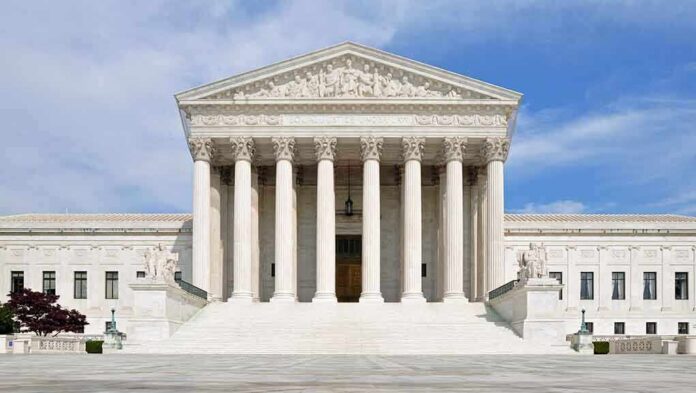
On October 14, the Supreme Court stopped a Fourth Circuit order that told the Federal Communications Commission to decide a political ad-rate dispute before the 2026 midterms. The stay removed the deadline and gave the agency more time to review objections. The Court did not decide if the Federal Communications Commission’s policy is legal. It instead focused on timing and process. Two justices were reported as dissenting in earlier coverage of related steps, showing limited disagreement over the path forward.
In September, the Supreme Court had already allowed the Federal Communications Commission’s March 30 guidance to operate during the election window. Reporting on that action said the justices viewed the case as likely not ready for court review until the agency finished its own work. Together, the rulings kept the status quo in place. That means broadcasters can continue honoring requests tied to party committees and certain joint fundraising groups during the regulated pre-election period.
What The Federal Communications Commission Policy Says
The Communications Act requires stations to sell candidates the lowest unit charge for ads during the weeks before an election under 47 U.S.C. Section 315(b)(1)(A). On March 30, the Federal Communications Commission’s Media Bureau issued a public notice. It explained that candidates, political parties engaged in coordinated activity, and joint fundraising committees with noncandidate members could seek that lowest rate during the election window. The notice gave stations and campaigns guidance for the 2026 cycle.
Democratic candidates challenged the March 30 policy at the Federal Communications Commission and then sought court help as the election neared. They argued the law’s text covers candidates, not party committees or mixed fundraising groups, and said the new reading would change ad markets at the worst time. They also warned that cheaper access would fuel more negative ads and tighter ad inventory near Election Day, since television time is limited and rates matter most in the final stretch.
Why Timing, Not Final Legality, Drove The Ruling
The Supreme Court’s October order dealt with procedure. Reports say the justices removed the deadline set by the Fourth Circuit so the Federal Communications Commission could finish its process. In September, the Court suggested the lower court likely lacked jurisdiction before a final agency action existed, pointing to ripeness and statutory limits on early review. This means the justices want the agency record completed first, then courts can weigh the policy’s legality on the merits.
This choice has real effects because the election window is short. The lowest unit charge period began in early September and runs through Election Day. Keeping the March 30 guidance in place now lets party committees and joint fundraising groups continue asking for discounted rates, pending a final decision. Supporters say this aligns with recent campaign finance rulings that treat party speech more broadly, while critics call it a stretch of the rate statute. The Court has not resolved that core dispute.
How This Fits The Bigger Campaign Finance Shift
A Supreme Court decision in June struck down limits on coordinated spending by political parties with their candidates, changing how parties fund messages close to elections. That ruling made party spending more central in federal races. As a result, the question of who gets the lowest unit charge has even higher stakes. If parties can coordinate more spending, cheaper broadcast rates for those ads may shift budgets, placement, and message volume in the final weeks.
What To Watch Next
First, watch for the Federal Communications Commission to complete its review and issue a final action. That step will likely return the case to court for a true merits ruling on the March 30 policy. Second, track how stations apply lowest unit charges in political files. That will show how much party-linked ads actually benefit. Finally, expect fresh legal briefs to test whether Congress meant the discount to cover only candidates or also coordinated party and joint fundraising ads.
Sources:
youtube.com, law.cornell.edu, reuters.com, newsweek.com, thedesk.net, supremecourt.gov
© newsworthy.news 2026. All rights reserved.