
Washington once kicked a key ally out of the F-35 program over Russia’s S-400 — a sign the system can collect valuable data on U.S. stealth jets.
Story Snapshot
- Pentagon barred Turkey from the F-35 after it bought Russia’s S-400, citing stealth security risks.
- S-400 can spot aircraft at long range, but turning a “blip” into a missile shot is the hard part.
- Analysts say fire-control lock on F-22 or F-35 likely occurs only at short range, if at all.
- No verified S-400 combat engagement against U.S. fifth-generation jets exists to date.
Why the S-400 Still Worries U.S. Officials
U.S. defense leaders removed Turkey from the F-35 program in 2019 after Ankara bought Russia’s S-400 air defense system. Officials argued the S-400 could expose sensitive stealth data from the F-35 and risk long-term security of the jet’s advantages. That decision cost Turkey industrial work and showed Washington took the S-400’s sensors seriously. It also signaled a bigger concern many share today: foreign systems tied to rivals can pry into U.S. technology.
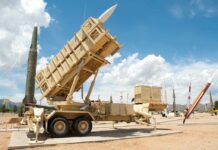
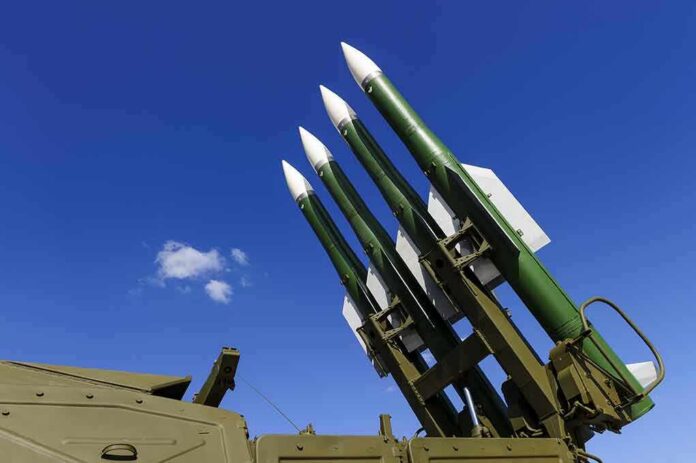
The S-400 is a layered system with several radars and long-range missiles. Russia advertises detection ranges out to hundreds of miles for large targets and engagement options approaching 400 kilometers using its longest-reach missile. Supporters argue the network can find, track, and engage modern aircraft under the right conditions. But raw range numbers can mislead. The key question is whether the system can hold a stealth fighter in a precise track long enough to guide a missile.
Detection Is Not the Same as a Weapons Lock
Engineers break the engagement into steps called the “kill chain.” A wide-area radar may sense a stealth jet is nearby. A separate guidance radar must then create a precise, stable track to feed a missile. Analysts note the S-400’s surveillance radar can detect at long range, but its engagement radar must do the hard, close work against stealth shaping and materials. That is where fifth-generation jets try to break the chain.
Open-source estimates back up this split. A technical summary says low-frequency radars may detect and even track stealth aircraft but “do not deliver a weapons-quality track.” It adds that the S-400’s engagement radar works in a band where stealth jets aim to be hardest to lock, pushing likely targeting ranges much shorter than brochure claims. This is why pilots plan to fire from outside those smaller, more dangerous zones when possible.
What Independent Estimates Suggest About Real Ranges
Published estimates vary but point in the same direction: the S-400 might sense a fifth-generation jet far away but struggle to lock it until much closer. Aviation reporting cited analysis that detection of an approaching F-22 could be around 21 kilometers and an F-35 around 34 kilometers, with many caveats on conditions and angles. Other write-ups echo a likely lock window in the tens of miles, not hundreds, for a shot that stands a chance.
There is another hard truth. No verified combat event shows an S-400 successfully engaging an F-22 or F-35. Coverage of the system highlights strong specifications but notes the absence of proven results against U.S. fifth-generation aircraft in wartime settings. That gap leaves room for both caution and doubt: caution because the system is advanced, and doubt because paper performance is not battle performance.
Why This Matters Beyond Military Tech
This debate speaks to a wider public worry: elites sell big promises, while reality is murkier and costlier. Russia markets sweeping ranges. U.S. officials react by reshaping alliances and contracts, as they did with Turkey and the F-35, to protect core advantages. Taxpayers fund these choices and live with the risks. People on the right and left can agree that clear facts, not hype, should drive decisions that affect security and spending.
How to Read Future Claims About “Seeing Stealth”
Readers can stress-test new claims with three questions. First, which radar saw the jet: a wide-area set or a fire-control set? Second, did the radar hold a stable, precise track for a missile, or only detect a presence? Third, did a real engagement occur, and what was the outcome? These simple checks cut through marketing and fear. They also keep focus on what wins fights: breaking the enemy’s kill chain at any link.
Sources:
war.gov, congress.gov, 19fortyfive.com, reuters.com, militarymachine.com, theaviationgeekclub.com
© newsworthy.news 2026. All rights reserved.