
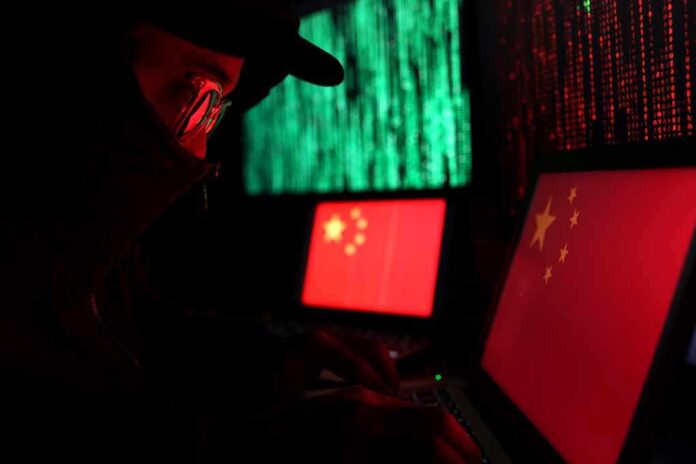
U.S. government records and new reporting show North Korea built a pipeline that turns handpicked students into state hackers who steal billions from global finance.
Story Highlights
- Treasury and Justice Department actions tie Lazarus Group and allied teams to North Korea’s spy service.
- Officials say North Korea trains cyber operators to steal and launder money from banks and crypto firms.
- Reuters details a student pipeline that selects children and feeds elite graduates into cyber units.
- U.S. sanctions link Pyongyang University of Automation to military intelligence cyber teams.
What U.S. Agencies Say About North Korea’s Cyber Machine
The U.S. Treasury Department formally identified three hacker groups—Lazarus Group, Bluenoroff, and Andariel—as controlled by North Korea’s government and linked to its Reconnaissance General Bureau, the spy agency that oversees clandestine operations. The Treasury also said North Korea trains cyber operators to hit financial institutions and then wash the stolen funds through complex schemes. Federal prosecutors later charged named North Korean operatives in a broad hacking conspiracy tied to theft, extortion, and cryptocurrency targets.
These official actions outline a clear structure: intelligence-linked groups conduct operations to raise hard currency under sanctions pressure. The Justice Department complaint against programmer Park Jin Hyok said he worked with a government front company and a hacking team known as Lazarus Group. Together, the designations and charges show a state-directed ecosystem with defined teams, money goals, and global reach. They also establish a legal and diplomatic basis for sanctions and arrests beyond U.S. borders.
How the Talent Pipeline Allegedly Works Inside North Korea
Reuters reporting describes a pipeline that begins with selecting about 150 to 200 students each year, starting near ages 11 to 12, then moving top performers to elite universities and, later, to military cyber units. A former trainer, Kim Heung-kwang, and defectors described heavy study in math, coding, and foreign languages, with placements into specialized roles after graduation. The figures come from interviews, not North Korean records, so they show how the system likely functions rather than a public roster or syllabus.
U.S. sanctions material reinforces a key part of that chain. In 2023, Treasury identified Pyongyang University of Automation as a premier training school whose graduates often enter cyber units under the Reconnaissance General Bureau. That links an actual institution to the state’s hacking structure and aligns with the Reuters account of university-to-unit paths. The combined record supports a real, state-linked program that recruits young talent and refines it into operational teams with financial missions.
From Banks to Blockchains: Follow the Money
Sanctions and court filings describe a shift from bank intrusions and payment fraud to large cryptocurrency heists, where stolen tokens can move fast across wallets and borders. Treasury attributed the theft of about $620 million from the Ronin blockchain project, used by Axie Infinity, to Lazarus Group in March 2022. That event showed both skill and intent: target the weakest points in new finance, then launder proceeds through mixers, fake identities, and overseas facilitators.
This pattern fits what analysts expect under heavy sanctions: cyber theft fills budget gaps that legal trade cannot. The government designations and indictments point to a system designed to generate revenue as much as intelligence. Operations use tailored malware, social engineering, and patient recon to find soft spots. Once inside, actors move funds in ways meant to outpace investigators, turning code into cash for a state that struggles to access dollars through normal channels.
Why This Matters for Americans and Global Markets
A state-run hacking pipeline that targets banks and crypto exchanges is not just a foreign story. Stolen funds can ripple through pension investments, small-business accounts, and consumer platforms. When a giant exchange or payment network gets looted, costs often spread across customers and partners. That offends both the left and the right: people see insiders and adversaries winning while regular families pay higher fees, face identity theft, or lose savings to fraud fallout.
🔐 North Korea’s Secret Army of Hackers: How Kim Jong Un Built a Cyberwarfare Machine Behind the 3 Billion Binance Heist
-Fact Checker: ✅: 5 ❌: 0 || 5/5 → Score: 100% 🦾
-Prediction: 📈 4 Positive | 📉 1 Negativehttps://t.co/c3r4wCaimI— Undercode News (@undercode_news) November 6, 2026
The broader worry is trust. Financial systems run on confidence that transfers will clear and savings are safe. Each major breach erodes that trust. Voters across parties already doubt that Washington can keep up with fast-moving threats. They watch as sanctions, indictments, and warnings pile up, yet hacks continue. The record shows clear state links and training pipelines, but it also shows a race: can governments move fast enough to lock the doors before the next haul walks out?.
Sources:
youtube.com, reuters.com, businesstimes.com.sg, techtarget.com, justice.gov, biz.heraldcorp.com
© newsworthy.news 2026. All rights reserved.