
Poland’s top court split into rival camps as a judge claimed control, police ringed the building, and leaders traded “coup” charges in a fast-moving constitutional fight.
Story Snapshot
- A Constitutional Tribunal judge suspended the court’s leadership and said she took charge for one month.
- The Tribunal’s official account called it a “coup d’état” and said the president remained in office.
- Police deployed around the court amid clashes and alleged threats; access was reportedly blocked.
- Poland’s president cut short a foreign trip as ministers sought to lift immunities for two top judges.
What Triggered The Crisis At Poland’s Constitutional Tribunal
On October 30, 2026, Judge Anna Korwin-Piotrowska announced that she was suspending the Constitutional Tribunal’s president, Bogdan Święczkowski, and vice-president, Bartłomiej Sochański, for one month. She said she was assuming interim control of the court. This sudden move created two competing claims to lead Poland’s top constitutional body. The action occurred amid long-running fights about who counts as a lawful judge and how the court should be run.
The Tribunal’s official channels pushed back hard. They said Korwin-Piotrowska was not a judge because she had not taken the presidential oath. They called the suspension a “coup d’état” and insisted Święczkowski and Sochański remained in charge. These statements framed the takeover as illegal and warned that those involved were committing crimes. This escalated public alarm and fixed the dispute as a test of Poland’s constitutional order.
Police Lines, Protests, And A President’s U-Turn
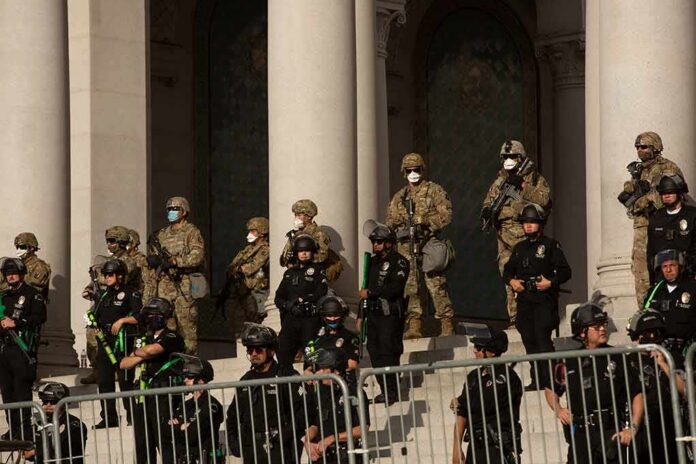
Police surrounded the Tribunal complex after reports of fence-cutting, clashes, and threats against judges and staff. Officers described their work as statutory duties to restore order. Some accounts said the suspended president was blocked from entering the building. The heavy police presence gave the impression of a siege, even as officials denied any occupation of the court. This visible force fed claims of a forcible struggle over a key state institution.
President Karol Nawrocki turned his plane around and returned from a trip to Senegal as the crisis deepened. Outside, opposition figures and supporters protested and argued over which leaders were legitimate. Inside government, the Justice Minister and Prosecutor General, Waldemar Żurek, pursued a legal track. He filed five motions to lift the immunities of Święczkowski and Sochański, citing alleged obstruction of other judges’ work.
Competing Stories: Coup Or Rule-Of-Law Repair
Prime Minister Donald Tusk said his government’s actions aimed to restore the rule of law after years of abuse under the prior leadership. He argued that tough steps were needed and denied any plan to seize unconstitutional power. Supporters cast Korwin-Piotrowska as the senior judge who could step in. Critics countered that she lacked authority without a presidential oath and that the move was a judicial “coup” against the sitting leadership.
Both sides used legal language and institutional claims to stake control. The Tribunal’s messaging branded the leadership change unlawful. Government voices framed police actions as public-order duties and the immunity motions as standard law enforcement steps. Yet key paperwork, such as the full suspension order and the five filings, was not publicly available. That gap left citizens relying on statements rather than documents.
Why This Matters For Voters Far Beyond Poland
This clash fits a wider pattern seen in many democracies. Political coalitions try to reshape courts through legal tools, while rivals reject those changes as illegitimate. Power then turns on who controls websites, press rooms, police perimeters, and public trust. When records are hidden or delayed, the side that speaks loudest often wins the day, even if the law points another way. That dynamic fuels anger at elites and feeds fears of a rigged system.
“In Poland, the rule of law will prevail over violence”: Donald Tusk delivers a defiant address to the nation
Poland’s prime minister addressed the crisis surrounding the Constitutional Tribunal following clashes outside its headquarters in Warsaw. Tusk accused the opposition… https://t.co/561ZfBZLAg pic.twitter.com/3MTbEAfAtg
— NEXTA (@nexta_tv) November 1, 2026
For readers in the United States, the warning is clear. When rules are bent through “hardball,” citizens lose faith that courts are neutral. People on the right and left both see insiders gaming the process. In Poland, the police lines and clashing posts came before clear legal answers. That order—spectacle before facts—should concern everyone who wants fair courts and leaders who follow the law, not the crowd.
Sources:
lifesitenews.com, notesfrompoland.com, en.wikipedia.org, independent.co.uk, thecatholicherald.com, poland.us, euronews.com
© newsworthy.news 2026. All rights reserved.