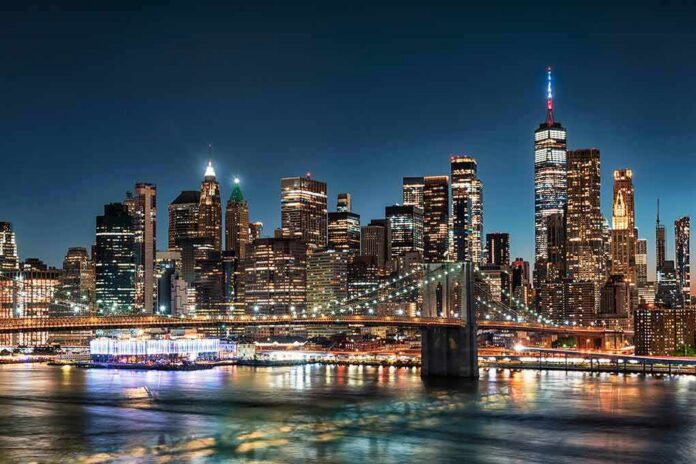
A brief fire on the Brooklyn Bridge cut through Macy’s 50th-anniversary fireworks spectacle, testing safety promises at a marquee America 250 event.
Story Snapshot
- The 50th Macy’s fireworks marked an official America 250 “signature event.”
- New York City issued 100,000 free tickets and rolled out heavy street closures.
- Organizers launched about 60,000 shells amid tight broadcast timing and logistics.
- No official post-event incident report has been released to explain the bridge fire.
What Was Planned: A High-Stakes National Showcase
Event planners billed the 2026 show as the 50th anniversary of Macy’s Fourth of July Fireworks and a “signature event” for America’s 250th birthday. That label signaled high-level coordination, strict permitting, and added public scrutiny. The program listed about 60,000 shells and a large production footprint across the riverfront. National television coverage on a major network pushed tight timing and complex choreography across barges and bridge elements. These choices raised both expectations and risks.
New York City agencies set extensive rules for moving and holding crowds. City notices showed wide street closures and checkpoints along Brooklyn and Manhattan waterfronts. The city issued 100,000 free tickets to control access to prime zones near the bridge. Police and event staff used screenings and set viewing pens to reduce crush points. These controls aimed to manage lines of sight, keep emergency lanes clear, and support fast response if something went wrong.
What Actually Happened: A Fire And An Information Gap
A fire sparked on the Brooklyn Bridge during the show, drawing fast attention and feeding online clips. While the display continued, the incident raised fair questions about technical safety and emergency plans. As of now, there is no public incident report from the New York City Fire Department or a detailed statement from Macy’s that explains the ignition source, damage, or any injuries. That silence leaves a gap between the event’s safety brand and what people saw.
Without an official cause, it is hard to judge whether the fire was a one-off equipment fault, a human error, or a sign of a broader systems miss. Media coverage and social posts tend to frame such moments as proof of failure, even before facts settle. That pattern is common with large public spectacles. It grows in the July 4 window, when fireworks risks and injuries surge nationwide, and any mishap can define the night. National safety data underscore that tension.
Why It Matters: Trust, Safety, And Public Space
Big civic shows promise joy, unity, and control. When a fire breaks out on a landmark like the Brooklyn Bridge, it dents that trust. People across the political map already think leaders focus on optics over substance. A major anniversary event, wrapped in national branding, will face extra scrutiny if officials do not share timely facts. Clear answers on cause, response time, and fixes help restore confidence. A lack of answers fuels the sense that image beat safety.
Next steps are straightforward. The New York City Fire Department can release an incident report that states the ignition point and contributing factors. Macy’s and the fireworks contractor can publish a post-event safety review that details equipment checks, crew training, and any procedural changes. The New York Police Department can summarize crowd and access lessons. Each document should include time stamps, photos if available, and plain-language findings. That level of detail helps the public judge the system, not just the spectacle.
How To Read The Risk: Context Without Spin
Professional shows are far safer than backyard fireworks, yet they are not risk-free. National data from the United States Consumer Product Safety Commission show thousands of injuries each year, with burns most common. Many incidents involve misuse or device malfunctions. Large displays use redundancies, blast zones, and fire suppression plans to cut those risks. But when failures do occur, even small ones, they can create dramatic images that shape opinion long after fixes are made.
On balance, the 2026 Macy’s show carried every sign of rigorous planning: federal anniversary branding, heavy street closures, ticketed zones, and a broadcast partner. Those facts tell us the city and organizers took safety seriously. The remaining question is narrow but vital: what lit the bridge, and how will the plan change to prevent a repeat? Until officials publish clear findings, the information gap will keep feeding worry from both skeptics and supporters. Sunlight, not spin, will close it.
Sources:
cbsnews.com, abc7ny.com, southstreetseaportmuseum.org, brooklynbridgeparents.com, hsi.com, cpsc.gov
© newsworthy.news 2026. All rights reserved.