President Trump’s boast that “young, beautiful girls” thank him for making Washington, D.C., safer spotlights real crime declines — and a fierce fight over what caused them.
Story Snapshot
- District crime fell in 2025, with sharp drops in property offenses, but experts split on why.
- Trump’s phrase about “young, beautiful girls” came during remarks promoting his crime record.
- A key study ties most gains to fewer opportunistic property crimes, not violent crime.
- Claims that women broadly credit Trump are anecdotal, not supported by surveys.
What Trump Said And Why It Landed Hard
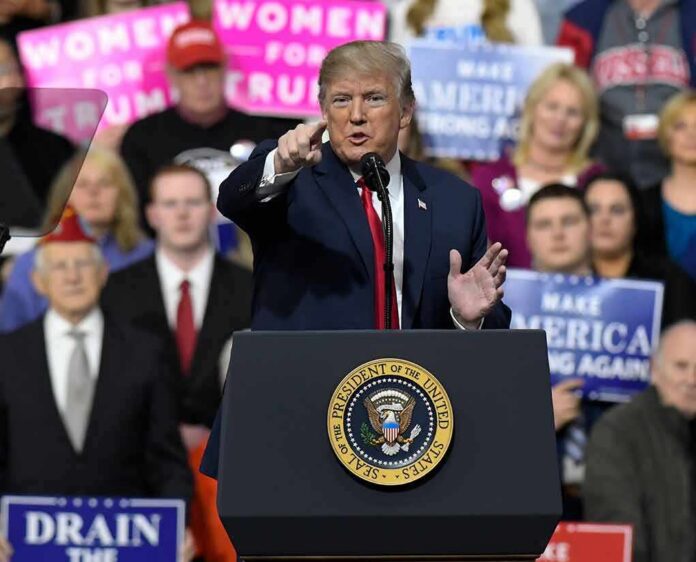
On August 14, President Trump said women — “young, beautiful girls” — thank him for making the nation’s capital safer. He linked those thanks to his crackdown in Washington, including National Guard deployments that he says restored order. The phrasing drew attention and pushback. Supporters pointed to falling crime. Critics said the line reduced women to a stereotype and leaned on stories, not data. Both reactions reflect how crime debates mix facts with political branding.
Trump has also framed D.C. as transformed from high crime to safety, sometimes in sweeping terms that critics call exaggerated. A July post claimed the city went from “High Crime to NO CRIME,” which clashed with official records showing ongoing offenses, even amid declines. The gap between rhetoric and records turned the remark into a flashpoint. It raised a core question that matters beyond D.C.: when crime falls, who gets credit, and based on what proof?
What The Data Shows About Crime Trends In D.C.
District police data shows large drops in 2025, especially in property crime categories, and a decline in homicides from the 2024 surge. Those figures support a general “safer than last year” story, though violent crime patterns were uneven in early 2026. Independent reporting also confirms that overall crime, driven by big declines in auto theft and theft from autos, fell notably into 2026 compared to 2025. These trend lines are real. The issue is assigning a clear cause.
Researchers who studied the Guard’s impact found a narrower effect. Analyses from a nonpartisan policy group and local reporting say the Guard’s presence likely deterred opportunistic property crimes by about a quarter, but showed little to no effect on violent crime. That picture fits what experts often see with visible patrol surges. People think twice about low-level theft when uniforms are near. But armed assaults, shootings, and robberies follow deeper patterns, including police work that targets repeat offenders.
Causation, Credit, And The Limits Of Anecdotes
Trump’s claim that women thank him blends two things: a measurable drop in many crimes, and an argument that his actions caused it. The first is documented in police dashboards and year-end summaries. The second remains contested. Studies cite proactive Metropolitan Police Department strategies and broader trends that started before the Guard arrived as likely drivers of violent-crime change, not the Guard itself. That does not erase property-crime gains. It separates correlation from cause.
The “young, beautiful girls” line adds another layer. The White House video shows he used that phrase while describing safety concerns from women who work around him. Reporters also surfaced at least one named woman who praised safety efforts after a past assault. But those accounts are personal stories, not citywide polling. No survey data shows that women in D.C. broadly credit Trump for the changes. Major outlets flagged this gap while acknowledging the real drop in several crime categories.
Why This Debate Hits A Nerve For Both Sides
People across the spectrum feel City Hall and Washington power brokers fail to solve basic problems. When crime falls, leaders rush to claim victory. When methods are blunt or costly, communities see “security theater.” In D.C., the Guard brought a visible show of force. That likely stopped some car break-ins and thefts. But studies say it did not move violent crime much, despite a high price tag and social trade-offs. That fuels distrust about who benefits and who pays.
For conservatives who want order and are tired of excuses, the numbers on thefts and homicides feel like proof that tough measures work. For liberals who fear overreach and profiling, the weak link to violent-crime change backs their case for smarter, community-based policing. For the growing middle that thinks the system serves elites, the fight looks like more spin. They want honest scorekeeping: what fell, what did not, how much it cost, and who is accountable when promises do not match results.
Sources:
independent.co.uk, mpdc.dc.gov, usatoday.com, washingtonpost.com, washingtonexaminer.com, stripes.com, bbc.com
© newsworthy.news 2026. All rights reserved.