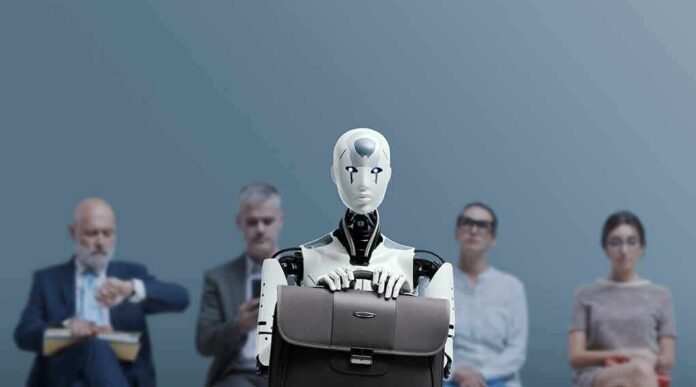
Two five-foot humanoid robots just removed gallbladders in live animals, raising real questions about who will be holding the scalpel in tomorrow’s America.
Story Snapshot
- UC San Diego surgeons used teleoperated humanoid robots to perform two live gallbladder surgeries in pigs in a world-first preclinical trial.
- One operation paired a human surgeon with one robot, while the other used two robots at the table with no human standing over the patient.
- The “Surgie” robots are compact, lower-cost machines designed to work in regular operating rooms and eventually in rural areas, battlefields, and even space.
- The study is a proof of concept only; the system is not approved for human patients and still suffers from delays, recalibration, and longer surgery times.
What exactly did these humanoid robots do?
Surgeons and engineers at the University of California San Diego report that two live laparoscopic gallbladder removals were completed using teleoperated humanoid robots during a preclinical trial on pigs. In one procedure, a human surgeon stood at the bedside and worked alongside a single robot, adjusting its position and helping manage the tools. In the second, two humanoid robots worked side by side to remove a gallbladder, with no human physically present at the operating table, though surgeons still controlled everything from a distance.
The robots, nicknamed “Surgie,” stand about five feet tall and weigh around sixty pounds, with arm designs that fit into the same tight spaces surgeons already use for minimally invasive operations. Instead of a huge, twelve-hundred-pound console that needs a special room, these compact machines roll into a standard operating room and use normal laparoscopic tools. Surgeons teleoperate the robots, meaning every move comes from a trained human at a control station, not from an independent artificial intelligence making decisions on its own.
How does this change the future of surgery — and access to care?
Researchers and some commentators say this proof-of-concept hints at a very different future for surgery, especially in places that Washington and state capitals have long failed to serve. Because Surgie is smaller and likely cheaper than giant robotic systems such as the da Vinci platform, the team argues it could be deployed to rural hospitals, understaffed clinics, and even frontline military units where today many people simply go without timely surgery. Remote teleoperation could let expert surgeons in big cities guide procedures hundreds or thousands of miles away, cutting into the long-standing gap between wealthy, well-connected patients and everyone else.
That dream matters in a country where voters on both the right and the left are tired of hearing that there is “no money” to fix basic problems while elites enjoy top-tier care. Many conservative Americans who resent bloated federal spending also see doctor shortages and hospital closures in small towns. Many liberal Americans angry about the growing divide between rich and poor watch rural and inner-city communities lose access to vital services. A teleoperated humanoid robot that can work in a normal operating room challenges the excuse that advanced care must stay locked inside giant, expensive centers.
Hype, limits, and the risk of a new kind of medical inequality
Despite breathless headlines calling the event “historic” and a “world first,” the team is clear that this is only a preclinical trial on animals, not a green light for human use. The Nature paper and press materials describe delays in robot response, the need for recalibration during surgery, and longer operating times compared with standard tools. Federal regulators at the Food and Drug Administration will require far more data on safety, reliability, and outcomes before any humanoid system touches a human patient, and many such “world-first” devices never reach everyday practice.
Incredible robotics resarch award of the day goes to: UC San Diego for performing surgery on a live pig using a humanoid robot (Unitree G1).
Accuracy of this approach is indistinguishable to using a da Vinci surgery robots worth several millions of dollars.
Only caveat: 2x… pic.twitter.com/1d3W7hjm0q— Léo (@LeoKharon) July 10, 2026
There is also a political and economic risk that this technology, if it succeeds, could become yet another toy for the well-off instead of a bridge for the forgotten. Large universities and tech companies gain reputation and licensing income from breakthrough robotics, while media outlets chase clicks with dramatic headlines. If federal agencies and hospital chains follow the usual pattern, the first human trials and deployments may cluster in wealthy centers, while working families in struggling regions are told, once again, to wait their turn — if that turn ever comes.
Where does this leave patients who still want a human doctor?
For now, every movement of Surgie comes from a trained surgeon, and no one is talking about removing humans from the loop. Yet videos and social posts already ask how long patients will still “have a choice” between a human doctor and a robot. That fear taps into a deeper frustration many Americans share: decisions about health, work, and privacy often seem made by distant experts, tech firms, and government insiders, not by the people who live with the results. This new milestone in robot surgery fits squarely into that unease.
The study’s authors say their goal is to “amplify access” and ease surgeon shortages, not to push doctors out. They point to remote communities, disaster zones, and even future space missions as places where humanoid robots might save lives when no skilled surgeon can be present. If these systems are developed with strong safeguards, clear consent rules, and real focus on underserved areas, they could become a rare example of advanced technology that narrows gaps instead of widening them. If not, they risk becoming one more symbol of a system that answers to elites first and patients last.
Sources:
nypost.com, arxiv.org, abcnews.com, instagram.com, facebook.com, today.ucsd.edu
© newsworthy.news 2026. All rights reserved.