
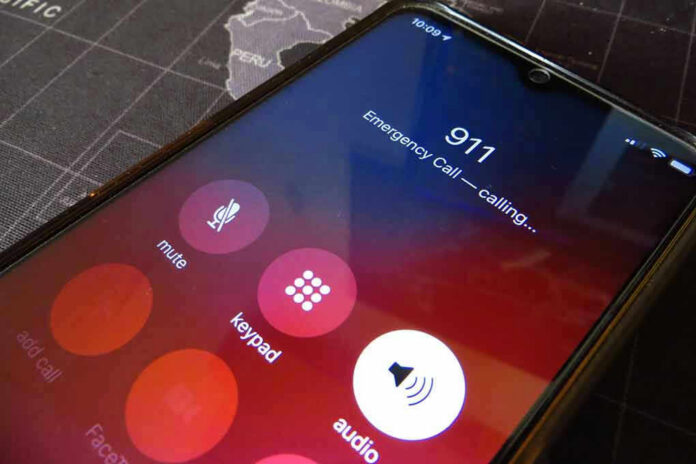
A YouTube clip titled “I Think There’s A Dead Person In My House” is pulling in viewers who believe they’re hearing a real 911 call — but no police record, no court filing, and no official show document confirms that call ever happened.
Quick Take
- Investigation Discovery’s Lethally Blonde, hosted by Holly Madison, markets itself as a true crime series based on real cases, including the Courtney Clenney murder case in Miami.
- A YouTube short tied to the show features a 911 call from “2100 Brown Street” — an address that does not appear in any verified record of the Clenney case or any related police report.
- No police logs, 911 transcripts, or court documents confirm the Brown Street call is real, raising questions about whether it is a dramatized reenactment presented without a clear label.
- The true crime genre routinely blends real facts with scripted scenes, often without telling viewers which is which — and Lethally Blonde appears to follow that pattern.
What Lethally Blonde Claims to Be
Investigation Discovery launched Lethally Blonde as a true crime series exploring cases where ambition and beauty crossed paths with murder. Host Holly Madison promoted it on Instagram as featuring “ALL NEW TRUE STORIES.” The Apple TV listing describes detectives responding to a 911 call at a “lavish Miami apartment” linked to a social media influencer — a clear reference to the real Courtney Clenney case. The show airs Mondays on Investigation Discovery and streams on HBO Max.
The Courtney Clenney case is real and well-documented. Clenney, a social media influencer, was charged with murder after her boyfriend was stabbed in their Miami high-rise apartment. That case has court records, news coverage, and verified details. The show’s marketing leans hard into that real story. But the YouTube short in question places a dramatic 911 call at “2100 Brown Street” — a location that appears nowhere in the verified Clenney case record.
The Brown Street Problem
Searches of public records turn up no 911 call at “2100 Brown Street” matching the scene described in the clip. The address does appear in real news — but only in connection with unrelated traffic deaths in Wisconsin, not a Miami murder case. No official Investigation Discovery episode guide, press release, or Holly Madison statement references Brown Street as part of the Clenney story or any other verified episode of the series.
That gap matters. If the clip is a dramatized reenactment — a common tool in true crime TV — viewers deserve to know that. Without a clear label, a scene with a fake address can easily be mistaken for footage tied to a real call. The show’s own branding as “true stories” makes that confusion more likely, not less.
How True Crime TV Blurs the Line
This confusion is not unique to Lethally Blonde. Academic research on the true crime genre describes a pattern of “generic transformation,” where documentary-style shows blend real facts with scripted drama to boost suspense. Producers often change addresses, names, and dialogue for legal or creative reasons — but they don’t always tell the audience. Crime show experts note that these programs tend to oversimplify and dramatize, leaving viewers with a distorted sense of what actually happened.
That’s the core issue here. Viewers watching a clip labeled as part of a “true stories” series have every reason to believe what they’re seeing is real. If the Brown Street call is a scripted scene, the network has an obligation to say so clearly. The absence of any disclaimer — and the absence of any matching public record — leaves a gap that the show’s own marketing makes worse. Until Investigation Discovery or the production team confirms whether that call is real or recreated, viewers are left guessing about something the network could easily clarify.
Sources:
youtube.com, facebook.com, instagram.com, tiktok.com, wkyc.com, nbcnews.com
© newsworthy.news 2026. All rights reserved.