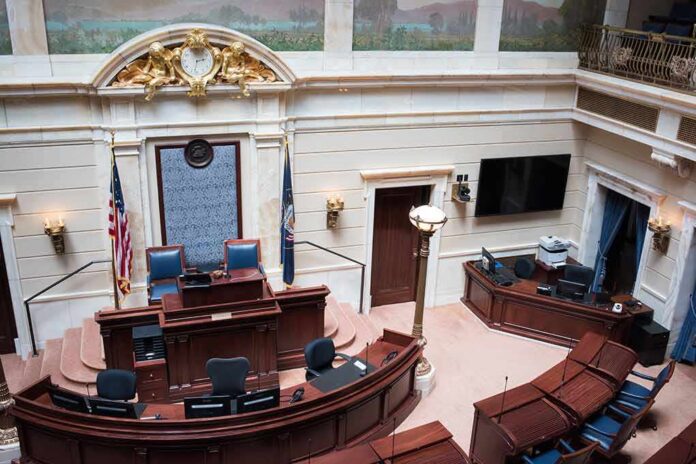
One powerful Indiana Republican just gave up his top job rather than drag his fellow senators deeper into a showdown with President Trump over who controls the political map.
Story Snapshot
- Indiana Senate leader Rodric Bray will step down from his top Republican role in November after a bitter fight over congressional district lines.
- Bray says he will not ask GOP senators to face Trump-backed primary challengers just for supporting him as leader.
- The move shows how national pressure and primary threats now shape state politics as much as local voters do.
- Both conservatives and liberals see this as another sign that party power games are beating real problem-solving.
Bray’s decision and what exactly he is giving up
Indiana Senate President Pro Tem Rodric Bray announced on July 31 that he will not seek another term as the Senate’s top Republican when lawmakers choose leaders after the November election. He has held the president pro tempore position since 2018 and has served in the Indiana Senate since 2012, representing District 37, which includes Morgan County and parts of several nearby counties. Bray will stay on as a senator through his current term, which runs until 2028, and will lead the chamber until a new Republican leader is chosen.
Bray’s announcement reverses what he said in May, when he told colleagues he planned to remain in the leadership job he has held for eight years. That earlier plan came before the full impact of this year’s primaries and Trump’s involvement was clear. By stepping back now, Bray is giving up control over the daily agenda in the Senate, committee assignments, and much of the behind-the-scenes power that comes with being the top Republican in a strongly Republican chamber.
How a Trump-backed redistricting fight sparked the leadership shake-up
The leadership change grew out of an intense battle over President Trump’s demand that Indiana redraw its congressional districts in the middle of the decade. Trump wanted new lines that would boost Republican chances to win all nine of Indiana’s United States House seats, going beyond the party’s already strong position in the state. Bray and many Senate Republicans rejected that plan, pushing back against changing the map again after it was already set earlier in the decade.
The fight did not end with that vote. In the following months, Trump backed primary challengers against several Republican senators who opposed his redistricting push. According to reporting, almost all of those Trump-supported challengers won, costing six Republican incumbents their seats and sending a strong warning to others in the party. That wave of defeats showed how national figures can reshape state legislatures by reaching into local primaries, even when voters in those districts had supported the incumbents for years.
Bray says he is leaving to protect fellow Republicans from primary threats
In his announcement, Bray directly pointed to promises that primary challengers would be recruited and funded against senators who backed his bid to stay on as leader. He said he would not put members of his caucus “in jeopardy from their own party” simply because they supported his reelection as president pro tempore. In plain terms, Bray told colleagues that keeping him in charge would make them bigger targets for Trump-aligned forces in the next election cycle.
Bray framed his choice as putting the team ahead of himself. He called serving as president pro tempore “among the most significant honors” of his life but said it was time for the Senate to choose another leader. This messaging matches a common pattern in party politics where leaders step aside while saying they are shielding others from harm, even when the move clearly comes after losing ground in internal power struggles. Both can be true at once: Bray faced real pressure, and he also chose not to test how far Trump and his allies were willing to go.
What this reveals about party power and why many Americans are frustrated
This episode highlights how modern American politics often puts party battles ahead of solving everyday problems. A president pressured a state legislature to redraw district lines mid-decade to lock in more party control, and then helped remove state senators who disagreed. Bray’s exit shows that even high-ranking Republicans in a solidly Republican state can lose clout if they cross national party demands, no matter what local voters might want.
For many conservatives, the saga confirms fears that “establishment” or “insider” Republicans sometimes resist populist pushes like Trump’s, and then cling to leadership until they are forced out. For many liberals, it shows how map-drawing and primary threats can be used to squeeze out dissent and make elections less about ideas and more about loyalty tests. For both sides, it feeds a growing belief that political elites focus more on holding power than on fixing high costs, weak schools, illegal immigration, or the widening gap between rich and poor.
Why this Indiana story matters beyond one state
When a powerful state leader gives up his role because of threatened primary challenges, it sends a message to lawmakers everywhere: cross national party demands at your own risk. State senators and representatives know that angering a president, major donors, or social media influencers can now bring instant challengers, national money, and heavy pressure on local races. That reality makes it harder for them to vote based on their district’s needs, their own judgment, or long-term policy goals.
Bray’s decision also shows how tools like redistricting have become weapons in a larger war over control, rather than technical steps to reflect populations fairly. When maps are drawn or redrawn mainly to lock in one party’s advantage, many voters on both the right and the left feel their voices are weakened. The Indiana case is a clear example of how these fights play out and why more Americans see a system serving party leaders and donors first, while the American Dream feels further out of reach.
Sources:
thegatewaypundit.com, indianacapitalchronicle.com, bloomberg.com, wibc.com, youtube.com
© newsworthy.news 2026. All rights reserved.