

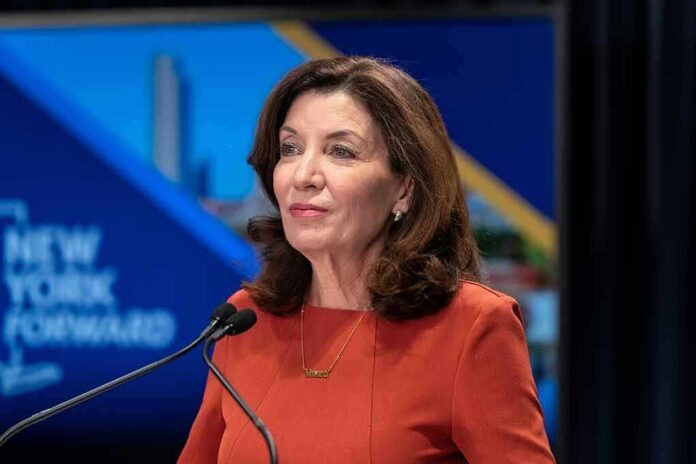
A single sentence from 2024 is now steering New York’s 2026 governor’s race — and reopening wounds about race, respect, and who gets left behind.
Story Snapshot
- Bruce Blakeman pressed Kathy Hochul over her 2024 remark about Black Bronx kids and “computers.”
- Hochul said she misspoke, apologized, and stressed unequal tech access, not ignorance.
- Bronx lawmakers and activists called the remark harmful and misinformed.
- Debate fallout shows how a quick line can overpower a nuanced policy issue.
What Sparked The Clash On The Debate Stage
During New York’s lone 2026 governor debate, Republican nominee Bruce Blakeman attacked Governor Kathy Hochul over a 2024 comment. He cited her line that “young Black kids growing up in the Bronx… don’t even know what the word computer is.” He called it reprehensible and used it to question her judgment and respect for communities she serves. The exchange put an old quote at the center of a new race for power.
News accounts confirm the original words were spoken at the Milken Institute Global Conference in May 2024. Coverage described it as an offhand remark during a talk about artificial intelligence and opportunities for young people. The sentence drew fast blowback. Bronx leaders and activists said it painted Black children with a false and hurtful brush. The criticism focused on the idea that limited access does not equal lack of basic knowledge.
Hochul’s Explanation And The Line Between Words And Intent
Governor Hochul later said she misspoke and regretted the wording. She stated that of course Black children in the Bronx know what computers are. She said her point was about unequal access to devices and pathways to high‑paying jobs tied to artificial intelligence. That clarification matters, but it does not erase the original phrasing, which many heard as insulting. The gap between intent and impact remains the core of the dispute.
Democrats and Republicans often fight over language like this. But frustration runs deeper than party lines. Many people see leaders as out of touch with daily life in working neighborhoods. When a quick remark becomes a campaign club, it confirms a shared fear: the political class focuses more on point‑scoring than on fixing broken systems. Voters want fewer gotchas and more real progress on schools, jobs, and safe streets.
The Real Policy Issue: Access, Devices, And Skills
Local data show serious digital gaps in New York City. City analyses and comptroller reports have found that many households lack broadband at home, with higher rates in the Bronx and among lower‑income and Black and Hispanic residents. Fewer computers and weaker connections mean fewer chances to learn coding, practice research, or apply for skilled jobs. That hurts students and workers when the best jobs demand digital fluency every day.
Hochul said Bronx Black kids don't even know what a computer is, then claimed she misspoke. Blakeman called it reprehensible on the debate stage. Parents in the Bronx deserve better than that from their governor.
— ThePatriot (@ThePatriotTea) October 14, 2026
Closing those gaps takes boring, steady work. Schools need up‑to‑date devices, safe networks, and teachers trained to weave tech into lessons. Libraries and community centers need longer hours and more staff. Internet providers and the state need deals that cut costs without hidden fees. Career programs must link teens to internships that teach real skills, not just buzzwords. These are measurable steps that leaders can fund, track, and report on to the public.
Why This Moment Resonates Beyond One Race
Campaigns know short clips move voters. Research shows that racial cues in ads can prime reactions and harden views. That is why a single sentence can outweigh a page of policy. The pattern fuels cynicism about politics as performance. Voters on the left and right see a system that rewards spin over substance. They want plain talk, clear goals, and honest progress reports on promises kept and promises missed.
The debate dust‑up offers a test. Candidates can keep trading cuts over a painful quote. Or they can set specific targets on broadband, device access, and job pipelines, with dates and dollars attached. The first path deepens mistrust. The second path gives families proof that government can still solve a real problem. New York has the scale and wealth to lead. It now needs leaders who will measure what matters and own the results.
Sources:
nypost.com, bbc.co.uk, nbcnews.com, politico.com, ny1.com
© newsworthy.news 2026. All rights reserved.