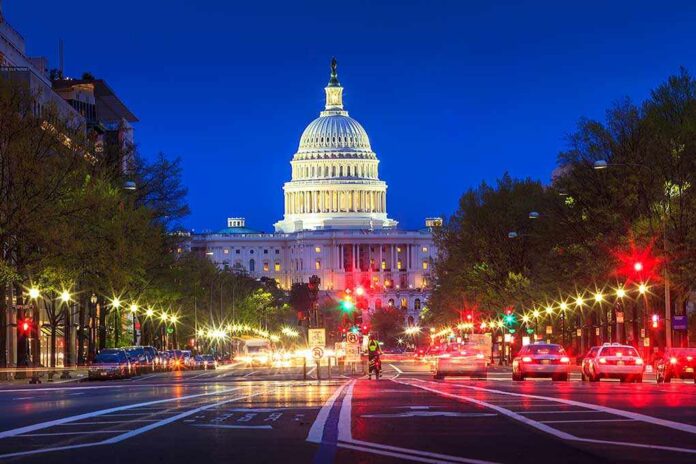
A viral clash over who paid for Washington’s IndyCar race exposed a familiar Washington move: leaders argue past each other while taxpayers still cover the cops and barriers.
Story Snapshot
- Penske and IndyCar funded the race production; public money covered security and public safety.
- Representative Adam Schiff criticized “taxpayer money,” and driver Graham Rahal said the event was privately funded.
- District officials expected to draw from a federal security fund set aside for major events.
- The fight reflects a broader pattern in which governments foot safety costs for big private events.
What Sparked The Fight: Schiff’s Post And Rahal’s Rebuttal
Representative Adam Schiff criticized the Washington, D.C., IndyCar race online, tying it to “more taxpayer money spent.” IndyCar driver Graham Rahal pushed back, saying the race was privately funded and brought visitors to the area, which he framed as economic impact. The core dispute focused on what “funded” means. Rahal pointed to production costs covered by Penske and IndyCar. Schiff pointed to public spending tied to the event’s footprint, such as security and city services.
Rahal’s claim tracks with multiple reports that said Penske paid for the race itself. Outlets described a more-than $35 million production tab financed by IndyCar, with free general admission, making it one of the costlier stops on the calendar. Those same reports said the city expected to use a congressionally provided security fund for police, fire, and related operations. That is separate from track building, staging, hospitality, and broadcast production covered by private money.
Follow The Money: Private Production, Public Safety
CNN reported that Penske would finance race production while the District tapped a $90 million emergency planning and security pool set aside for major events. NBC Washington said Penske covered the vast majority of costs and that taxpayers would help pay for police, fire, and security, with the money coming from a federal fund reserved for big events. Politico reported organizers stressed no taxpayer money funded the race itself, but the District would likely draw federal appropriations for police and other local expenses.
This split is common in mega-events. Private groups fund the show. Governments handle public safety, traffic control, and cleanup. The Athletic similarly reported that Penske funded the race outside of the bicentennial program while extra District needs, including police and security, would come from the federal pot. The point of friction is simple: one side highlights private dollars for the spectacle, the other points to public dollars for the safety net. Both claims can be true at once.
Why It Resonates: A Government That Feels Distant And Costly
Voters on the right and left see a pattern. Politicians talk up big wins while bills for safety and logistics land on public ledgers. Supporters of the race cite tourism, national pride, and a free event near the National Mall. Critics see taxpayer-backed lines for police overtime and barriers, even when a private company runs the show. The argument echoes wider anger about who benefits when the government underwrites parts of private events and who pays when the crowds go home.
Economic research gives more fuel to the skeptics. Studies across decades find that stadiums and mega-events rarely create enough new tax revenue or jobs to justify public subsidies. Reviews show “little to no tangible” local economic gains from venues or event spending, even when backers promise a tourism bump. That does not erase civic pride or entertainment value. It does warn that public safety costs are real and often fall to taxpayers, even when promoters fund the main event.
How To Read The Claims: Practical Takeaways For Voters
When leaders argue about “taxpayer-funded” sports, check which bucket they mean. Ask if private money covers the race, the stage, and the sponsorships. Then ask if public money covers police, fire, traffic, and cleanup. In Washington’s case, reports say private money paid for the race, while a federal security fund paid for safety operations tied to a major event footprint. That mixed model is not unusual, but it deserves clear disclosure and tough cost control.
Citizens can press for three safeguards. First, demand a post-event, line-item audit showing total public safety costs. Second, require promoters to share specific city service expenses when attendance or risk passes a set threshold. Third, publish a plain-language economic report that separates feel-good effects from hard tax receipts. Those steps help cut spin from both sides and make sure the public sees how the numbers actually add up.
Sources:
redstate.com, politico.com, x.com, thecentersquare.com, nytimes.com
© newsworthy.news 2026. All rights reserved.