
The Supreme Court’s emergency order let parts of a federal mail-ballot screening plan move ahead, then lower courts pulled it back, leaving voters and states in limbo before the midterms.
Story Snapshot
- The Supreme Court allowed some implementation of a Postal Service ballot rule, for now.
- The rule ties mail-ballot delivery to state voter lists and unique barcodes.
- Lower courts say the Postal Service likely lacks power to refuse lawful ballots.
- Experts say fraud rates in mail voting are extremely low nationwide.
What the Supreme Court Did and Did Not Decide
On August 24, 2026, the Supreme Court issued an emergency order that let the administration proceed, for now, with parts of its mail-ballot policy while lawsuits continue. The order did not decide the final legality of the rule. It lifted one block but left other limits in place around the country. The mixed result created a patchwork. Some states faced new steps. Other states continued under injunctions from lower courts that viewed the policy as unlawful.
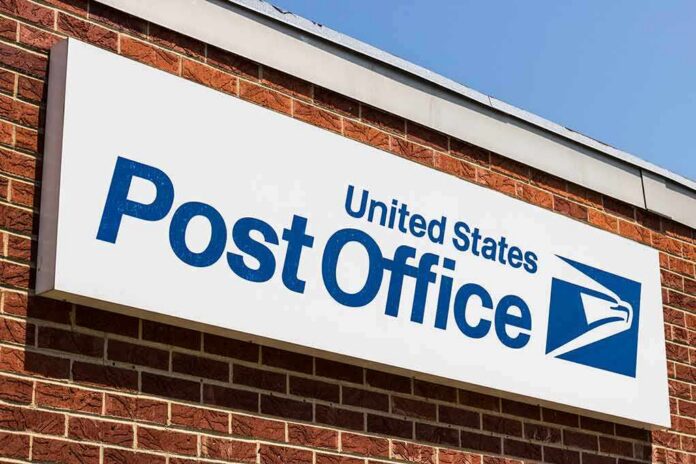
The administration’s legal theory frames the United States Postal Service as a gatekeeper for secure ballot mail. Supporters say postal rules on lists and barcodes help detect fraud and protect chain of custody. Two justices argued the Postal Service has broad mail security powers that can include ballot handling standards. They said there is a strong interest in enforcing the rule while cases move ahead. That view did not control the Court but signals a serious legal debate.
What the Rule Would Change for Ballot Mail
The Postal Service rule requires states to submit mail voter lists and use envelopes with unique barcodes tied to each ballot. It also sets up a portal to match ballot mail against those lists. Ballots that do not match could be rejected for delivery under the policy, according to court filings and reporting. These steps amount to a federal screen layered on top of state election systems. That is why lawsuits call the plan an unprecedented shift in ballot processing.
Lower courts have pushed back on both power and timing. Judges said Congress did not give the Postal Service authority to refuse lawful ballot mail based on new federal conditions, and that a sweeping change this close to voting risks chaos. One federal judge concluded the agency likely lacks power to enforce the rule as written. An appeals court declined to let the policy take effect before November, citing legal and operational concerns.
The Evidence Fight: Fraud Risk Versus Disruption Risk
Supporters argue cross-checks with voter lists and serialized barcodes will block ballot substitution and noncitizen voting. They point to federal efforts to share citizenship data to improve list accuracy. Critics respond that the record has not shown a concrete, widespread fraud threat the rule would fix right now. Major studies and court records describe mail-ballot fraud as rare across large volumes of votes nationwide, even in heavy mail-voting years.
The U.S. Supreme Court has rejected President Donald Trump’s attempt to impose new restrictions on mail-in ballots ahead of the November 2026 midterm elections. The ruling keeps lower-court protections in place, allowing states to continue existing mail-voting procedures. pic.twitter.com/x9SZQ4fv0M
— Millat Times English (@Millat_English) September 15, 2026
Operational risk sits at the center of the court warnings. State officials told courts they could not reprint envelopes or stand up new systems at scale in time. Any portal failures or barcode mismatches could hold up lawful ballots. Courts flagged that a nationwide rule applied without individualized suspicion could delay or block valid votes far more than it would stop rare fraud. That mismatch, they said, weighs against last-minute changes before a major election.
Why This Matters Beyond Partisan Lines
Americans across the spectrum worry that insiders write rules that help the powerful, not the public. This clash shows a familiar pattern. Washington built a complex rule without firm proof it would work, and states said they lacked time and tools to carry it out. The Supreme Court’s temporary green light collided with fast-moving lower-court stops, leaving voters stuck in the middle. That is a system problem, not just a partisan fight.
Clear rules, strong audits, and stable deadlines build trust. Courts are signaling that big changes must rest on clear laws from Congress and solid evidence. Supporters of tighter screening can answer that call by producing public tests, transparent error rates, and verified fraud data. Opponents can detail concrete alternatives that harden chain of custody without risking valid ballots. Either path should center on facts, not slogans, before the next election cycle.
Sources:
reuters.com, pbs.org, scotusblog.com, jurist.org, npr.org, theguardian.com, democracydocket.com
© newsworthy.news 2026. All rights reserved.