
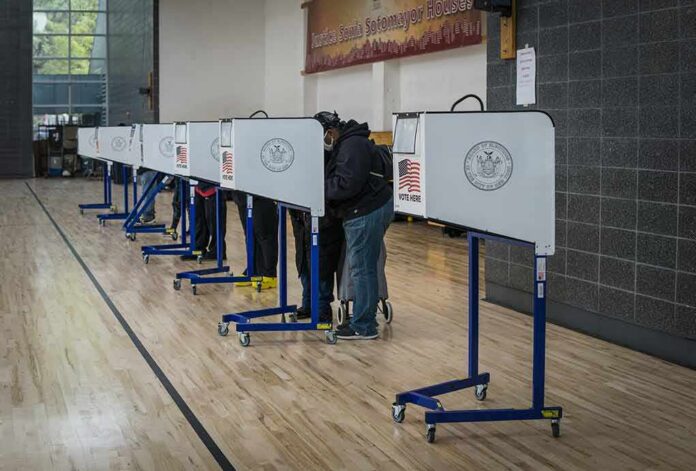
With weeks to go before voting ends, the Justice Department asked California to set aside thousands of mailed ballots tied to people it says are likely noncitizens.
Story Snapshot
- Justice Department filed a federal lawsuit after flagging more than 20,000 likely noncitizens on California’s voter rolls.
- Request asks counties to hold and verify associated ballots before any counting, not to discard them.
- California officials say a local review found many errors, including people who appear U.S.-born.
- Dispute blends election integrity, voter rights, and last-minute logistics in a high-stakes federal-state clash.
What DOJ Says It Found and What It Wants
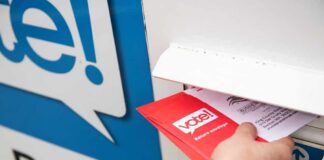
The Justice Department sued California in federal court on October 15, 2026. It said it identified more than 20,000 people it believes are likely noncitizens who were sent vote-by-mail ballots for a federal election. It asked the court to order counties to set aside any ballots linked to those names. It also asked for a process to confirm citizenship before counting. Officials said they worked with the Department of Homeland Security to assemble the list.
The filing stresses a narrow remedy. It does not call for destroying ballots. It calls for holding them while citizenship is checked, either by the state or with federal help. The government argues that counting an unlawful vote can cancel out a lawful one. That message connects with voters who feel basic standards are not being enforced. But the filing also uses the phrase “likely noncitizens,” which signals that status is not yet proven for each person.
How California Officials Are Responding
California leaders pushed back hard. The Secretary of State said she would not risk disenfranchising eligible voters based on accusations she called unsupported and likely inaccurate. Los Angeles County reported a preliminary review that flagged problems on the federal list. In a sample where birthplace was meaningfully reported, about 38.9 percent appeared to be born in the United States, which would indicate citizenship, according to court filings summarized by reporters.
State and county officials also cited timing and process concerns. They said the Justice Department delivered the list indirectly and then demanded action within 48 hours just three weeks before Election Day. They argued that matching incomplete voter records with imperfect immigration files can generate many false positives. They warned that a rushed segregation of ballots could violate court orders or state and federal election laws and block eligible votes.
The Core Conflict: Integrity Versus Error Risk
Both sides agree on a basic rule: only citizens can vote in federal races. The fight is over accuracy, timing, and control. Federal officials say the list is strong enough to pause counting until status is checked. California officials say early checks show the list may be too error-prone to justify holding ballots from eligible citizens. This dispute also tests federalism. A federal lawsuit is asking state-run election offices to change ballot handling weeks before results are due.
You're right about one thing, This is not a drill
🚨 CALIFORNIA’S ELECTIONS will be fair and transparent.@SenAlexPadilla helped build the system they are fighting over.
Under Padilla came the expansion and implementation of the election architecture I have spent months… https://t.co/ku6ZOGYSwm
— Christine Bish (@BishforCA) October 24, 2026
For voters, two questions matter most. First, how many listed people actually returned ballots that would be counted absent a court order? Second, how accurate is the federal list once each name is checked against birth records, naturalization, passports, or other proof? The public filings do not yet answer those points. That gap fuels shared frustration that the system cannot deliver fast, trusted facts when stakes are highest.
What To Watch Next
Watch the court’s decision on any emergency order. If the judge orders segregation and verification, counties will need clear steps and a tight timeline. If the court rejects the request, ballots will move through normal counting rules. Also watch whether the Justice Department releases more detail on its matching method and error checks. Transparent data could confirm the list’s value or show the need for a different fix before future elections.
Why This Resonates Across Politics
Conservatives see a promise to protect each lawful vote. Liberals see a threat that eligible voters could be delayed or blocked. Many Americans, across parties, see something else: a government that struggles to get the basics right. Sending ballots to the wrong people, or flagging citizens as noncitizens, both erode trust. People want rules that are firm, fair, and verified. They want proof, not spin, before anyone’s vote is held back or tossed.
Sources:
cbsnews.com, justice.gov, npr.org, politico.com, sfchronicle.com, usnews.com
© newsworthy.news 2026. All rights reserved.