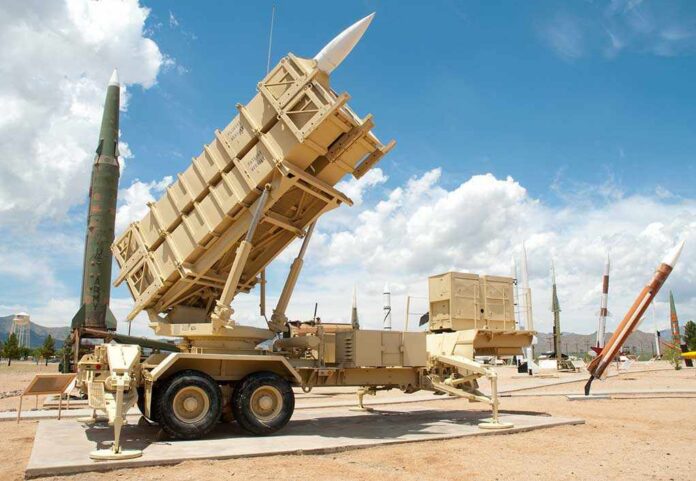
America’s missile shield is running on empty at the exact moment war has exposed how slowly it can be refilled.
Quick Take
- The Center for Strategic and International Studies says the Iran war cut U.S. interceptor stocks sharply, including Patriot and Terminal High Altitude Area Defense rounds.
- Analysts say some key missiles will take years to replace, not weeks or months, under current production plans.
- Reporting says the military is stretching expensive interceptors against cheap drones, which speeds up the stockpile squeeze.
- The exact size of the remaining stockpile is still an estimate, not a public Pentagon inventory release.
What the new inventory reports show
New reporting says the U.S. used up large shares of its high-end missile defense stock during the Iran war, leaving Patriot and Terminal High Altitude Area Defense interceptor inventories far below prewar levels. The Center for Strategic and International Studies says Patriot stocks fell from about 2,200 before the war to fewer than 827, while fewer than 278 Terminal High Altitude Area Defense interceptors remained after the surge in use. Military Times said the drawdown creates readiness risks if another crisis arrives before stocks recover.
The broader pattern is familiar in defense planning. Washington rarely publishes exact missile inventory counts, so outside analysts build estimates from public budget data, delivery schedules, and reported firings. That makes the debate hard to settle in public, but the direction of travel is clear: wartime demand burned through expensive interceptors faster than industry can replace them, and officials now face a long rebuild cycle while deterrence demands stay high.
Why replacement takes so long
The main problem is production speed. The Center for Strategic and International Studies says Patriot, Terminal High Altitude Area Defense, and Tomahawk missiles will take three or more years to return to prewar levels under current delivery plans, while Standard Missile-3 and Standard Missile-6 interceptors will take about two years. Defense Secretary Pete Hegseth has said replenishment will take “months and years… depending on the weapon system,” which matches the slow factory timelines described by analysts.
That lag matters because the military is not only replacing what it fired. It is also supporting allies, guarding multiple theaters, and keeping enough interceptors on hand for another major conflict. The result is a widening gap between how fast the United States can spend these weapons in combat and how slowly it can build them back. In practical terms, that is the kind of bottleneck that can shape war plans long before the next missile is launched.
The debate over severity and the SM-3 claim
One detail in the headline deserves care: the supplied reporting strongly supports the broader depletion story, but it does not clearly document a public, primary-source claim that the United States spent “half” of its SM-3 stockpile. The strongest evidence in the research package focuses on Patriot and Terminal High Altitude Area Defense interceptors, plus other munitions that were heavily used in the campaign. That means the SM-3 part of the claim is less certain than the wider readiness warning.
Question for people much smarter than me:
Doesn’t it make sense for us to license Patriot missile production to Ukraine, considering our anemic production timeline?
As part of the deal, we could require Ukraine to sell some quantity to allies, who are similarly facing supply…
— Thaaat Colin (@ThaaatColin) August 8, 2026
Even with that caveat, the policy problem is real. The United States is using very expensive interceptors against cheaper threats, and that cost gap worsens the strain on stockpiles. If the stockpile estimates are close to right, then the country faces a simple but uncomfortable choice: keep spending scarce missiles to defend against near-term threats, or accept more risk while factories catch up. That tension now sits at the center of the missile-defense debate.
Sources:
19fortyfive.com, cnn.com, aljazeera.com, militarytimes.com, thehill.com, tandfonline.com, fortune.com, usatoday.com, youtube.com
© newsworthy.news 2026. All rights reserved.