

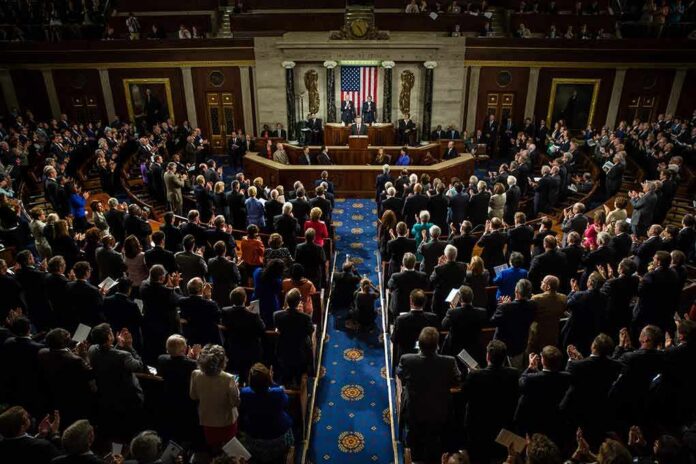
House Democratic Leader Hakeem Jeffries said Democrats want Congress to pass the Dream and Promise Act now—and called it only “the beginning,” not the end, of their immigration push.
Story Snapshot
- Jeffries urged Congress to pass the Dream and Promise Act during this Congress, calling it the starting point for reform.
- The bill is described as offering legal status and a path to citizenship for eligible Dreamers and others, but key details were not provided.
- Former Immigration and Customs Enforcement official Todd Lyons warned any “amnesty” move could clash with the administration’s rule-of-law stance.
- The public record lacks the bill text, costs, vote count, or scope of later steps Jeffries hinted at.
What Jeffries Said And Why It Matters
Hakeem Jeffries said the immigration system is broken and pressed Congress to pass the Dream and Promise Act during the current session. He called it the first step, not the last, in a larger plan. Reports describe the bill as a path to legal status and citizenship for some Dreamers and related groups. Jeffries framed the goal as fairness and restoring a “nation of immigrants” tradition. The comments set a clear marker for Democrats’ priorities heading into legislative talks.
Jeffries also used sharp language about enforcement, calling past actions a “violent mass deportation machine.” He signaled interest in “remedial assistance” for people he believes were treated unfairly, including some who held Deferred Action for Childhood Arrivals status. Coverage raised the idea that deported recipients might seek reentry or aid, but it did not define what “remedial assistance” would mean in practice, such as legal help, status fixes, or other remedies.
What Is Known And What Is Not
The reporting identifies the Dream and Promise Act but does not supply a bill number, full text, a cost estimate, or a detailed eligibility map. It does not list criminal bars, background checks, fee levels, or time-in-country rules. It also does not show committee action, a vote schedule, or bipartisan support. Jeffries said the bill is only the beginning, but the next steps—border measures, enforcement changes, or other legalization paths—were not described in the available material.
These gaps matter because details decide outcomes. How many people would qualify depends on the final cutoffs and screening rules. Costs hinge on fees, work requirements, and benefit access. Passage depends on votes in both chambers under Republican control. Without text, opponents can label the effort as sweeping “amnesty,” while supporters can argue it is limited and conditional. The lack of specifics gives both sides room to fill in the blanks with their own narratives.
How The Opposition Is Framing It
Former acting leader at Immigration and Customs Enforcement Todd Lyons said an amnesty-style deal would upset President Trump’s base and conflict with a rule-of-law message. He urged Congress to act, but warned that opening the door to amnesty would trouble supporters who expect strict enforcement. His stance previews likely resistance among enforcement-first lawmakers and officials who view broad legal status as rewarding unlawful entry.
🚨 NOW: Katie Miller just CALLED OUT Democrats over their priorities after the midterms!
They campaigned on AFFORDABILITY, but Hakeem Jeffries is already pushing legislation offering a pathway to citizenship for certain illegal immigrants.
Miller’s message? President Trump will… pic.twitter.com/YCjEhhd7Oo
— Ryan Fournier (@RyanAFournier) November 18, 2026
The Heritage Foundation likewise argues that legal status for the current undocumented population would reward illegal behavior, spur more unlawful crossings, and impose large public costs. That line of attack will surface in hearings and media as Republicans demand clear limits, strong screening, real border control, and worksite enforcement. Expect critics to compare any new bill to the 1986 law, claiming legalization without lasting enforcement fuels future waves.
Why This Touches A Shared Public Nerve
Americans across parties are frustrated that Washington talks tough but rarely solves big problems. Voters on the right see weak enforcement, high costs, and broken promises. Voters on the left see a system that traps long-settled families in fear and limbo. Both see leaders who posture for soundbites while crises drag on. Announcing a first-step bill without details invites suspicion that insiders will decide the fine print later, out of view, and ordinary people will pay the price.
To rebuild trust, Congress would need to publish the bill text, define who qualifies, set enforcement guardrails, and share neutral cost scores. Lawmakers would also need a clear floor path and transparent amendments. Without that, the fight becomes slogans about “amnesty” versus “fairness,” and the real trade-offs stay hidden. That cycle fuels the belief that elites protect themselves while leaving border communities, workers, and immigrant families to bear the burden.
What To Watch Next
Watch for a formal bill filing with a number, committee referral, and a public summary of eligibility, background checks, and limits. Look for a nonpartisan cost estimate and any link to border security or worksite verification. Track whether Republican leaders allow votes in committee or on the floor. Finally, follow whether Democrats define the “next steps” Jeffries mentioned or keep the scope open, which will drive the next round of political claims.
Sources:
thegatewaypundit.com, amnesty.nl, americanimmigrationcouncil.org
© newsworthy.news 2026. All rights reserved.