
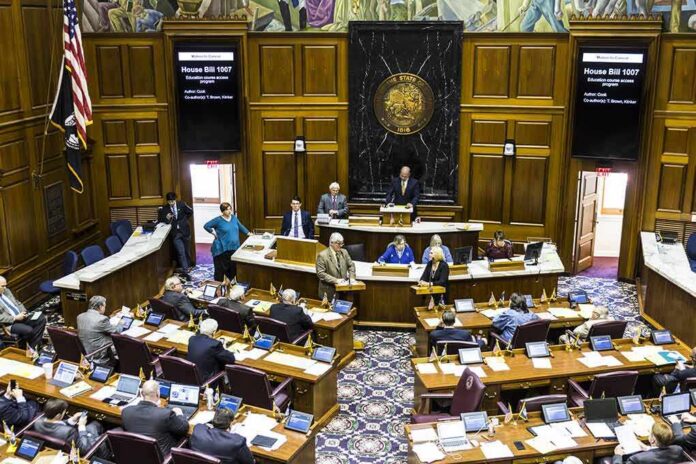
In a rare 62–33 vote, the Senate moved to speed up building power lines, pipelines, and data centers by rewriting major permitting rules.
Story Snapshot
- The Bipartisan American Affordability and Jobs Act changes how federal permits are reviewed.
- Backers say it keeps core environmental laws while cutting red tape.
- Opponents warn it narrows state clean-water powers and doubles some permit terms.
- The fight reflects years of gridlock over how to build faster without cutting safeguards.
What the Senate Passed and Why It Matters
The Senate approved the Bipartisan American Affordability and Jobs Act, a sweeping bill to speed permits for energy and infrastructure projects. The text shows direct changes to the National Environmental Policy Act, the Clean Water Act, and the Endangered Species Act. Supporters argue the bill streamlines steps and schedules to lower costs and unlock jobs, while keeping the main protections of those laws in place. The vote count signals broad, if uneasy, agreement to fix a slow, overlapping process.
The bill arrives after years of complaints from builders, unions, and communities that projects take too long. Past laws tried to fix this by setting timelines and creating a federal permitting council, yet delays stayed common. Research shows reviews often stretch for years, driven by complex studies, staff shortages, and lawsuits. Lawmakers now aim to remove repeat steps, set firmer clocks, and clarify who decides what, and when.
How the Bill Changes Environmental Reviews
Committee materials and bill text say the measure reforms, rather than replaces, the current review system under key environmental laws. The pitch is simple: keep the rules but make the path shorter and clearer. That includes tighter schedules, more coordinated reviews, and limits on revising applications late in the game. Backers say these steps give businesses certainty to invest in grids, factories, and broadband, while agencies still check air, water, wildlife, and historic resources.
Critics counter that “streamline” here means weaker oversight. Legal analysts and environmental groups say the bill narrows what states can weigh when they certify that a project will meet water standards under Section 401 of the Clean Water Act. They also warn that the bill extends some discharge permits from five to ten years, cutting how often terms can be updated as conditions change. These are concrete shifts that could tilt outcomes on pipelines and transmission lines.
States’ Rights, Local Voice, and the Data Center Surge
State officials and advocates argue the bill trims their authority to address runoff, erosion, and other construction impacts during water-quality reviews, especially for interstate projects. They say that would make it harder to protect wetlands and streams near big builds. Some senators also warn the bill shortens public input windows and limits local challenges, which could sideline communities that live with the projects after ribbon cuttings.
https://t.co/EKtULOqwiC US Senate has passed the BAAJA permitting reform bill by 62–33.#Energy #AI #DataCentres
— B2B Market Signal (@b2bmarketsignal) November 20, 2026
Provisions tied to data centers drew special focus. The bill’s supporters say it forces large users to pay their fair share for the power they need, easing strain on grids and ratepayers. Opponents say it could let centers use on-site natural gas with fewer checks, raising emissions and noise near neighborhoods. This clash captures the bigger tension: how to handle surging demand from artificial intelligence and cloud computing without passing costs and risks to everyone else.
Why Both Parties Keep Returning to Permitting Fights
Congress has tried fixes before, from the 2015 law that set up a permitting council to deadlines in later bills. Each round promised speed without cutting standards, yet court fights and slow studies kept piling up. This new bill repeats that bet: cleaner process, not weaker laws. But because it also narrows some state tools and extends some permits, it sets up the next round of court tests and state-federal turf battles.
The stakes are larger than one vote. America needs more wires, pipes, factories, and chargers to meet energy demand and keep prices in check. Voters across parties are tired of projects that take a decade and cost double. They are also tired of rules that seem to bend for insiders while locals get boxed out. This bill could cut delays and build needed stuff. It could also leave communities with fewer ways to say “fix this” before the concrete is poured.
What to Watch Next
House action, conference talks, and agency guidance will decide how these changes work in real life. Watch how courts read the new limits on state water reviews, how agencies enforce timelines, and how companies respond on siting and community benefits. If projects speed up without more spills, outages, or surprise costs, trust may rise. If not, expect another round of “reform the reforms” within a few years.
Sources:
townhall.com, epw.senate.gov, capito.senate.gov, whitecase.com, britt.senate.gov, barrons.com, enotrans.org, yahoo.com, steveahlquist.substack.com, acwa-us.org, waterkeeper.org, rhg.com, congress.gov
© newsworthy.news 2026. All rights reserved.