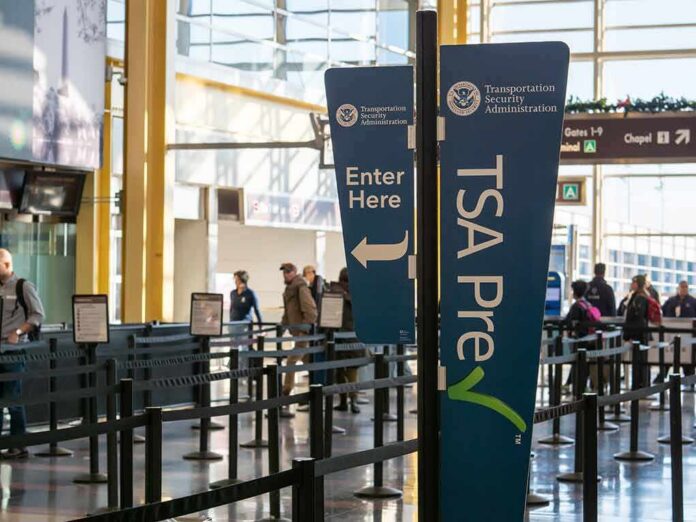
One airport phone search has turned into a test of how far the Fourth Amendment reaches at the nation’s gates.
Quick Take
- The Constitution protects “papers” and “effects” from unreasonable searches, and that baseline still matters at airports.
- Federal law also gives border officials broad power to search people and items at the border and its functional equivalent.
- International airports are treated as the functional equivalent of the border, which is why the case has legal weight.
- The Tunick dispute turns on whether the phone search was routine border enforcement or a more intrusive device search.
Why This Airport Search Matters
The dispute centers on Samuel Tunick’s claim that officers searched his phone at Hartsfield-Jackson Atlanta International Airport after first searching his luggage and diary. CNN reports that his lawyers say he asked for counsel, did not get Miranda warnings, and gave a code that wiped the phone after agents said they could search it without a warrant. The story has struck a nerve because it sits at the collision point between old border law and modern digital privacy.
That tension is not new, but phones make it sharper. The Constitution Annotated says federal officers may generally conduct warrantless searches at the border, and that rule also applies at the “functional equivalent” of the border, including international airports. Congressional Research Service material adds that border searches are still limited by reasonableness, and that more intrusive searches may need reasonable suspicion. That leaves room for a fight over whether a phone is just another item or something closer to a private archive.
The Legal Split Behind The Case
Older airport-search scholarship shows that courts have long treated airport screenings as Fourth Amendment searches, even when they are allowed under special exceptions. The same materials also show the government’s strongest reply: airport and border screening can be lawful without a warrant when it serves customs or safety goals. That is why supporters of broad search power can point to routine inspection rules, while privacy advocates argue that a smartphone deserves more protection than a suitcase or coat pocket.
Congressional Research Service says routine border searches may happen without a warrant and without individualized suspicion, but more intrusive searches may require at least reasonable suspicion. That distinction matters here because the available reporting does not fully show whether officers only looked at the phone by hand or used a deeper forensic method. It also does not settle whether the passcode entry was truly voluntary, coerced, or tied to the phone’s wipe. Those gaps make the legal analysis harder and the public debate louder.
What Both Sides Can Claim
Supporters of Tunick’s position can point to the Fourth Amendment’s promise of protection for “papers” and “effects,” plus legal writing that treats digital devices as different from ordinary containers. They can also note that Pacific Legal Foundation says Customs and Border Protection’s 2018 directive still requires reasonable suspicion for the most intrusive device searches. On that view, a phone search at an airport should not be treated like a quick look through a bag.
Supporters of the government can answer that border doctrine remains broad and that airports sit inside it. They can also cite Congressional Research Service language saying the border exception applies at international airports and can permit warrantless searches. The practical problem is that both views can sound plausible to the public. One side sees a routine security step. The other sees a digital search that reached deep into private life with too little restraint.
Why The Debate Keeps Growing
This case fits a larger pattern that keeps returning in federal courts and public debate. The law has not settled on a single rule for phones at the border, and the materials provided here show tension between broad border-search authority and stronger privacy claims for electronic devices. That uncertainty matters because airports are common entry points, and millions of travelers carry devices filled with messages, photos, contacts, and documents that used to live in desk drawers or filing cabinets.
The result is a familiar split in American life. Government agencies want flexible power at the border. Civil-liberties lawyers want clear limits on searches that reach into digital life. Tunick’s case matters because it tests whether the old border rule still works in a world where a phone can hold far more private material than any bag ever could. If courts accept that difference, airport searches may face tighter limits. If they do not, the border will remain one of the easiest places for the government to search first and explain later.
Sources:
zerohedge.com, constitution.congress.gov, nap.nationalacademies.org, ojp.gov, nationalacademies.org, billofrightsinstitute.org, michiganlawreview.org, cdn.ca9.uscourts.gov, pacificlegal.org
© newsworthy.news 2026. All rights reserved.