
Russia and Belarus are rehearsing battlefield nuclear war in Europe’s backyard, and the American people deserve straight answers about what it really means for our security and our wallets.
Story Snapshot
- Moscow and Minsk ran Zapad‑2025, a nuclear‑linked drill involving about 13,000 troops, hypersonic missiles, and simulated nuclear strikes near NATO borders.[1][2][4]
- Belarus and Russia insist the exercises were “defensive,” but scenarios, locations, and nuclear planning procedures tell a more alarming story.[1][2][3]
- The drills featured rehearsal of non‑strategic nuclear use, deployment of the Oreshnik missile system, and operations near Poland and Lithuania.[2][3][4]
- NATO states were put on alert, underscoring how quickly a regional exercise can escalate into a broader confrontation if mismanaged.[2][4]
Zapad‑2025: Nuclear-Laced War Games On NATO’s Doorstep
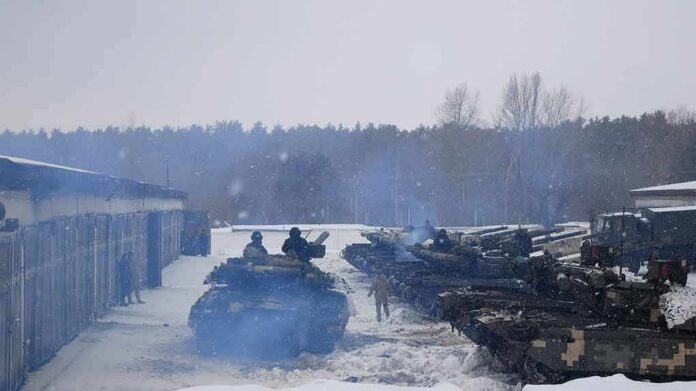
Russia and Belarus held the Zapad‑2025 exercise from September 12 to 16, with roughly 13,000 troops operating across Belarus, western Russia, and the Baltic and Barents seas.[1][2] Belarusian Defense Minister Viktor Khrenin said maneuvers would concentrate around Barysaw, about 46 miles from Minsk, while smaller units trained near the borders with Poland and Lithuania to repel a “hypothetical enemy.”[1] Officially, Minsk described the drills as testing their ability to repel attack and retake lost territory, not prepare aggression against a named state.[2]
Belarusian authorities framed Zapad‑2025 as a routine defensive event, part of a regular series of quadrennial exercises, emphasizing planning, command‑and‑control, and decision‑making.[3] Officials publicly highlighted that the drills would be “scaled back” compared with earlier massive maneuvers and held deeper inside the country, while still acknowledging some activity near western borders.[2] Minsk also invited observers from nine North Atlantic Treaty Organization (NATO) countries, including United States officers, presenting this as proof of transparency and reassurance to neighboring states.[2]
𝗕𝗥𝗘𝗔𝗞𝗜𝗡𝗚 Belarus has launched battlefield nuclear weapons drills in coordination with Russia.
Belarus confirmed on May 18 that its military has begun exercises focused on the deployment and operational use of tactical nuclear weapons stationed inside the country.
The… pic.twitter.com/1G1n0GM4I5— Bagelis Poulos (@BagelisPoulos) May 18, 2026
Nuclear Procedures, Oreshnik Missiles, And Urban Combat Training
Behind the defensive rhetoric, the nuclear component of Zapad‑2025 is what rattled capitals from Warsaw to Washington. Belarusian chief of staff Pavel Muraveiko said the sides practiced “planning and the consideration of the application of non‑strategic nuclear weapons” and evaluated deployment of the mobile Oreshnik missile complex.[3] Belarusian President Alexander Lukashenko confirmed that Belarusian forces rehearsed the launch of tactical nuclear weapons alongside Russian units, moving beyond paper drills into explicit nuclear operations training.[3]
Defense reporting notes that Oreshnik is an intermediate‑range, hypersonic ballistic missile first revealed in a Russian strike on Ukraine in November 2024, and that Moscow plans to station such nuclear‑capable systems in Belarus.[2][3][4] During the exercise, Russian forces also used the nuclear‑capable Iskander‑M short‑range ballistic missile system in nearby Kaliningrad, further tightening the vise around NATO’s eastern flank.[3] Muraveiko said Russian troops shared frontline lessons from Ukraine, including drone warfare, urban fighting, assault on populated areas, and countering “illegal armed groups,” sharpening Belarusian forces for modern high‑intensity conflict.[2]
From “Defensive” Messaging To Strategic Nuclear Signaling
The same facts that Minsk presents as defensive readiness look very different when placed in context. Zapad‑2025 unfolded near the borders of Poland and Lithuania, both NATO members, with scenarios explicitly involving retaking lost territory and operations in populated areas.[1][2] The Moscow Times reported that NATO countries were put on alert and that Poland and its neighbors had already conducted their own drills earlier in the summer, reflecting serious concern that these “exercises” could mask coercive signaling or worse.[2][4]
Analysts point out that the last major series of Russia‑Belarus drills preceded Russia’s 2022 full‑scale invasion of Ukraine, creating a credibility problem for official assurances today.[4] Arms‑control observers note that Russia formally extended its nuclear umbrella over Belarus and has been integrating Belarusian territory into its non‑strategic nuclear posture since at least 2023, without releasing detailed exercise orders or after‑action reports.[3][5] That secrecy allows Moscow to showcase nuclear‑capable systems and procedures while leaving the West guessing whether the “hypothetical enemy” is really just a coded reference to NATO.[1][2][3]
Why It Matters For American Conservatives And U.S. Policy
These drills raise three core issues for Americans who care about national security, fiscal sanity, and constitutional government. First, nuclear signaling near NATO borders increases the odds of miscalculation that could drag the United States into another open‑ended European crisis, with Washington pressured to send more troops, money, and weapons abroad instead of securing our own border and rebuilding domestic strength. NATO’s heightened alert posture during Zapad‑2025 shows how quickly foreign decisions can generate American obligations.[2][4]
Second, Russia’s willingness to place nuclear‑capable systems like Oreshnik and Iskander‑M in Belarus underlines how serious adversaries are about hard power, while many Western elites kept chasing climate schemes and “woke” social engineering instead of investing in credible deterrence.[3][4][5] Third, the lack of transparency from Moscow and Minsk underscores why U.S. leaders must be cautious about any calls for new arms‑control deals that constrain American capabilities more than those of authoritarian regimes that hide their real plans.[3][5] Careful strength, not naïve trust, is the only language nuclear blackmailers respect.
Sources:
[1] YouTube – Zapad 2025 | Russia & Belarus Unleash Massive Nuclear-Linked Drill
[2] Web – Russia and Belarus Stage Simulated Nuclear Strike During Zapad …
[3] Web – Belarus, Russia Practice Nuclear Operations
[4] Web – Russia-Belarus military drills start this week. Here’s what to know
[5] Web – Nuclear weapons in Belarus: What we Know – ICAN