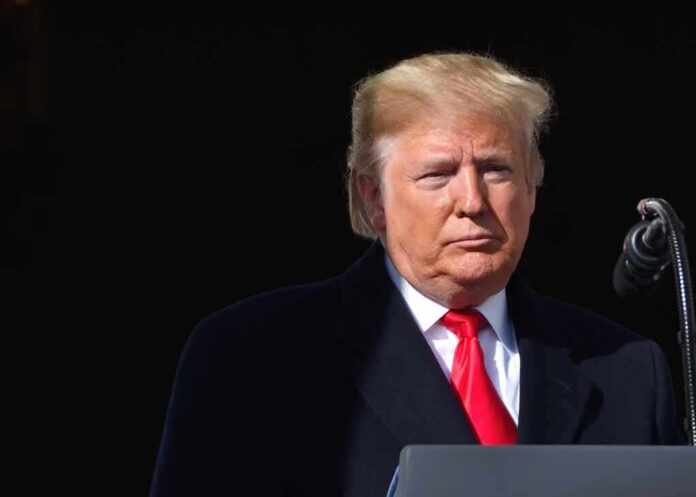
President Trump’s “biggest oil deal in world history” promises cheaper gas and U.S. control in Venezuela, but experts and Venezuela’s own constitution raise hard limits on both claims.
Story Snapshot
- Trump says the U.S. secured majority control over 65 billion barrels in Venezuela and future lower gas prices.
- Venezuela touts huge investment potential from 17 fields tied to the deal.
- Analysts say the deal will not cut U.S. gas prices soon, and output gains are uncertain.
- Venezuela’s constitution says oil deposits are state property and non-transferable.
What The White House And Caracas Say Is In The Deal
President Trump announced that the United States reached an agreement with Venezuela that secures majority U.S. control over more than 65 billion barrels of proven oil reserves. He said the plan would more than double U.S. oil reserves and lead to lower gas prices over time. A United States official described the setup as a new private venture with an experienced operator in Venezuela. Venezuela’s government said 17 fields could draw $100 billion in investment and large tax revenue.
Coverage from major outlets repeated the White House line that this is a generational energy win. Supporters framed the move as a boost to United States energy security and a setback for socialism. Backers also linked the promise of lower prices to long-term control of more supply. Public documents tied to the deal, such as a signed contract or term sheets, were not released. That leaves the exact ownership, timelines, and enforcement terms unclear based on public records so far.
Why Cheaper Gas Soon Is Unlikely
Energy economists and market analysts across several outlets say pump prices will not fall soon because of this deal. One analyst called the idea of near-term relief “absurd.” Another said a significant production increase is highly unlikely and would not affect the world market in the short term. Others noted that current prices reflect geopolitics and limited refining capacity, not access to far-off reserves in Venezuela.
Analysts also point to the long lead time between reserves on paper and barrels that refineries can run. Venezuela’s oil sector needs major repairs, new investment, and steady governance. Its crude is often heavy and hard to refine. Those steps take years, not months. Even if production rises, the chain from new output to United States gasoline prices runs through shipping, global benchmarks, and refinery margins. That weakens any quick, direct impact at the pump.
The Legal Wall In Venezuela’s Constitution
Venezuela’s constitution states that mineral and hydrocarbon deposits are the property of the Republic, part of the public domain, and not transferable. It also reserves petroleum activity to the state. These clauses pose a direct challenge to any claim of majority foreign control over reserves. Past disputes in Venezuela have turned on these rules, and critics cite them to question the deal’s legal footing absent clear legislative approval.
Reporters and lawyers say the public lacks a contract text, company structure, or legislative record that show how the deal overcomes those rules. A United States official described a private joint venture with an operator on the ground, which can be lawful under certain service or profit-sharing models. Still, the details matter. Without the signed terms, both supporters and critics are filling gaps with their own narratives, which risks more confusion over what was actually agreed.
What This Means For Americans Watching Prices And Power
For families worried about high fuel costs, this announcement does not change near-term budgets. Gas prices move with global supply, demand, and refinery capacity, not press releases. For citizens on both the right and left who suspect backroom deals, the missing paperwork and unnamed partners will feel familiar. Clear terms, timelines, and oversight would help the public judge whether this is a sound energy play or another political headline.
For those focused on American strength, the deal signals a push to lock in future supply and influence. For those worried about sovereignty and the rule of law, Venezuela’s constitutional limits raise red flags. Both views can be true at once. The decisive tests now are contract transparency, legal compliance in Caracas, credible investment, and measurable production. Until those appear, expectations for quick price relief should stay low, and scrutiny should stay high.
Sources:
youtube.com, bbc.com, abcnews.com, politico.com, nbcnews.com
© newsworthy.news 2026. All rights reserved.