As Pakistan’s rulers blackout the internet and jail protesters in Kashmir, millions see yet another reminder that when people challenge the powerful, the system often treats basic rights as a threat, not a promise.
Story Snapshot
- Pakistan-administered Kashmir is under a sweeping internet shutdown and security lockdown tied to protests over elections and basic rights.
- Rights groups report mass arbitrary arrests, deadly force against civilians, and a protest movement branded “terrorist” under anti-terror law.
- Officials claim they are responding to violent unrest, but they offer little hard evidence to justify the scale of blackout and detentions.
- The crisis fits a wider pattern in both India and Pakistan: use of security laws and digital blackouts to crush dissent in Kashmir.
What Triggered The Latest Crisis In Pakistani Kashmir
In early June, Pakistan-administered Azad Jammu and Kashmir erupted after anger over election rules and long-running economic stress boiled over into mass marches and strikes. Protesters challenged a plan to reserve legislative seats for refugees from Indian-held Kashmir and raised basic grievances over jobs, electricity costs, and food prices, saying the system favors elites while ordinary families struggle. Cities saw roadblocks, shuttered shops, and crowds demanding fair representation and relief from rising costs.
Regional authorities answered by declaring the key protest coalition, the Jammu and Kashmir Joint Awami Action Committee, a banned “proscribed organization” under the Azad Jammu and Kashmir Anti-Terrorism Act. On the same day, they ordered all internet and mobile services cut off across the region, initially until June 12, just ahead of a major protest march the group had planned. This move turned a political dispute into a complete information blackout for ordinary residents.
Internet Blackout, Roadblocks, And Daily Life In Limbo
Mobile data and broadband services across Pakistani Kashmir have been suspended since June 5, leaving people cut off from news, work, and even emergency help. Local reports say roadblocks and security checkpoints now ring many towns, making travel hard and choking off trade. Families cannot easily contact loved ones, students lose online classes, and hospitals struggle to share data, all because the state chose to silence the entire region in the name of “order.”
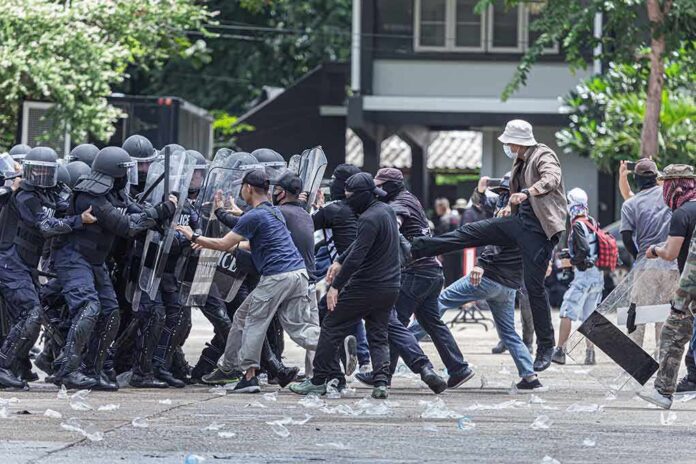
Amnesty International calls this a “violent and sweeping crackdown” that includes the internet shutdown, mass arbitrary arrests, and lethal use of force against protesters. A human rights situation report from the protest movement’s own rights cell describes a grave crisis between June 5 and June 12, citing the blackout, widespread detentions, blocked medical access, and accounts of beatings and disappearances. These are the kinds of measures many Americans fear when they talk about the “deep state” putting control over citizens ahead of basic freedom.
Deaths, Arrests, And The Battle Over The Narrative
Casualty figures are messy, which itself worries observers. Reuters reported at least 11 people killed in one night of clashes in Rawalakot. Sky News cited officials saying around 24 civilians died over nearly two weeks of unrest, with four police officers killed, 97 officers wounded, and 515 people detained. Indian and diaspora outlets claim even higher tolls, suggesting more than 30 deaths since the protests began, but hard official data has not been fully released.
Police and government sources say some protesters were armed and attacked officers with sticks, stones, and even firearms, arguing that strong action was needed to restore order. That claim, if true, shows how street anger can turn violent when people feel unheard. But authorities have not shared detailed arrest records, body camera footage, or independent investigations to prove that every killing and detention was necessary or lawful. Without that evidence, the story looks to many like yet another government hiding behind “security” to crush dissent.
Pattern Of Crackdowns And Why It Matters Beyond Kashmir
The United Nations and major legal groups have warned for years that both India and Pakistan use security framing, anti-terror laws, and communication shutdowns to manage unrest in Kashmir, with “chronic impunity” for abuses. Past reports describe unlawful killings, enforced disappearances, torture, and long internet sieges on both sides of the Line of Control. Kashmir is not just one crisis; it is a long-running system where power often beats rights.
🚨 Reports from Rawalakot in Pakistan-occupied Jammu & Kashmir.
More than 12 people are reported dead after Pakistani forces opened fire during the unrest.
There are also allegations that sniper fire was used as the crackdown continues. pic.twitter.com/0NALjVR3pC
— The Alternate Media (@AlternateMediaX) July 28, 2026
For Americans watching from afar, this matters for two reasons. First, these tactics echo fears at home about how far governments will go to silence unwanted voices, whether through surveillance, censorship, or labeling protest as “terrorism.” Second, the Kashmir story shows how deep frustration on left and right can grow when people believe a small group of rulers and bureaucrats protect their own positions while everyday families pay the price. When internet shutdowns, mass arrests, and vague anti-terror labels become normal tools of rule, trust in government dies a little more each time.
Sources:
pjmedia.com, amnesty.org, eurasiareview.com, socialistworker.co.uk, youtube.com, timesofindia.indiatimes.com, bbc.com, en.wikipedia.org, aljazeera.com, apnews.com, npr.org, fidh.org, icj.org, ohchr.org, assets.zyrosite.com
© newsworthy.news 2026. All rights reserved.