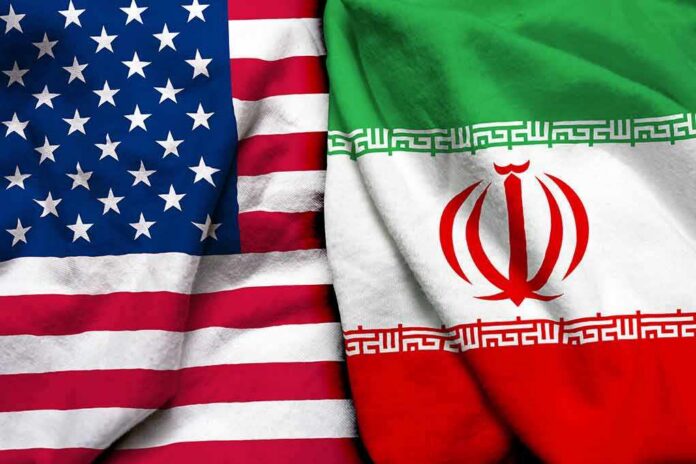
Iran publicly tied reopening the Strait of Hormuz to a seven-day cease-fire plan, and President Trump has not accepted the terms as talks stall and reports point to possible strikes after the midterms.
Story Snapshot
- Iran pitched a seven-day framework linking a cease-fire to reopening the Strait of Hormuz and later nuclear talks.
- Trump said he is “not satisfied” with Iran’s offer as negotiations continue without a breakthrough.
- Reports say Trump rejected the plan and told aides airstrikes could resume after midterms, citing U.S. officials.
- Iranian leaders warned the strait stays shut until their conditions are met, keeping energy markets on edge.
What Iran Put on the Table
Iran’s foreign minister described a seven-day plan delivered through intermediaries during United Nations meetings in New York. The plan would phase steps so that fighting pauses first, the Strait of Hormuz reopens on day seven, and nuclear talks restart after that. Reports describe conditions that include changes to U.S. sanctions and constraints on military actions, showing this is not an unconditional halt but a trade of steps over a week.
Iranian officials reinforced that the offer is conditional. One senior figure said the strait will remain closed until Iran’s conditions are met, which include broad changes to pressure on Tehran. That stance underlines why this is a bargaining framework, not a signed deal ready to execute. It also explains why oil markets have been skittish, since a closed strait threatens global shipping lanes and higher fuel prices for families already stretched by rising costs.
How the White House Responded
President Trump has voiced distrust of Iran’s offer. He told reporters he is “not satisfied” with the proposal, while also saying talks remain ongoing. Coverage summarizing U.S. officials says Trump rejected the seven-day plan and told aides he expects bombing to resume after the midterm elections. That claim rests on anonymous sources, not a public order or posted directive, which limits what the public can verify today.
Reuters reported the two sides remain far apart and recent meetings produced no breakthrough. That tracks with the conditional, phased nature of the plan and the gap over sanctions, blockades, and the timing of nuclear talks. In short, both sides are signaling toughness in public while leaving some room to keep talking in private. This pattern is common in past U.S.–Iran crises when neither side wants to look weak but both want options.
What This Means for Americans
Families feel this fight at the gas pump. A shut or threatened Strait of Hormuz can push fuel prices higher, hitting budgets already strained by inflation. Many readers on the right blame years of policy that raised energy costs. Many on the left worry conflict deepens inequality. Both see a federal system that lurches from crisis to crisis while insiders protect their jobs. A deal that is only a press leak is no help to truckers, commuters, or small firms that need stability to plan.
National security also hangs in the balance. The United States has said Iran cannot get a nuclear weapon, and that red line shapes every decision. Iran’s offer delays full nuclear talks until after immediate steps on the strait and fighting. The White House questions if Tehran would really deliver. Without a public draft, citizens cannot judge the trade-offs. That secrecy fuels distrust across the spectrum and feeds the sense that the “deep state” guards the process from voters.
The Stakes: War Timelines and Election Timelines
Reports that airstrikes could resume after the midterms add a hard political edge. If true, it would place military timing near an election cycle, which alarms people who fear leaders put politics first. Because that detail comes from unnamed officials, it should be treated as reporting to watch, not settled fact. What is certain is that both sides are preparing for next steps while the strait stays contested and markets watch every headline for cues.
Here is the bottom line for now. Iran made a conditional, seven-day offer tied to reopening a vital waterway and restarting nuclear talks. President Trump has not accepted it and has voiced clear doubts. Negotiations continue, with no breakthrough. Until leaders publish the actual terms or announce a verified pause, expect more brinkmanship, shaky prices, and another reminder that Washington’s closed-door habits keep the public guessing instead of informed.
Sources:
iranintl.com, nytimes.com, nypost.com, independent.co.uk, cbs12.com
© newsworthy.news 2026. All rights reserved.