
A single volunteer in Oxford just took the world’s first Bundibugyo Ebola vaccine while the outbreak it targets still has no approved protection or cure.
Story Snapshot
- A 37-year-old UK volunteer is the first person to receive a Bundibugyo Ebola vaccine in a human trial.
- The shot was built in about eight weeks using the same platform as the AstraZeneca Covid-19 vaccine.
- The Bundibugyo Ebola outbreak in Congo and Uganda has killed over 1,000 people and has no approved vaccine or treatment.
- The trial will only test safety and immune response in 50 healthy adults, not real-world protection yet.
First human test of a Bundibugyo Ebola vaccine
Oxford University has begun the first human trial of a vaccine made specifically for the Bundibugyo strain of Ebola, and a 37-year-old man from the United Kingdom named Ed Hunt is the first person in the world to receive it. He volunteered after seeing coverage of the deadly outbreak in the Democratic Republic of the Congo, saying he wanted to help in some way. The trial will enroll about 50 healthy adults, aged 18 to 55, to test the shot.
Researchers in Oxford say they built the new vaccine in roughly eight weeks, using the same basic technology behind the AstraZeneca Covid-19 vaccine. The candidate, called ChAdOx1 BDBV, uses a viral vector platform that was already proven for other diseases, which helps speed development and lower cost. A spokesman told reporters the first dose was given to Hunt on a Friday in Oxford, marking a major moment in the global response to this outbreak.
Outbreak driving the urgent push for new tools
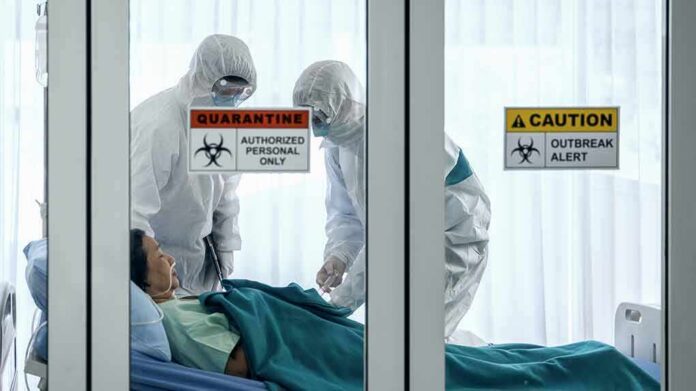
The Bundibugyo strain is fueling a fast-moving Ebola outbreak in the Democratic Republic of the Congo and Uganda, killing more than 1,000 people since it was detected in May, according to the World Health Organization. This is the seventeenth Ebola outbreak in Congo’s history, but only the third caused by Bundibugyo, which doctors say is rarer and harder to spot. World Health Organization chief Tedros Adhanom Ghebreyesus warned the outbreak has grown faster than any earlier Ebola outbreak on record.
Cases remain focused in Congo’s mineral-rich, conflict-heavy northeast, but infections have now been found in four other provinces as well. Armed groups, weak health systems, and poor roads all slow basic response steps like contact tracing and safe burials, making it easier for the virus to spread unchecked. The Africa Centres for Disease Control and Prevention has declared the outbreak a continental public health emergency, highlighting its wider risk for the region.
Why this vaccine matters, and what it does not promise yet
Unlike the more common Zaire strain of Ebola, Bundibugyo currently has no approved vaccine or specific treatment, which leaves frontline workers with only classic public health tools: rapid case finding, isolation, contact tracing, and infection control. That gap is why a Bundibugyo-specific vaccine is a major scientific step, even at a very early stage. The new Oxford trial is phase 1, which means it is designed to check basic safety and whether the shot triggers an immune response, not whether it truly protects people in an outbreak.
The Serum Institute of India has already manufactured and stockpiled around 620,000 doses of the experimental vaccine, and supplied 4,000 doses for this trial, in case later studies and emergency use move forward. That scale of advance production can sound like a ready-made solution, but real-world proof will still require larger trials in or near outbreak zones to see if vaccinated people avoid infection and severe disease. Until then, officials stress that traditional measures, not this new jab, remain the core of outbreak control.
Trials, treatments, and trust in a time of crisis
Alongside the Oxford work, the World Health Organization says a large treatment trial has started in Congo to test antibody therapy and the antiviral drug remdesivir in more than 1,000 Bundibugyo patients. There are enough supplies to continue treatment if results are positive, which could give doctors at least one proven option for those who fall ill. Together, the treatment trial and vaccine trial show the scientific system moving fast, but they do not erase the fact that both tools are still experimental.
A major Ebola outbreak is currently spreading across the Democratic Republic of the Congo and Uganda, prompting the World Health Organization to declare a Public Health Emergency of International Concern. This 2026 epidemic is being driven by the rare Bundibugyo virus strain pic.twitter.com/RlPdcEoRhN
— Afridiaspo.net (@Afri_diaspo) July 23, 2026
For many Americans and Europeans watching from far away, this can feel like one more example of elites making high-stakes decisions while regular people struggle with basic costs and safety at home. At the same time, both conservatives and liberals often agree that fighting deadly outbreaks overseas matters, because diseases cross borders and unstable regions can fuel wider crises. The key tension is trust: people see rapid vaccine and drug rollouts and worry that hard questions about safety, profit, and priority are not being asked out loud.
Sources:
insiderpaper.com, who.int, news.un.org, msf.org, eeas.europa.eu, cdc.gov
© newsworthy.news 2026. All rights reserved.