A Democratic lawmaker’s call for Supreme Court ethics reform challenges constitutional principles, igniting conservative backlash.
Story Snapshot
- U.S. Rep. Jasmine Crockett criticizes Supreme Court ethics at MoveOn event.
- Her remarks spark viral debate and partisan media coverage.
- Crockett’s rhetoric highlights ongoing tensions over judicial accountability.
- Conservative commentators argue Congress cannot regulate Supreme Court ethics.
Crockett’s Controversial Critique of the Supreme Court
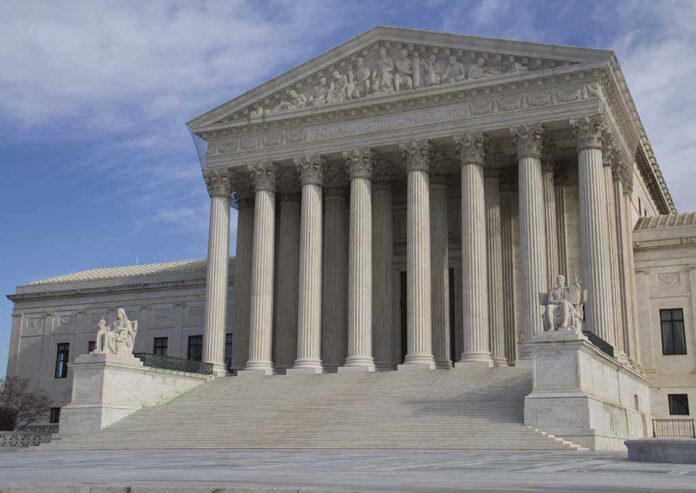
In July 2025, U.S. Representative Jasmine Crockett (D-TX) stirred national controversy with her remarks during a MoveOn event in Phoenix. Her speech, which included sharp criticisms of former President Donald Trump and the U.S. Supreme Court, quickly gained traction online. Crockett accused the Supreme Court of lacking proper ethics safeguards and called for legislative measures to address these concerns. Her statements have polarized audiences, with conservatives questioning her understanding of constitutional law.
The response from the media was swift and divided, reflecting ongoing partisan tensions. Conservative outlets emphasized Crockett’s perceived ignorance of constitutional limits, while progressive voices highlighted the Supreme Court’s need for accountability. The debate underscores the broader political struggle over judicial independence and the boundaries of congressional power in regulating the judiciary.
Historical Context and Political Dynamics
Jasmine Crockett, a Democratic congresswoman and civil rights attorney from Texas, has been a vocal critic of Republican policies. She gained recognition for her role in the 2021 Texas House quorum break protesting restrictive voting laws. The Supreme Court itself has faced increased scrutiny over ethics, particularly following controversies involving justices accepting undisclosed gifts, prompting demands for formal ethics codes. These developments set the stage for Crockett’s contentious speech.
The backdrop of Crockett’s remarks is a period of heightened partisan tension regarding the Supreme Court’s perceived ideological tilt. Previous attempts to impose ethics codes on justices have failed due to their self-policing tradition. While some lawmakers, like Sen. Sheldon Whitehouse (D-RI), have advocated for reform, constitutional questions about Congress’s authority to regulate the judiciary remain unresolved.
Constitutional Debate and Partisan Reactions
Crockett’s call for Supreme Court ethics reform has intensified the constitutional debate over Congress’s regulatory power. Legal scholars, such as Jonathan Turley, argue that the Constitution does not grant Congress the authority to impose ethics rules on the Supreme Court. Justice Samuel Alito has echoed this view, claiming that only a constitutional amendment could enable such oversight. Despite these challenges, progressive groups insist that congressional oversight is necessary to maintain public trust in the judiciary.
The incident has significant implications, both in the short and long term. In the immediate aftermath, it has drawn media attention to Crockett and the issue of Supreme Court ethics, further polarizing public discourse. Long-term effects could include sustained pressure for judicial ethics reform, though significant constitutional hurdles remain. This ongoing debate highlights the complex interplay between judicial independence and congressional oversight, with potential ramifications for future legislative efforts and judicial nominations.
Sources:
Encyclopaedia Britannica: Jasmine Crockett profile