
A Black journalist says she was hit with racist slurs and monkey noises while working a Metallica concert, challenging the idea that big shows are always safe and apolitical.
Story Snapshot
- Laina Dawes described being called the N-word and mocked with monkey noises at a Metallica show while on assignment.
- She later said it was the most she had ever been called that slur at a metal show.
- Dawes is an author and researcher on race and gender in heavy metal.
- The claim comes as James Hetfield says Metallica concerts avoid politics and focus on music.
Journalist’s Account of Abuse at a Metallica Concert
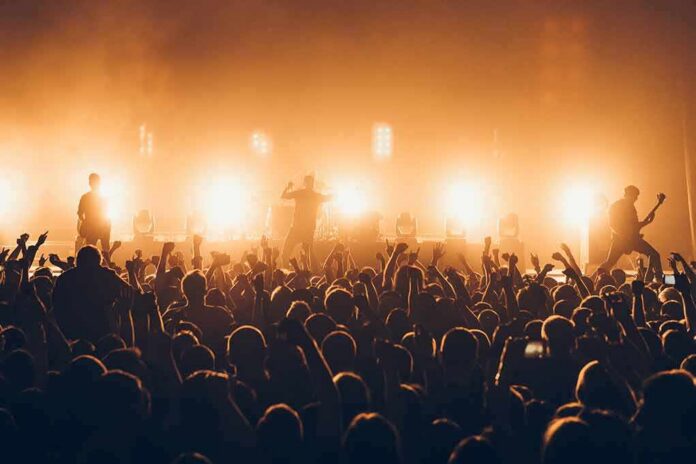
Canadian music journalist Laina Dawes says men made monkey sounds and called her the N-word while she covered a Metallica concert in Toronto. She told Global Television’s “16×9” the show took place at the Air Canada Centre in 2009. She said the scene was “totally insane,” with several people using the slur as she walked by while working the event. Her account is a first-person description of two forms of racist abuse, heard during a mainstream arena show.
Dawes later echoed that experience in a separate public statement. She said she photographed Metallica at a concert and had never been called that slur so many times at a metal show, adding that one man made monkey noises. She linked the experience to a view that politics are always present in metal, even when people deny it. The date she referenced later differs from the 2009 Toronto detail, a point not resolved in the available material.
Who Laina Dawes Is and Why Her Perspective Matters
Dawes is the author of What Are You Doing Here?: A Black Woman’s Life And Liberation In Heavy Metal. She has reported and researched race, gender, and identity across heavy metal, hardcore, and punk. Global News identified her as a journalist and photographer who examines Black women’s experiences in the scene. An interview also highlights her view that mainstream metal spaces can feel more exclusionary than underground shows, shaping how some fans and workers move through concerts.
Other reporting places her account within a pattern of incidents she has described over the years. Coverage notes that she has faced threats and items thrown at shows, and it describes another episode where a man used an explicit slur as she moved through a crowd. These stories do not prove rates of abuse at any one band’s concerts, but they show that harassment can occur in large public venues with loud, dense crowds and limited oversight between songs.
Context: Music, Politics, and Safety in Big Crowds
Recent coverage quotes Metallica frontman James Hetfield telling fans that the band avoids politics at its shows. He said politics and religion divide people and that the band’s focus is love, energy, and heavy music. Dawes’s account spotlights a different layer of the concert experience: not the band’s message, but the behavior in the crowd. For many fans, safety and dignity matter as much as the set list in shaping whether a show brings people together.
Heavy metal has long grappled with questions about race and belonging. Scholars and journalists describe the scene’s public image as heavily white and male, with reports of racism, sexism, and gatekeeping recurring in studies and fan accounts. That does not mean most fans engage in abuse, nor that any one band’s audience is defined by it. It does mean that claims like Dawes’s fit a problem researchers take seriously across the culture.
What This Means for Fans, Venues, and Bands
Fans who love the music want shows where anyone can attend without fear or ridicule. Venues and promoters set the tone with clear rules, visible staff, and fast responses when abuse happens. Bands can help by backing codes of conduct and reminding crowds that harassment is not welcome. Dawes’s account calls for practical steps that protect speech, protect fun, and protect people. That shared goal crosses politics and honors the basic promise of a ticketed public event.
Sources:
twitchy.com, blabbermouth.net, allthecoresandmore.com, latimes.com, loudersound.com, newsweek.com
© newsworthy.news 2026. All rights reserved.