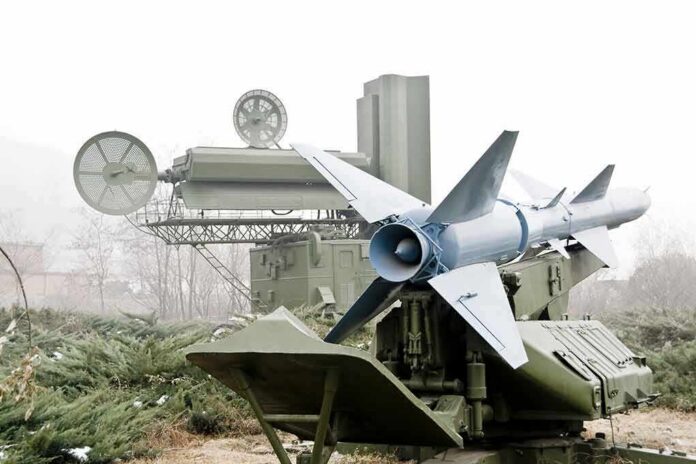
U.S. air defense stockpiles have been drawn down fast enough that Patriot interceptors may now number fewer than 800.
Quick Take
- Center for Strategic and International Studies estimates put the Patriot stockpile at **759 to 827** interceptors, down from about 2,330 before the Iran war.
- The same reporting says the U.S. THAAD stockpile fell from 452 before the war to **234 to 278** remaining.
- CNN reported that senior military sources described the munitions picture as “dangerously low” after heavy wartime use.
- Reuters reported that the Pentagon moved to boost Patriot and THAAD parts production as inventories tightened.
Patriot Stocks Fell Below Pre-War Levels
New reporting based on Center for Strategic and International Studies analysis says the U.S. Patriot interceptor stockpile has fallen sharply during the war with Iran. The latest estimate places the inventory at 759 to 827 missiles, down from about 2,330 before the conflict began, according to AP and ABC News coverage of the study. That is a steep decline for one of the main systems used to protect U.S. forces and allies from ballistic missile attacks.
The report also shows that the drawdown did not stop at the first round of fighting. AP said the Patriot stockpile had already dropped to 1,030 by the April ceasefire, then fell further after later strikes. Military Times said CSIS estimated the U.S. had expended about 65% of its Patriot inventory, leaving fewer than 1,000 interceptors. The spread between 2,200 and 2,330 in pre-war estimates reflects different variant counts, but both baselines point in the same direction: a large loss.
THAAD Inventories Also Tightened
The same analysis points to heavy strain on the Terminal High Altitude Area Defense, or THAAD, system. CSIS estimated that the U.S. started with 452 THAAD interceptors and now has 234 to 278 left. CNN reported that military sources said the Pentagon had burned through nearly 80% of its THAAD inventory since the war began, and AP said the stockpile was still at least 38% below pre-war levels after some replenishment.
That matters because THAAD is the U.S. high-end shield against ballistic missiles, and it is not easy to replace quickly. CNN said CSIS estimated it would take three or more years to rebuild THAAD inventories to pre-war levels. CSIS has also warned of a delivery gap, saying no new THAAD missiles had entered U.S. inventory since July 2023 and that procured missiles were still in the pipeline. In plain terms, the U.S. is using these weapons faster than industry is delivering them.
Rebuild Efforts Face Long Delays
Reuters reported that the United States signed a deal to increase production of Patriot and THAAD missile parts, a sign that officials see the stockpile problem as real and urgent. That kind of production boost can help over time, but it does not solve the short-term gap. CSIS and follow-on reporting make clear that replacement missiles arrive slowly, while wartime use can drain inventory in weeks or months.
"to quadruple Patriot/THAAD interceptors"
This truly shows that you have no clue at all… It is going to take many years before the factories are built, the personell skilled for production.
THAAD: 8 month for $12m each
Iran missiles: 250 month
Intercept rate single digit %— SineNomine (@SineIdentitas) August 7, 2026
There is one important limitation. The core depletion figures come from CSIS estimates and unnamed or semi-named sources cited by major outlets, not from a fully public Pentagon inventory ledger. That means the exact totals can move a bit from report to report. But the larger point is hard to miss: the U.S. entered the Iran war with a deep missile defense stockpile, and it now faces a much thinner one at a time when global demands on those systems remain high.
Sources:
19fortyfive.com, cnn.com, abcnews.com, stripes.com, nationaltoday.com, aljazeera.com, apnews.com
© newsworthy.news 2026. All rights reserved.