

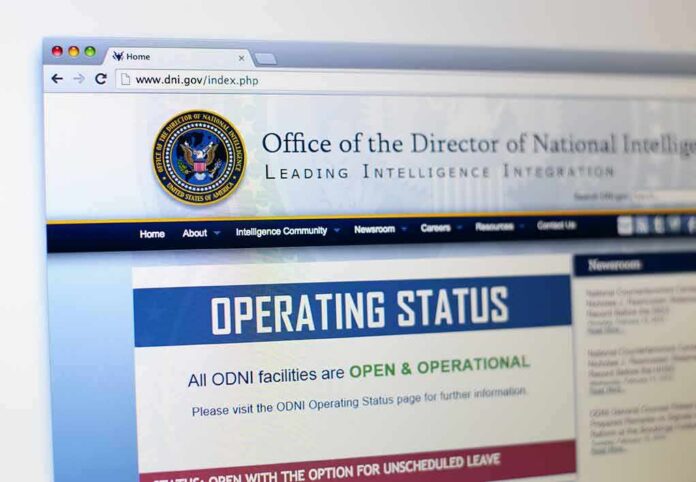
As Bill Pulte launches a third wave of firings inside America’s top intelligence office, both parties are signaling that the real fight is no longer just over jobs, but over who actually runs the country’s spy machinery.
Story Snapshot
- Acting intelligence chief Bill Pulte has begun a third round of cuts at the Office of the Director of National Intelligence (ODNI), after already removing 51 staff.
- President Trump openly tasked Pulte with downsizing ODNI, and Pulte started by demanding a list of every employee to decide who should go.
- Supporters call this a long overdue purge of a bloated and political “deep state” bureaucracy; critics in both parties say an unqualified, possibly unlawful appointee is gutting key national security functions.
- Both the left and right see the fight as proof that Washington’s elites protect their own power first and the American people second.
What Pulte Is Doing Inside America’s Intelligence Nerve Center
President Donald Trump named housing regulator Bill Pulte as acting Director of National Intelligence in early June, announcing the move on his social media account and allowing Pulte to keep his housing roles while running ODNI. Soon after arriving at ODNI a day early, Pulte demanded a complete list of every employee so he could review who should be cut or sent back to their home agencies. Within his first week, multiple outlets confirmed that 51 personnel had been removed from their roles.
News reports say six career and political officials were formally fired, while forty‑five others were detailed staff returned to their original intelligence agencies. Sources told reporters that Pulte asked his deputies for suggestions and then decided this first wave was “enough for now.” CBS News and other outlets also reported that none of those removed came from the counterterrorism group, suggesting the earliest cuts avoided the most sensitive mission areas. Supporters argue this shows a targeted approach, not reckless risk‑taking.
Why Trump Loyalists See a Necessary “Deep State” Cleanup
For many conservatives, Pulte’s moves look like long‑awaited house‑cleaning inside an intelligence system they believe has been politicized for years. Reports say Trump directed Pulte to “execute the immediate and needed downsizing of the office,” reflecting a view that ODNI had become a bloated layer of bureaucracy on top of the eighteen separate intelligence agencies. Some Republicans have argued for years that the ODNI structure is outdated and that better communication between agencies makes such a large central office unnecessary.
Conservative outlets describe Pulte walking in “on a mission” to identify hundreds of positions for elimination, aligning with Trump’s broader effort to shrink the federal workforce and weaken what many on the right call the “deep state.” They highlight that most of the affected employees were simply sent back to their home agencies, where they can still do intelligence work, instead of being fully removed from government service. To these readers, Pulte’s actions speak to a bigger promise: break the power of permanent Washington insiders who never seem to answer to voters.
Why Critics Say the Firings Threaten the Rule of Law and Security
Legal scholars and mainstream outlets see the same events very differently. Analysts note that the National Security Act says the principal deputy should act as director when the job is vacant, and that person is a career intelligence professional, not Pulte. Commentators argue that Pulte has no meaningful national security background and may not meet the law’s requirement for “extensive” experience, raising questions about whether he can lawfully hold the post at all.
Because the White House has not released a formal legal opinion explaining Pulte’s authority to fire or reassign career civil servants, critics warn that the terminations may not stand up in court. Former officials and legal experts have said that people “cannot be lawfully terminated by someone who lacks the authority,” and some fired staff have already turned to lawsuits to challenge what happened to them. Bipartisan critics in Congress, including Republicans, say this mix of shaky legal ground and sudden cuts could weaken intelligence operations and delay key work like renewing surveillance laws.
How This Fight Exposes a Deeper Crisis of Trust in Washington
The struggle over Pulte’s purge taps into anger on both sides about an unaccountable government run by elites. Research groups point out that presidents from both parties now rely more on “acting” officials to lead major security posts, often sidestepping Senate confirmation and, with it, open debate. The Cato Institute notes that Pulte’s appointment, despite his lack of intelligence experience, shows how broad the Vacancies Act has become and how easily a president can install a loyalist at the top of the spy world.
Many conservatives see this as payback against unelected insiders who abused their power; many liberals see it as proof that presidents can now place political loyalists over life‑and‑death intelligence work with almost no checks. In different ways, both sides are asking the same question: who is government really serving? Whether Pulte is remembered as the man who finally cut a wasteful bureaucracy or as an unqualified tool who damaged national security, the real story is how broken and distrusted the system has become.
Sources:
thegatewaypundit.com, theatlantic.com, facebook.com, nytimes.com, justsecurity.org, instagram.com, cato.org, pbs.org
© newsworthy.news 2026. All rights reserved.