An armed suspect exchanged gunfire with Secret Service officers near the White House, injuring a juvenile bystander and reigniting urgent questions about security, transparency, and accountability in the nation’s capital.
Story Snapshot
- Secret Service reports an armed suspect fired at officers near the White House; officers returned fire and hit the suspect.
- A juvenile bystander was injured during the exchange, prompting scrutiny of protocols in crowded federal zones.
- Officials recovered a weapon; investigators have not released bodycam, ballistics, or independent forensic findings.
- Initial facts are developing; conservatives demand swift clarity without weakening agents’ ability to stop real threats.
What Officials Confirmed About the Shooting
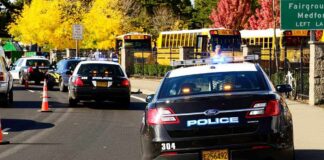
Secret Service officials said officers encountered an armed suspect near 15th Street and Independence Avenue, within walking distance of the White House and Washington Monument, on May 4. Agency statements described an exchange of gunfire after the suspect allegedly fired in the direction of officers. Officers returned fire and struck the suspect. A juvenile bystander was also injured during the incident. Authorities recovered a weapon at the scene, and investigators began processing evidence while securing the area for public safety.
Agency leaders briefed reporters that the suspect’s intent remained unclear pending interviews and evidence analysis. Officials stated they would determine whether the incident had any connection to protectees. The area saw heightened activity as motorcades and weekend tourism overlapped in the National Mall corridor. Early reporting emphasized that officers engaged after shots were fired and the suspect fled on foot, underscoring the compressed timeline typical of fast-moving protective operations in dense public spaces.
Transparency Gaps and the Investigation’s Next Steps
Investigators have not publicly released body-worn camera footage, independent witness statements, or a ballistics sequence confirming who fired first. Current details rely on Secret Service briefings and on-scene statements. Analysts tracking federal protective shootings note frequent early claims of imminent threat followed by debates about proportionality until forensics are complete. The absence of third-party technical verification places a premium on rapid evidence disclosure to maintain trust while safeguarding legitimate security tactics.
Conservatives watching federal use-of-force cases consistently call for two parallel standards: firm backing for officers confronting armed aggression and rigorous, timely transparency to validate decisions under fire. The bystander injury raises hard questions about crossfire risk in tourist-heavy areas and how containment, angles of fire, and pursuit protocols adapt when crowds are nearby. Releasing audio dispatch logs, camera video where available, and a preliminary ballistic trajectory would help address concerns without undermining protective readiness.
Security Tradeoffs Near the White House Perimeter
The White House perimeter and National Mall create a difficult security environment that blends open public access with tight protective missions. Officers frequently balance crowd safety against split-second threats, with suspects sometimes moving quickly across open plazas. This incident reflects that challenge: plainclothes observation, uniformed response, armed flight, and a short, volatile exchange. Public expectations for zero collateral harm collide with real-world dynamics where a single armed individual can endanger families, tourists, and officers within seconds.
The Secret Service is investigating a shooting that took place blocks from the White House. Here's what we know. https://t.co/AdI2Jws7eE
— WTKR News 3 (@WTKR3) May 5, 2026
Policy-minded readers will recognize the core tension for the Trump administration’s security posture: protect life decisively while rejecting bureaucratic fog that erodes confidence. The administration can lead by insisting on swift evidence releases once it will not compromise the investigation, reinforcing lawful self-defense standards, and improving crowd-safety training for high-traffic zones. Those steps back agents in the field, defend the public’s right to know, and keep the focus on deterring violent actors—not tying officers’ hands with politics.
Sources:
Secret Service officers shoot armed individual near White House
Secret Service shoots armed man near White House