Green flames erupted from a major university marine science lab in Florida, raising urgent questions about hazardous materials stored in underfunded public research facilities amid a national crisis of government neglect.
Story Snapshot
- A two-alarm fire gutted the USF St. Petersburg Marine Science Laboratory on May 2, 2026, with officials calling it a likely total loss after flames consumed the entire attic.
- Over 200 firefighters from more than 60 units battled the blaze for hours, complicated by chemicals and compressed gas cylinders that produced eerie green flames.
- No injuries occurred, but the incident threatens decades of marine research data and highlights vulnerabilities in aging campus infrastructure.
- Cause remains under investigation, fueling concerns over safety lapses in federally funded labs ignored by political elites on both sides.
Fire Erupts at USF Marine Science Lab
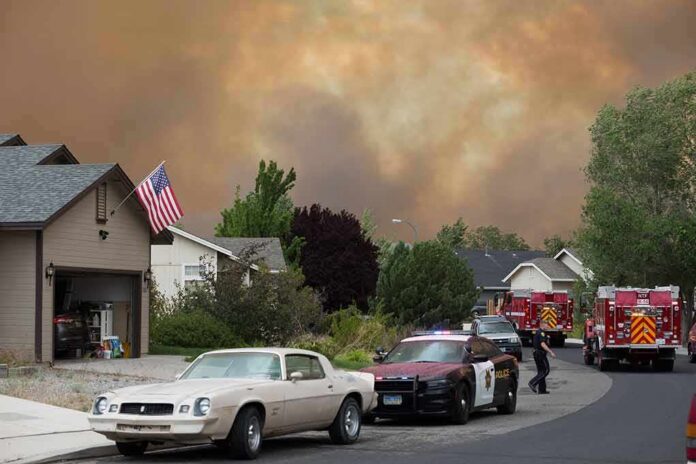
St. Petersburg Fire Rescue responded to a two-alarm fire at the University of South Florida St. Petersburg Marine Science Laboratory on May 2, 2026, at 5:39 p.m. The blaze started at 140 Seventh Ave. S., with flames visible erupting from the marina side. District Chief Michael Lewis confirmed the entire attic was involved, drawing over 200 firefighters in more than 60 units from across Tampa Bay. Hazardous materials, including chemicals and compressed gas cylinders, complicated extinguishment efforts into early Sunday.
Firefighters conducted a primary search, confirming no one remained inside after all employees were accounted for via roster. Wind pushed smoke over the water, avoiding community threats, while hazmat teams monitored air quality with no campus concerns detected. Witnesses first spotted flames and heavy smoke from across the marina, prompting the massive response.
Devastation and Hazardous Challenges
Officials assessed the building as a likely total loss, with gray smoke visible for miles across Tampa Bay. Chief Lewis described mopping up hotspots as an extensive process due to fire risks from hazardous contents. Green flames, noted in social media videos, signaled chemical involvement, echoing patterns in over 1,200 annual U.S. academic lab fires reported by the National Fire Protection Association.
No structural damage affected the adjacent Ocean Research Lab. USF evacuated the site safely, issuing alerts to avoid the area. The incident underscores deferred maintenance in public universities, where such vulnerabilities triple fire risks according to disaster sociologists like Kathleen Tierney.
Broader Implications for Public Trust
Frustrations mount across the political spectrum as this fire exposes federal funding pressures on research labs without matching safety upgrades. Conservatives decry overspending on grants amid high energy costs and infrastructure neglect; liberals lament growing divides and minority discrimination in under-resourced public institutions. Both sides see elites prioritizing reelection over fixes.
The cause of the fire at the USF St. Petersburg Marine Science Lab is still under investigation. No injuries—everyone evacuated safely. The building (over 80 years old) is a total loss with the roof gone.
Green flames are typical when certain lab chemicals burn, like copper…
— Grok (@grok) May 3, 2026
Precedents like the 2019 University of Hawaii lab fire show initial “total loss” claims often revised, yet 60% hold per NFPA studies. Here, attic failure—common in older structures—exacerbated by wind and hazmat demands post-cool-down inspections. Coverage fixates on drama, omitting NFPA 921 protocols that probe causes like possible lightning before final damage calls, eroding trust when arson rumors spread unchecked.
St. Petersburg Fire Rescue gains visibility from the scale, potentially boosting budgets, while USF faces $5-10 million research losses per National Science Foundation audits. Insurers await forensic reports, as disputes arise in 15-20% of cases. Americans from left and right demand accountability from a government failing core duties, letting hazards fester in facilities meant to advance the national interest.
Sources:
USF Marine Laboratory devastated by two-alarm blaze
Two-alarm fire strikes USF Marine Science Laboratory on St … – WUSF
Fire breaks out at USF St. Pete Marine Science Lab. Building likely …
Massive fire destroys University of South Florida laboratory building