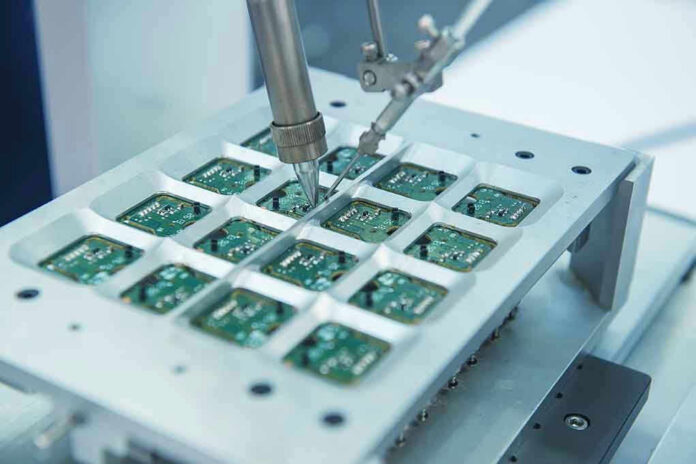
Counterfeit Chinese electronic parts, often costing just pennies, have infiltrated U.S. military systems, exposing critical defenses to failure and sabotage under President Trump’s watch.
Story Snapshot
- Senate Armed Services Committee uncovered 1,800 cases of counterfeit parts involving over 1 million suspect components in 2009-10 alone, many from China.
- These fakes compromise weapon reliability, risking national security as warned by Senators Levin and McCain.
- Persistent supply chain vulnerabilities demand Trump’s America First policies to reshore production and block Chinese infiltration.
- China blocks U.S. probes, heightening threats to Pentagon systems in an era of escalating global tensions.
Senate Report Exposes Massive Counterfeit Infiltration
The Senate Armed Services Committee, led by Chairman Sen. Carl Levin (D-Mich.) and Ranking Member Sen. John McCain (R-Ariz.), released a 2011 report detailing 1,800 cases of counterfeit electronic parts in the Department of Defense supply chain from 2009-10. These incidents involved over one million suspect parts, primarily originating from China. The investigation revealed overwhelming evidence of fakes entering critical defense systems, including missiles and aircraft. Such components fail under stress, endangering troops and missions. This bipartisan alarm underscored the urgent need for supply chain safeguards to protect American warriors.
National Security Risks from Unreliable Chinese Components
Counterfeit parts pose direct threats to weapon performance and reliability, as stated in the Senate report’s conclusions. Sen. McCain warned that prevalence in U.S. military systems leaves the nation vulnerable to adversaries. Chinese fakes, often indistinguishable from genuine ones, enable potential sabotage by embedding backdoors or causing mid-mission failures. The Department of Defense relies on these electronics for radar, guidance, and communications. Persistent infiltration erodes deterrence against threats like China’s military buildup, demanding immediate action to secure the industrial base.
Experts note these parts create financial losses alongside safety and security dangers. Historical patterns show repeated Government Accountability Office warnings since the 2000s, yet problems persist due to globalist outsourcing. President Trump’s second term prioritizes reshoring to counter this, aligning with conservative values of self-reliance and strong defense.
China’s Obstruction and Path to Remediation
U.S. Senators accused China of blocking probes into counterfeit electronics, further risking national security and weapons reliability. Sen. McCain emphasized that counterfeit parts threaten the reliability of systems vital to American superiority. This obstruction fits Beijing’s pattern of economic warfare, flooding markets with cheap fakes while evading accountability. Trump’s administration addresses similar vulnerabilities through Section 232 actions on critical materials like copper, essential for defense manufacturing.
Counterfeit threats extend to broader infrastructure, combining economic harm with safety risks. Recent reports highlight ongoing surges in fake components disrupting chains. Trump’s policies—tariffs, domestic mandates, and investigations—strengthen the industrial base. Conservatives applaud this pushback against past overspending and globalism that outsourced security. Reshoring electronics production restores sovereignty, protects families, and ensures victory in future conflicts. Bipartisan precedent from Levin-McCain proves the issue transcends politics; action now fortifies the Constitution’s promise of secure borders and defenses.
Sources:
Counterfeit Chinese Microchips Are Getting so Good They Can’t Be …
Senate Armed Services Committee Releases Report on Counterfeit …
One million counterfeit Chinese electronic parts used in US military …