
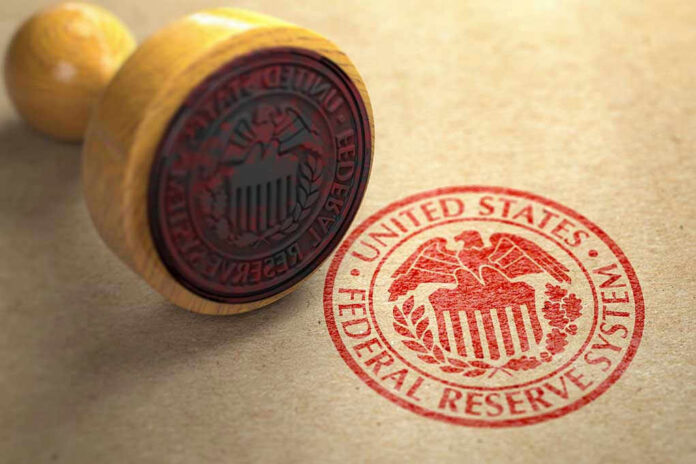
President Trump’s renewed threat to fire Federal Reserve Chairman Jerome Powell is turning an inside-the-Beltway fight over accountability into a high-stakes test of how independent the Fed really is.
At a Glance
- Reports say Trump told Fox Business host Maria Bartiromo he would move to fire Powell if Powell does not step down, escalating a long-running feud over rates and leadership.
- The dispute is now entangled with scrutiny of an expensive Federal Reserve headquarters renovation that has become a political flashpoint.
- Powell has publicly pushed back on political pressure, framing the Fed’s policy decisions as insulated from White House demands.
- The episode highlights a broader public frustration: powerful institutions spend billions while families feel squeezed by prices, borrowing costs, and stagnant confidence.
Trump’s Powell Ultimatum Moves From Rhetoric to a Timeline
President Trump’s comments to Maria Bartiromo and related reports signal a shift from generalized criticism of the Federal Reserve to a more direct “step down or be removed” message aimed at Chairman Jerome Powell. Public accounts vary on the precise wording because the referenced Bartiromo clip is incomplete in the provided research, but multiple outlets describe a threat to fire Powell if he does not leave his role. That framing raises the immediate question of what legal authority the president can use.
Republicans have argued for years that the Fed’s decisions have enormous consequences for working households, especially when borrowing costs stay high. Democrats and many institutional voices counter that an independent central bank is essential to market stability and inflation control. The tension is real: voters want accountability, but investors also want predictable rules. The current fight sits at that intersection, with Trump pushing for leadership change while Powell emphasizes insulation from politics.
The Fed Renovation Controversy Becomes the Fuel for a Bigger Argument
The conflict has also been amplified by attention on the Federal Reserve’s headquarters renovation costs. The provided research cites a dispute in July 2025 over renovation figures that were described as rising from about $2.7 billion to $3.1 billion in public discussion. That kind of price tag lands differently when many Americans are paying more for groceries, insurance, and interest on credit cards and mortgages. Even without proving wrongdoing, large government-adjacent projects can deepen distrust in “elite” institutions.
More recently, the research references an “unprecedented criminal investigation” tied to the renovation project. Those reports, if accurate as described, increase the political volatility because they blend institutional spending questions with law-enforcement scrutiny. Still, the key limitation remains that the user-provided research does not include complete underlying documentation for the Bartiromo quote or the investigative details. Readers should separate what is established—public disputes over costs and reported investigations—from claims that require verified evidence and due process.
Independence vs. Accountability: What’s Actually at Stake
Powell has been described in the research as responding that he would not capitulate to political pressure when shaping economic policy. That statement captures the Fed’s traditional posture: monetary policy should be set based on economic conditions, not election calendars. At the same time, the Fed is a powerful institution whose errors can hit ordinary families hard, and conservatives have long argued that unelected officials should not be immune from consequences when decisions misfire or when spending appears out of control.
The constitutional and statutory questions matter because they shape what happens next. If a president can remove a Fed chair over policy disagreements, markets could interpret that as a shift toward political control of interest rates. If a president cannot remove a chair absent specific legal grounds, then threats may function more as political pressure than a practical plan. Either way, the public spectacle reinforces a bipartisan cynicism that Washington’s most powerful players protect their turf first and solve kitchen-table problems second.
Why This Fight Resonates With Voters Across the Divide
Conservatives frustrated by inflation, debt, and what they see as elite insulation will view the standoff as a long-overdue confrontation with an institution that rarely faces direct scrutiny. Many liberals, meanwhile, will worry about precedent and stability, especially if they believe the White House is trying to bully the central bank. Both reactions spring from a shared reality: trust is low, and Americans increasingly believe major institutions answer to insiders rather than citizens who work, pay taxes, and follow the rules.
The next developments to watch are concrete, not rhetorical: whether formal steps are taken to remove Powell, whether Congress holds detailed oversight hearings on the renovation and governance, and whether any investigative actions produce documented findings. Until the full Bartiromo statement and official records are public, responsible analysis should avoid filling gaps with speculation. The policy consequences—rates, credit access, and inflation expectations—will ultimately matter more than any single headline.