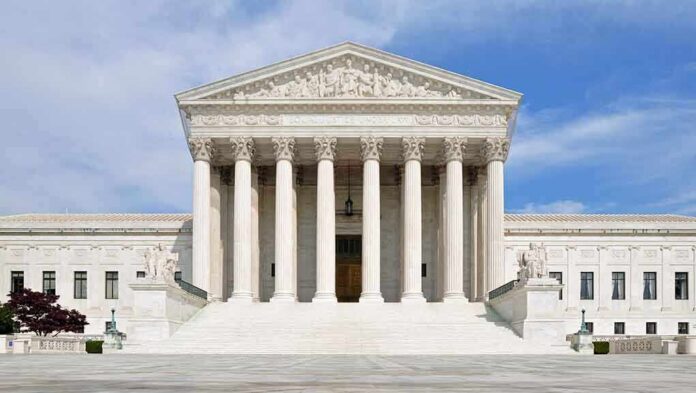
The Supreme Court cleared the Trump administration to resume third-country deportations for now, a fast-track shift with real stakes for people and policy alike.
Story Snapshot
- The Supreme Court paused a lower-court block, letting third-country deportations continue for now.
- The justices will hear full arguments in December before a final ruling.
- Lower courts said migrants must get notice and a chance to object over safety fears.
- The government says it seeks assurances that people will not face torture or persecution.
What The Supreme Court Did And What Happens Next
The Supreme Court issued an emergency order that lets the administration restart third-country removals while the case continues. The order is unsigned and provisional, so it does not settle the law. The Court plans to hear arguments in December and rule after that. For now, immigration officers can resume transfers to countries that are not a person’s homeland, under the current policy framework. Supporters call this needed control. Critics say due process is at risk.
The administration argued that stopping the policy would slow removals and force new talks with foreign partners. Government lawyers said time-consuming objection steps would upend flight plans and agreements. They also said they do not deport someone to a third country unless that country offers assurances against torture or persecution. News reports did not publish those agreements, so the exact terms are not public in these accounts. The Court’s stay leaves those arguments in place during review.
Why Lower Courts Said The Policy Went Too Far
A federal district judge earlier found that the policy was unlawful because the government did not give people a real chance to object to the chosen country. The First Circuit appeals court largely agreed and said people must get notice of the planned destination and a chance to raise fear of persecution or torture before removal. The panel warned that a right to contest is hollow without prior notice and a meaningful chance to speak up. Those rulings remain the backdrop to the current stay.
These findings reflect a long-running balance in immigration law. Congress allows third-country removal only after trying the main options first. Courts check whether the government follows those steps and respects basic process. Past Supreme Court cases show that third-country removals can be lawful in some settings. But judges often press the government on how it handles safety claims and notice before moving someone to a place they do not know.
What This Means For People, Policy, And Trust
For migrants in custody, the stay means faster decisions may return now, and transfers could go forward on short timelines. People who fear harm in the target country may have less time to raise that claim under the current setup. For immigration officers, the ruling is an operational win that restores speed, at least for now. The Court’s final ruling will decide whether that speed matches the law’s process requirements.
For the country, the case taps into broad public frustration. Many Americans across the spectrum think the system is broken. Some see lax enforcement and chaos at the border. Others see rushed removals and human costs. Both groups question whether leaders in Washington are transparent and accountable. Reports say the policy relies on foreign “assurances,” but those documents are not public in the coverage cited. That gap fuels doubts about safety and oversight, even as enforcement resumes.
How To Read The Next Moves Carefully
Expect a flood of claims on both sides as the December arguments near. The emergency order is not a final ruling on the law. It signals that a majority saw reasons to keep the policy in place during review. The justices will weigh the text of the immigration law, past Supreme Court rulings, and the record on notice and objections. The key legal question is whether the current process gives a real chance to contest removal to a third country.
Supreme Court lets Trump resume third-country deportations
An emergency order pauses a Boston judge’s due-process block; the three liberal justices dissented, and arguments are set for December.— EJPH News (@ejphnews) September 30, 2026
For readers trying to track facts, focus on three items. First, what the government’s written guidance actually says about notice and objections. Second, how many people receive notice, object, and win relief. Third, what evidence supports the foreign assurances offered on safety. Those details, more than slogans, will show whether the policy meets the law and the nation’s values when the Court issues its final decision.
Sources:
facebook.com, apnews.com, cnn.com, nytimes.com
© newsworthy.news 2026. All rights reserved.