A transgender college student was arrested in Florida’s State Capitol after deliberately challenging the state’s controversial bathroom law, facing up to 60 days in jail for a brief protest intended to highlight what she calls an “unjust” restriction.
Key Insights
- Marcy Rheintgen, 20, was charged with trespassing rather than violating Florida’s “Safety in Private Spaces Act,” preventing a direct legal challenge to the law
- Rheintgen sent 160 letters to state officials prior to her protest, informing them of her intentions to use the women’s restroom
- Florida is one of over a dozen states with bathroom restrictions, but this marks the first known arrest under such legislation
- The law prohibits individuals from using bathrooms that don’t align with their birth sex in government buildings, including schools, libraries, and state parks
Planned Protest Leads to Arrest
Marcy Rheintgen, a 20-year-old transgender college student from Illinois, was arrested after using the women’s restroom at the Florida State Capitol on April 8. Her action was a deliberate protest against Florida’s “Safety in Private Spaces Act,” which prohibits individuals from using bathrooms that don’t align with their biological sex in government facilities. Prior to her protest, Rheintgen sent 160 letters to state lawmakers notifying them of her intention and included her photograph for identification purposes.
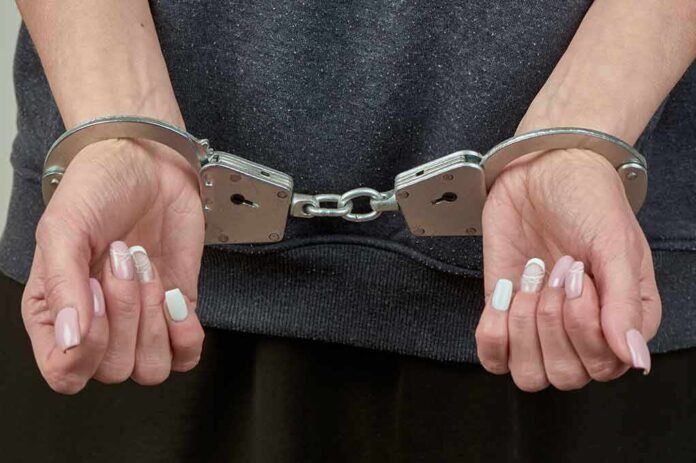
According to reports, Rheintgen spent between 30 seconds and one minute in the women’s restroom before law enforcement asked her to leave. When she refused, she was arrested and charged with misdemeanor trespassing, which carries penalties of up to 60 days in jail and a $500 fine. Notably, she was not charged under the bathroom law itself, which some observers suggest was a tactical decision to prevent a direct legal challenge to the legislation.
“I know that you know in your heart that this law is wrong and unjust,” Marcy Rheintgen wrote to state lawmakers ahead of her arrest. https://t.co/7HLCnB2uRw
— HuffPost (@HuffPost) April 8, 2025
Law’s Implementation and Scope
Florida’s “Safety in Private Spaces Act,” enacted in 2023, is part of a broader trend of legislation affecting transgender individuals across the country. The law specifically criminalizes individuals who refuse to leave restrooms assigned to the opposite sex when asked by a government employee. It applies to a range of public facilities including legislative offices, schools, libraries, jails, state parks, and potentially certain airports and sports arenas.
“I am here to break the law,” Rheintgen stated before her arrest, according to multiple sources.
The law does include certain exemptions, such as for unisex restrooms, maintenance purposes, accompanying a child or disabled person, or if facilities are out of order. Critics have pointed out that the law’s vague language could lead to enforcement actions against anyone using public facilities, creating confusion and potential harassment. Florida is one of over a dozen states with similar bathroom restrictions, though Utah is reportedly the only other state that has criminalized such acts.
First Known Arrest Under Bathroom Laws
According to Jon Davidson of the American Civil Liberties Union, Rheintgen’s arrest marks what is believed to be the first such detention under state laws prohibiting individuals from using bathrooms that don’t align with their assigned sex at birth. Despite the proliferation of these laws across multiple states, enforcement has been rare or nonexistent until now. The arrest has drawn attention from advocacy groups who view it as a concerning precedent.
“I know that you know in your heart that this law is wrong and unjust,” Rheintgen wrote in one of her letters to lawmakers.
Following her arrest, Rheintgen was released on pretrial conditions. The Florida Department of Law Enforcement confirmed that she was arrested for “trespass on property after warning,” not specifically for violating the bathroom law. This technical distinction has raised questions about whether officials are attempting to sidestep a potential constitutional challenge to the law itself while still enforcing its practical effects.
Sources:
- A trans woman was arrested at the Florida Capitol for using the women’s restroom
- 20-Year-Old Trans Woman Arrested After Using Florida State Capitol Bathroom As Protest
- Florida Cops Arrest Transgender Woman for Using Women’s Bathroom