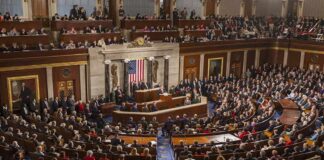
The Senate unanimously approved the “No Tax on Tips Act” this week, delivering a major financial relief for over 13 million service workers while fulfilling one of President Trump’s key campaign promises.
Key Takeaways
- The bipartisan “No Tax on Tips Act” passed unanimously in the Senate, exempting tips from federal income tax for service industry workers
- The legislation allows traditionally tipped employees to deduct tips from federal income tax, with deductions capped at $25,000 for individuals earning less than $160,000 annually
- The bill fulfills a campaign promise made by President Trump during a visit to Nevada, a state with a high concentration of service industry workers
- Led by Senators Ted Cruz (R-TX) and Jacky Rosen (D-NV), the bill now moves to the House of Representatives for consideration
- Democrats successfully separated the proposal from a larger House Republican package they oppose that would cut programs like Medicaid and SNAP
A Trump Promise Fulfilled Through Bipartisan Cooperation
In a rare display of bipartisan cooperation, the Senate unanimously passed the “No Tax on Tips Act” on Tuesday, advancing legislation that would exempt tips from federal income tax for millions of American service workers. The bill, co-sponsored by Senators Ted Cruz (R-TX) and Jacky Rosen (D-NV), fulfills a key campaign promise made by President Trump during a Nevada campaign stop and provides meaningful financial relief to workers in restaurants, bars, hotels, and other service industries across the country.
“No tax on tips was one of President Trump’s key promises to the American people, which he unveiled in my state of Nevada. And, I am not afraid to embrace a good idea, wherever it comes from,” said Senator Rosen, who played a critical role in shepherding the legislation through the Senate despite being a Democrat.
Financial Relief for Service Workers with Reasonable Limits
The legislation specifically targets relief for traditionally tipped employees, allowing them to deduct tips from their federal income tax. The bill includes sensible guardrails to ensure benefits go to those who need it most—deductions are capped at $25,000, and individuals earning more than $160,000 annually are not eligible. This structure ensures tax relief benefits hardworking Americans rather than wealthy individuals or corporate executives, addressing a key concern from both sides of the political aisle.
“If we are serious about providing service employees with financial relief, let’s do it now, let’s do it today!” Senator Rosen declared during Senate proceedings, emphasizing the immediate need for action.
Nevada stands to benefit significantly from this legislation due to its large service industry workforce. The state’s tourism-driven economy employs thousands of service workers in Las Vegas, Reno, and other tourism destinations, making this tax relief particularly impactful for Nevada residents who rely on tips as a substantial portion of their income.
Political Maneuvering and Path to Becoming Law
Despite the unanimous Senate approval, the bill’s path to becoming law still faces challenges. House Republicans previously included the “No Tax on Tips” provision in a larger budget proposal that Democrats oppose due to cuts to essential programs like Medicaid and SNAP. Senator Rosen successfully advocated for the Senate to pass a clean, standalone version of the bill, creating a strategic advantage for Democrats while still advancing President Trump’s policy goal.
“We shouldn’t be forcing working families to choose between keeping their health care or keeping their tips,” Rosen stated, criticizing the House Republican approach of bundling the tips tax relief with controversial program cuts.
Senator Cruz has expressed confidence that the legislation will become law one way or another, whether as a standalone bill or as part of a larger package. The unanimous Senate passage represents a significant policy win for President Trump even as Republicans continue to debate other aspects of his domestic agenda. The House will now need to decide whether to pass the clean Senate version or attempt to reincorporate it into a broader package that may face stronger Democratic opposition.