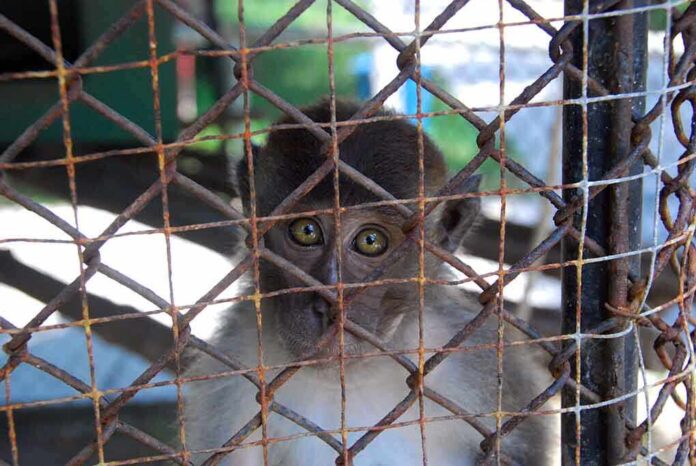
In the sacred halls of Bali’s Uluwatu Temple, a band of crafty monkeys is orchestrating a heist that would make the most seasoned con artist envious.
At a Glance
- Macaques at Uluwatu Temple steal high-value items from tourists.
- The monkeys barter stolen goods for food, showcasing economic decision-making.
- Temple management has tried to mitigate the issue by relocating monkeys.
- Tourists remain frustrated by thefts and the need to negotiate for item recovery.
Macaques Turn to Crime for Food
At the heart of Bali’s Uluwatu Temple, long-tailed macaques have mastered the art of theft, targeting tourists’ valuable items like smartphones, wallets, and glasses. These monkeys are not just random pilferers; they demonstrate a keen ability to assess the value of what they swipe, preferring high-value items that can be bartered for food. This behavior, documented over decades, reflects a sophisticated level of economic decision-making rarely seen in non-human animals.
Monkeys 'running a scam' at sacred temple, frustrated tourists say after phone thefts https://t.co/1JX4BxLRoi
— Fox News (@FoxNews) July 30, 2025
Tourists, often unsuspecting, find themselves victims of this monkey heist, left in the lurch as their belongings are whisked away. The temple staff, familiar with the antics, facilitate a bizarre exchange where stolen goods are returned in exchange for food offerings. It’s a scene straight out of a comedy, but for those affected, the humor quickly fades into frustration.
Management’s Efforts to Curb Thievery
Temple management has taken steps to address these disruptions. In May 2025, they attempted to relocate the monkeys within the temple grounds. This move aimed to minimize disruptions, particularly during religious ceremonies. However, the monkeys’ antics continue to draw attention, with ongoing advisories for tourists to secure their valuables and avoid direct interactions with the monkeys. Despite management’s efforts, the monkeys remain a central and unavoidable feature of the temple experience.
The temple’s natural allure, enhanced by the presence of these intelligent primates, presents a challenging balance between maintaining tradition and addressing the practicalities of wildlife management. Tourists continue to flock to the site, drawn by its spiritual significance and the chance to witness the peculiar behavior of its resident macaques.
The Economic and Social Impact
The economic implications of the monkeys’ behavior are significant. While tourism remains robust, negative experiences could deter some visitors. The costs associated with managing the monkey population and compensating for lost items are not negligible. Socially, the monkeys are a source of both fascination and frustration, their behavior becoming an integral part of the temple lore.
Politically, local authorities face the task of balancing economic interests with public safety and religious observance. The monkeys, unwitting as they may be, have sparked discussions on wildlife tourism management and human-wildlife conflict mitigation globally. Their actions are cited in academic literature as a rare example of animal economic behavior and cultural transmission.
The Scientific Perspective on Monkey Economics
Researchers like Dr. Jean-Baptiste Leca describe the macaques’ behavior as a culturally maintained token economy, highlighting the sophistication behind their actions. These monkeys have learned and socially transmitted this behavior across generations, showcasing advanced cognitive abilities and social learning. It’s a testament to the adaptability and intelligence of these primates, offering insights into the complexities of animal behavior.
While some experts liken the behavior to a “monkey mafia,” others focus on the broader implications for understanding animal culture. The challenge of managing these interactions in tourism settings remains a pertinent discussion, with the Uluwatu Temple serving as a case study for wildlife management strategies.