

Joe Kent’s razor-thin confirmation as head of America’s counterterrorism efforts signals a dramatic new chapter—one that’s already igniting fierce debate about just how far we’ll go to reclaim national security and put America first.
At a Glance
- Senate confirms Joe Kent, a decorated Special Forces veteran and CIA officer, as Director of the National Counterterrorism Center in a 52-44 vote.
- Kent’s appointment draws fire for alleged far-right associations and pushes the limits of partisan politics in intelligence leadership.
- Trump and allies praise Kent’s combat record and vow to overhaul America’s approach to border security and domestic threats.
- Democrats warn of politicization and question whether the intelligence community can remain nonpartisan under Kent’s leadership.
Senate Confirmation Sparks Clash Over National Security Leadership
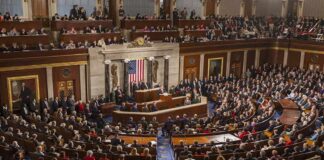
Washington, D.C. witnessed a confirmation battle that would have been unthinkable under the previous administration. The Senate, in a 52-44 vote, confirmed Joe Kent—former Green Beret, CIA paramilitary officer, and Gold Star husband—as Director of the National Counterterrorism Center (NCTC). Kent’s combat credentials are beyond dispute: eleven tours, direct action against ISIS, and a personal loss in the war on terror after his wife was killed in Syria. The left fixated not on his record, but on vague allegations of “extremist ties”—a label thrown around with reckless abandon when anyone dares challenge the establishment’s sacred cows. Kent’s confirmation, powered by a near-unified Republican front and a President who finally demands accountability, puts the NCTC under the control of someone who actually understands what’s at stake.
Yet, Democrats and a lone Republican, Sen. Thom Tillis, clung to the old playbook—casting doubt, sowing division, and warning of “politicization.” Their concerns? Kent’s willingness to call out failed border policies, his belief in a secure America, and, heaven forbid, his refusal to apologize for conservative values. The left’s opposition sounded like a broken record: “extremism,” “partisanship,” “danger to democracy.” Meanwhile, the real question—whether the NCTC is finally ready to target the cartels and gangs flooding our borders—got buried under the familiar avalanche of virtue-signaling and hand-wringing.
Kent’s Record and the Realignment of Counterterrorism Priorities
Kent’s nomination was far from business as usual. He’s not a faceless bureaucrat or a career pencil-pusher. He’s a soldier who’s bled for this country and a CIA officer who’s seen firsthand the price of weak leadership. Backed by President Trump and Director of National Intelligence Tulsi Gabbard, Kent represents a return to hard-nosed, results-first national security. His stated priorities are crystal clear: take the fight to terrorists wherever they operate—especially the Latin American gangs and cartels that Democrats so often pretend don’t exist. Kent’s approach is a direct repudiation of years of soft-pedaling threats and tiptoeing around the reality of border-driven crime.
Detractors continue to harp on Kent’s supposed “associations” with controversial figures, but facts matter: Kent’s career has been about eliminating threats, not appeasing political operatives. His supporters, including Senator Tom Cotton, argue that Kent’s experience and sacrifice make him uniquely qualified to overhaul the NCTC. Critics, on the other hand, claim his confirmation signals a dangerous shift toward ideology—ignoring the clear evidence that the only ideology Kent subscribes to is defending the Constitution and protecting American lives.
Political Fallout and the Future of Intelligence Leadership
The left’s outrage over Kent’s confirmation should come as no surprise. For years, intelligence agencies have been used as political cudgels by bureaucrats more interested in headlines than results. Kent’s arrival threatens to upset the cozy status quo, and that’s precisely why so many career politicians and media mouthpieces are panicking. Democrats warn that Kent’s appointment will erode the intelligence community’s nonpartisan reputation. But after the disasters of the past administration—open borders, handcuffed law enforcement, and endless lectures about “equity”—Americans are demanding a different kind of leadership.
Already, Kent’s first moves point to a dramatic shift: a new focus on border-related threats, aggressive action against transnational gangs, and an end to the soft-glove approach that’s failed to keep Americans safe. Some critics suggest that morale among career staff may suffer, but after years of watching their mission take a backseat to political correctness, many in the intelligence community are ready for a leader who actually backs the men and women on the front lines.
Implications: A Test of Will and a Challenge to the Old Guard
Kent’s confirmation is more than a personnel decision—it’s a test of whether this country is serious about confronting threats at home and abroad. In the short term, expect the NCTC to pivot hard toward border security and the war on organized crime. In the long term, Kent’s appointment could set a precedent for putting tough, unapologetic patriots in charge of our most critical security agencies—even if that means breaking with the tepid, bipartisan niceties that have allowed the country’s enemies to flourish. The left may scream about “politicization,” but what they really fear is losing their grip on the levers of power. For Americans sick of endless excuses and failed policies, Kent’s rise is a long-overdue course correction—one that puts the safety of our citizens back where it belongs: front and center.
Scrutiny of Kent’s leadership will be fierce, and the stakes could not be higher. But if his record is any indication, America’s enemies—foreign and domestic—just got a new reason to worry. The rest of us can finally breathe a little easier.