Scientists have discovered a venomous snake species in Myanmar that baffled researchers by appearing to be multiple species simultaneously, raising questions about the complexity of nature that government-funded taxonomies may have oversimplified for decades.
Story Snapshot
- New pit viper species identified in central Myanmar exhibits highly variable appearance, initially mistaken for hybrid
- Genomic analysis confirmed single species rather than crossbreeding, challenging conventional taxonomic assumptions
- Researchers hypothesize ancient gene exchange between related species may explain the morphological mystery
- Discovery highlights how much remains unknown about biodiversity even in well-studied regions
Shape-Shifting Snake Defies Classification
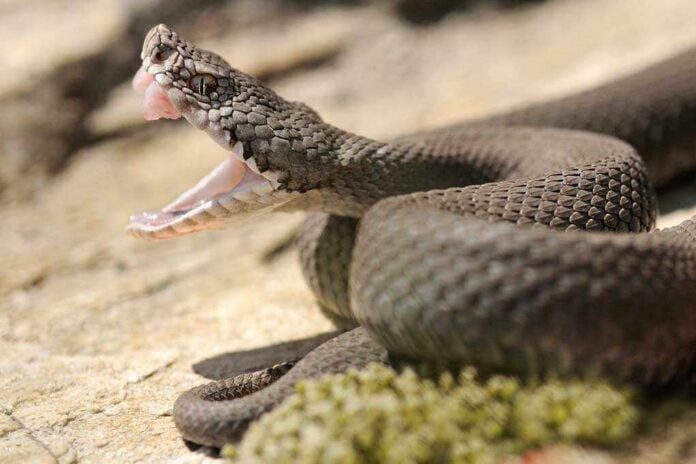
Researchers identified a new pit viper species, Trimeresurus ayeyarwadyensis, along Myanmar’s Ayeyarwady River basin that exhibits bewildering morphological variation within a single species. Some individuals display dark green coloration with distinctive blotches resembling the southern mangrove pit viper, while others appear bright green without markings like the northern redtail pit viper. Dr. Chan Kin Onn, lead herpetologist now at the University of Kansas, used advanced genomic techniques to rule out hybridization and confirm this was indeed one species, not two interbreeding populations. The formal description appeared in the peer-reviewed journal ZooKeys in January 2024.
Taxonomic Puzzle Solved Through Modern Genetics
The discovery emerged from field surveys in central Myanmar where researchers encountered specimens that defied straightforward identification. Traditional morphological analysis suggested these snakes might represent hybrids between two neighboring species, a reasonable assumption given their intermediate appearance. However, genomic testing revealed they constituted a genetically distinct lineage occupying territory between the ranges of their northern and southern relatives. Dr. Chan noted this “interesting phenomenon” might result from ancient gene exchange with neighboring species, though this remains speculative rather than confirmed. The species inhabits a range bounded by the Pathein River to the west and Yangon River to the east.
Broader Implications for Biodiversity Research
This discovery underscores significant gaps in our understanding of Asian pit viper diversity and highlights limitations of appearance-based classification systems. The Trimeresurus genus has proven notoriously difficult for taxonomists because some species groups contain look-alikes while others show extreme variation within single species. The revelation that one species can simultaneously display traits of two different relatives challenges conventional wisdom about species boundaries and genetic isolation. For taxpayers funding biodiversity research through government grants, this raises legitimate questions about how much scientific consensus on species counts and conservation priorities might shift as genetic tools become standard practice.
Questions About Scientific Certainty
The case illustrates how scientific understanding evolves, sometimes overturning widely accepted assumptions. Researchers initially believed they were observing hybridization, a conclusion that seemed obvious based on visual evidence. Only sophisticated genetic analysis revealed the truth: a single highly variable species occupying an intermediate geographic range. Dr. Chan’s statement that gene exchange “may have” occurred in the past acknowledges uncertainty, suggesting even the corrected understanding remains incomplete. This scientific humility contrasts with the confidence often projected in government-funded biodiversity assessments that drive policy decisions. The discovery has minimal immediate economic impact but demonstrates that remote regions like Myanmar’s river basins remain poorly catalogued despite decades of field research and institutional funding.
“Baffling” new snake species in Myanmar looks like multiple species at once
Scientists have uncovered a fascinating new species of pit viper in Myanmar that seems to blur the very definition of what a species is. This snake, now named the Ayeyarwady pit viper, puzzled…
— The Something Guy 🇿🇦 (@thesomethingguy) April 22, 2026
The Ayeyarwady pit viper joins thousands of species formally described each year, reminding us that nature’s complexity exceeds our current taxonomic frameworks. For researchers, this reinforces the necessity of integrating morphological and genetic approaches rather than relying on appearance alone. For citizens concerned about how their tax dollars support scientific institutions, it prompts reflection on whether enough resources reach actual field research versus administrative overhead in the sprawling federal science bureaucracy.
Sources:
“Baffling” New Species of Snake Discovered in Myanmar – SciTechDaily
New Snake Species Discovered – Giant Freakin Robot
Same and Different: A New Species of Pit Viper from Myanmar – Scientific Inquirer