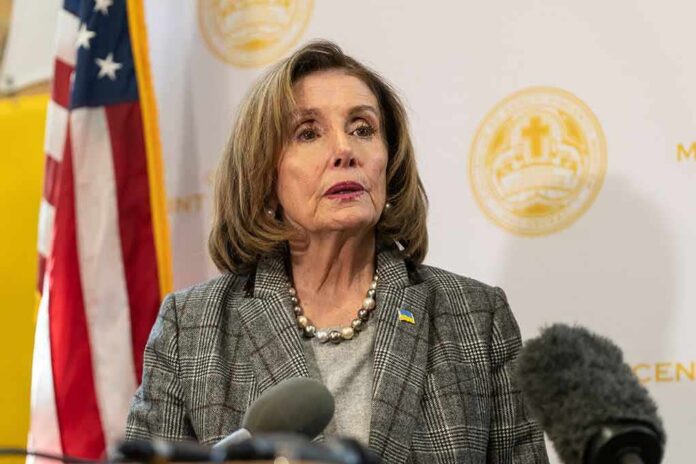
Nancy Pelosi’s long-standing political reign may soon face its biggest challenge yet as Scott Wiener steps forward to contest her for the congressional seat, signaling a significant ideological shift.
Story Highlights
- Scott Wiener announces candidacy for Pelosi’s Congressional seat in 2026.
- Wiener’s move marks a break from his previous pledge to wait for Pelosi’s retirement.
- The race sees increasing tension between establishment Democrats and progressives.
- Polls show Wiener leading among potential candidates with 61% favorability.
Wiener Challenges Pelosi Amid Shifting Political Dynamics
Scott Wiener, a California state senator known for his progressive policies, has announced his intention to run against Nancy Pelosi in the 2026 Democratic primary. This decision signals a pivotal moment in local and national Democratic politics as it comes amid increasing calls for generational and ideological change. Pelosi, who has represented San Francisco since 1987, faces declining support in recent polls, which show a significant shift in voter sentiment towards new leadership.
REPORT: America’s Most Sexually Degenerate Lawmaker Scott Wiener Is Challenging Nancy Pelosi In A Primary https://t.co/YB4caa71P8 via @dailycaller
— She Vet AF (@etcher10) October 18, 2025
Wiener’s candidacy represents a departure from his previous stance to wait for Pelosi’s retirement. It underscores the growing momentum among progressive factions within the Democratic Party, eager to replace long-standing establishment figures with fresh voices. Wiener’s legislative record, particularly his advocacy for LGBTQ+ rights and housing reform, positions him as a formidable contender in a district known for its progressive leanings.
Progressives Gain Traction in San Francisco
The emergence of Saikat Chakrabarti, a tech entrepreneur and former chief of staff to Alexandria Ocasio-Cortez, further complicates the race. Chakrabarti’s campaign has gained traction as he positions himself as an outsider challenging the Democratic establishment. His anti-establishment rhetoric resonates with voters frustrated with traditional political figures. Chakrabarti’s self-funded campaign underscores the financial muscle and determination driving progressive challengers in this race.
In a recent poll, Wiener leads with 61% favorability among primary voters, outpacing both Chakrabarti and Christine Pelosi, Nancy Pelosi’s daughter, who holds 21% each. These figures highlight a shifting landscape that could redefine political alliances and priorities in San Francisco’s Democratic stronghold.
The Implications for the Democratic Party
The outcome of this primary could have far-reaching implications for the Democratic Party. A victory for Wiener or Chakrabarti would signal a shift towards progressive policies and a potential realignment of party priorities at both local and national levels. The race has already attracted significant attention and funding, reflecting its importance as a bellwether for broader trends within the party.
As Pelosi focuses on Proposition 50 and has yet to announce her reelection plans, the uncertainty surrounding her political future adds another layer of complexity to this high-stakes contest. The primary, scheduled for June 2026, promises to be a defining moment for San Francisco and the Democratic Party.
As this race unfolds, it will be crucial for voters to consider the implications of each candidate’s policies and the broader impact on the party’s direction. Whether the outcome leads to a reaffirmation of establishment values or a shift towards more progressive ideals, the repercussions will be felt far beyond San Francisco.
Sources:
Scott Wiener Running for Congress Against Nancy Pelosi in 2026
Wiener Challenges Pelosi: San Francisco’s Political Shift
Wiener’s Legislative Record and Congressional Bid
The Advocate: Wiener’s Intent to Run for Pelosi’s Seat