
NATO Secretary General Mark Rutte praises President Donald Trump for catalyzing a “staggering” surge in European defense spending, as the alliance confronts growing threats from Russia and China.
Key Insights
- NATO Secretary General Mark Rutte has publicly credited Trump for successfully pushing European allies to increase their defense spending, calling recent developments “really staggering”
- A record 23 of NATO’s 32 member nations have now met the 2% GDP defense spending target, with British Prime Minister Keir Starmer pledging to reach 2.5%
- European Commission President Ursula von der Leyen has proposed an $841 billion plan for EU nations to boost defense capabilities
- The U.S. still shoulders over 50% of NATO funding, spending 3.3% of its GDP on defense as European nations work to catch up
- Increased defense commitments align with ongoing efforts to negotiate a ceasefire in Ukraine and counter Russian and Chinese military advances
Trump’s Push Yields Results: NATO Allies Boost Defense Budgets
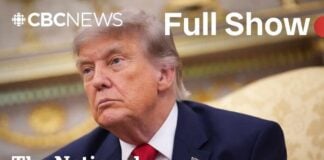
NATO Secretary General Mark Rutte has publicly acknowledged President Donald Trump’s significant role in pushing European allies to increase their defense spending. During a White House meeting on March 13, 2025, Rutte praised Trump’s influence, telling the president, “When you look at Trump 47, what happened the last couple of weeks is really staggering.” This recognition comes as numerous European nations have announced substantial increases to their military budgets in response to global threats, particularly from Russia and China.
Trump has consistently advocated for NATO members to spend between 2% and 5% of their GDP on defense, often criticizing allies for falling short of these targets. His pressure appears to have yielded results, with a record 23 of NATO’s 32 member nations now meeting the alliance’s defense spending target. During his first term, Trump famously questioned America’s commitment to NATO’s mutual defense clause, creating uncertainty that appears to have motivated European leaders to take greater responsibility for their own security.
TRUMP SCHEDULE: Thursday 12:20 PM – NATO Secretary General Mark Rutte is scheduled to meet with U.S. President Donald Trump today in the Oval Office. The agenda for their discussions includes several critical issues:
European Defense Spending
A central topic will be the… pic.twitter.com/FYLMgUo7nn— @amuse (@amuse) March 13, 2025
European Powers Respond with Unprecedented Defense Investments
European Commission President Ursula von der Leyen has proposed an ambitious €800 billion ($841 billion) plan for EU nations to boost their defense capabilities. This represents one of the largest coordinated military spending initiatives in modern European history. British Prime Minister Keir Starmer has pledged to increase the U.K.’s defense spending to 2.5% of GDP, significantly exceeding NATO’s minimum requirement and setting an example for other European powers to follow.
“You’re starting to hear the British prime minister and others all committing to much higher defense spending. We’re not there. We need to do more, but I really want to work together with you . . . to make sure that we will have a NATO which is really reinvigorated, under your leadership. And we are getting there.” – NATO Secretary General Mark Rutte
Germany has also committed to increasing its military expenditure, a notable development for a nation that has historically maintained relatively modest defense spending following World War II. Defense Secretary Pete Hegseth reinforced this message during his recent visit to Brussels, urging NATO allies to continue increasing their defense commitments. “NATO is a great alliance, the most successful defense alliance in history, but to endure for the future, our partners must do far more for Europe’s defense,” Hegseth stated.
Addressing Global Threats and Negotiating Ukraine Peace
Rutte highlighted the urgent need to strengthen the defense industrial base in both the United States and Europe, warning that the West is lagging behind Russia and China in military production capabilities. Founded in 1949 to counter the Soviet Union, NATO now faces a resurgent Russia under Vladimir Putin and growing concerns about China’s military ambitions. The alliance’s renewed focus on defense preparedness comes as the war in Ukraine enters its third year with no immediate end in sight.
“I think they want to work together with you in the run-up to the next summit to make sure that we will have a NATO, which is newly invigorated under your leadership.” – Mark Rutte
Despite these positive developments, the United States continues to carry a disproportionate share of NATO’s financial burden. As of 2023, the U.S. spent 3.3% of its GDP on defense, contributing over 50% of NATO funding. Trump and Rutte also discussed a U.S. proposal for a 30-day ceasefire in Ukraine during their meeting, with Trump expressing cautious optimism about Putin’s openness to negotiations. Trump’s special envoy, Steve Witkoff, has traveled to Moscow to discuss the ceasefire proposal, underscoring the administration’s commitment to diplomatic solutions alongside military preparedness.
Sources:
- Trump praised for getting NATO allies to bolster defense spending: ‘really staggering’
- NATO secretary-general tells Trump he’s motivating alliance members to spend more on defense