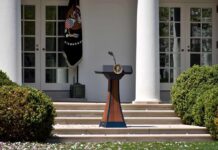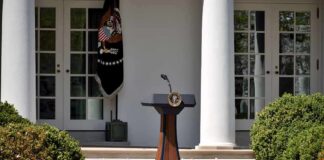

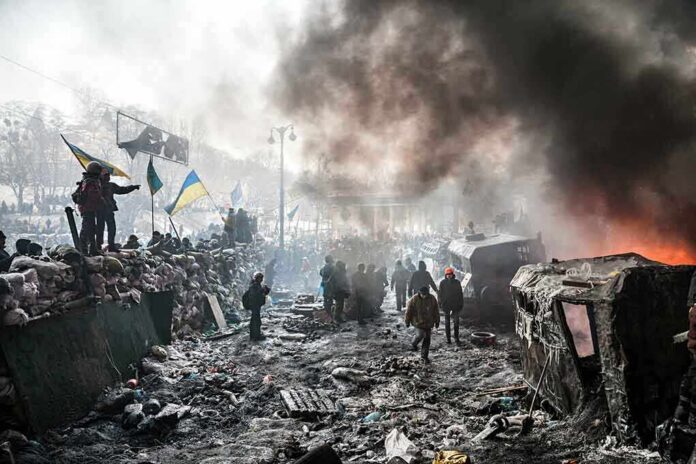
A local ceasefire brokered with help from First Lady Melania Trump has stopped the fighting in one Russian-occupied Ukrainian town, while missiles keep falling everywhere else in the war.
Quick Take
- A ceasefire took effect in Oleshky, a Russian-occupied town in southern Ukraine, to let aid in and civilians out.
- Russia’s military said the “silence regime” began at 4:00 a.m. Moscow time on October 27; Ukraine’s General Staff reported a 3:00 a.m. Kyiv time start.
- The White House says First Lady Melania Trump helped secure the deal, working alongside human rights officials from both countries.
- The plan has three steps: stop fighting, deliver aid, then evacuate civilians who want to leave.
- Fighting continues elsewhere in Ukraine, including strikes near Kyiv, showing the truce is limited to one town.
What Happened In Oleshky
Russia’s Ministry of Defense announced a ceasefire and “silence regime” starting at 4:00 a.m. Moscow time on October 27, 2026, in the Oleshky area. Ukraine’s General Staff separately confirmed a pause beginning at 3:00 a.m. Kyiv time, saying it was meant to support humanitarian operations in the occupied town. Both militaries, which remain enemies on nearly every other front, agreed to stand down in this one spot.
The White House said the goal was simple: let aid trucks in and let civilians out. Officials said both countries agreed “to stop military action in Oleshky to allow for humanitarian aid to enter and to prepare a civilian evacuation through a designated safe passageway”. Ukraine’s General Staff described the same purpose, calling it a chance for the “free movement of civilians” trapped in the town.
A Three-Step Plan With Named Officials
Ukraine’s Human Rights Ombudsman Dmytro Lubinets told the Associated Press the arrangement follows three stages. First comes the ceasefire itself. Second is delivery of humanitarian aid. Third is evacuation of any civilians who choose to leave Oleshky. This structure suggests more than a one-time announcement. It points to an actual operational plan with steps that can be tracked.
Lubinets said the mission was organized together with Russia’s human rights ombudswoman, Yana Lantratova, with Melania Trump mediating and coordinating between the two sides. Naming specific officials on both sides gives the claim more weight than a vague diplomatic statement would. It shows a working channel between Kyiv and Moscow, even if only for this narrow purpose.
Scope Stays Narrow As War Rages On
The White House was careful to describe the deal as a ceasefire “localized to the city of Oleshky”. This is not a broader truce. Reporting from the region noted that strikes continued elsewhere in Ukraine, including attacks near the capital, Kyiv, even as the Oleshky pause held. The limited scope means the ceasefire tests whether small, practical deals can work, not whether the larger war is ending.
Published timelines show some variation. The White House statement referenced October 29 as a key date, while Russian and Ukrainian officials both pointed to October 27 as when the silence regime began. These may reflect different phases of the same operation rather than a contradiction, since the plan involves multiple stages happening over time.
Why This Small Deal Matters
Years of full-scale war have left many Ukrainians and Russians distrustful of broad peace talks. A narrow, task-specific ceasefire — stop the guns, move the aid, evacuate the people — is easier for both militaries to accept because it does not require either side to give up its larger war aims. That may explain why this deal came together while bigger cease-fire efforts have repeatedly stalled.
For residents of Oleshky, the stakes are immediate. The CNN report on the deal noted officials on both sides confirmed it had gone into effect, giving trapped civilians a real chance to receive supplies or leave the area. Whether this single-town model gets used again elsewhere in Ukraine remains an open question that only future fighting, or future diplomacy, will answer.
❗️30 hours of the ceasefire in Oleshky have passed without a single incident. This has been made possible, in particular, by ongoing communication between me and Yana Lantratova, Russia’s Commissioner for Human Rights. We remain in contact and coordinate efforts to implement the… pic.twitter.com/8d8MCGdR5K
— Dmytro Lubinets (@lubinetzs) October 28, 2026
Sources:
abc.net.au, whitehouse.gov, cnn.com, abcnews.com, dw.com, zn.ua
© newsworthy.news 2026. All rights reserved.