

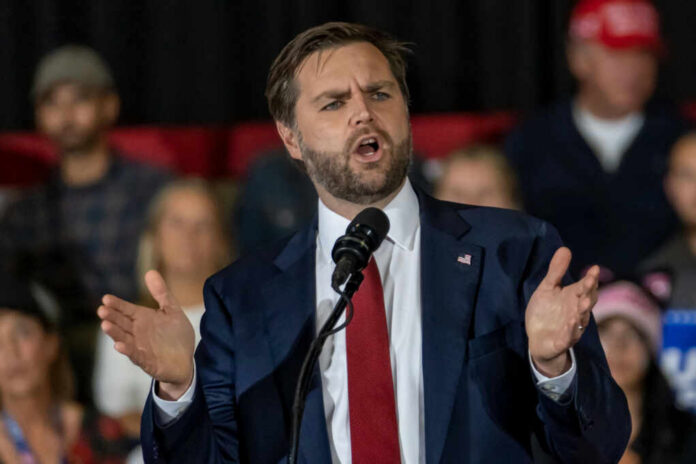
A tense exchange at a Florida campaign stop exploded online after Rep. Byron Donalds repeatedly addressed a transgender woman as “sir,” drawing shouts, curses, and fresh debate over respect and free speech.
Story Highlights
- Byron Donalds used “sir” to address a transgender woman at a Florida event, prompting immediate pushback.
- The attendee said she is a woman and objected; a bystander blasted Donalds for “belittling” her.
- Donalds linked his wording to the voice he heard, but he did not switch to “ma’am” after correction.
- Viral outrage amplified the clash, fitting a pattern where conflict spreads fastest online.
What Happened At The Campaign Stop
On October 23, 2026, Rep. Byron Donalds, a Republican running for Florida governor, held a campaign event where a transgender woman pressed him with a question. Donalds began, “Sir, as a member of Congress,” which drew an immediate reply: “I’m not a sir! I’m a ma’am!” Reporting says he explained he was responding to the voice he heard, but he continued to use “sir.” The exchange became heated and was recorded on video that spread quickly online.
As the back-and-forth went on, a bystander cursed at Donalds, asking, “Are you f—ing kidding me, calling her ‘sir’?” The same bystander later shouted that Donalds had “belittled her enough on camera.” The attendee also argued that her gender should not be judged by her voice alone. Coverage from national outlets described Donalds’s language as misgendering and highlighted the intensity in the room as the moment escalated.
Why The Language Fight Hit A Nerve
Reports describe the attendee identifying herself as a woman and objecting to male terms after stating her identity. Donalds’s choice to stick with “sir” after the correction became the core dispute. Advocacy-oriented coverage framed the moment as disrespect toward a transgender veteran woman, a view boosted by captions and posts that accompanied the viral video. The event followed a familiar script: identity claims met with refusal, then a quick jump to moral outrage online.
Mediaite quoted the exact exchange and Donalds’s rationale tied to what he heard, which his critics said missed the point of self-identification. This shows the conflict many voters know well: one side stresses personal identity and dignity, the other stresses speech choice and perception. The gulf widens on camera, where every word is a test. Neither side moved, and the crowd reaction made the standoff the story, more than the policy question that began it.
How Social Media Turned A Moment Into A Flashpoint
Research shows posts with anger and moral language get more clicks and shares. Platforms reward content that triggers strong feelings, which pushes creators and audiences toward sharper takes. That cycle turns a few seconds of conflict into a viral fight seen by millions. The Donalds clip fits that pattern: short, raw video, clear sides, and a frame that invites scorn or cheers, with little space for calm context or policy depth.
Dude is entitled to grow his hair and use whatever pronouns he wants.
Byron Donalds is entitled to ignore cosmetic changes and use biology-based pronouns like the last 10,000 years of civilization.Both are exercising basic freedom, which is grand! https://t.co/wBA2dq5tzr
— Happy Granddaddd (@PlotWeaver) October 23, 2026
Studies also find that divisive content and partisan attacks spread faster than calm debate. People expect that kind of content to go viral, and they are often right. That feedback loop hardens views and makes leaders perform for cameras instead of listening to each other. Many Americans on the left and right see this as proof that our system promotes noise over solutions, while everyday problems go unsolved and trust keeps falling.
Why This Matters Beyond One Event
Campaigns now treat confrontations like this as part of the show. Supporters see grit; critics see cruelty. But both sides agree on one thing: these viral fights do not fix the cost of living, energy bills, border issues, crime, or the widening wealth gap. They do not rebuild trust either. When leaders chase clout more than answers, citizens feel ignored. That fuels the belief that politics serves elites and clicks, not families and work.
The Line Between Respect And Speech Rights
This clash highlights a real tension. Many Americans believe respecting someone’s stated identity is basic courtesy. Others believe the government or culture should not force speech. Courts and scholars have wrestled with how speech about identity can “convey a powerful message” in public life. But a campaign stop is not a courtroom. Voters judge character fast. Words can close doors, or open them to a real talk about policy and common ground.
What To Watch Next In Florida
Donalds remains a high-profile candidate with a busy bus tour schedule and strong conservative support. Democrats will press this moment as a test of respect for transgender people. Republicans will frame it as a stand against compelled language. Expect more viral clips, more pressure on candidates to pick a side, and less patience for nuance. The risk is clear: the louder the noise, the harder it gets to hear the people politicians serve.
Sources:
thegatewaypundit.com, advocate.com, yahoo.com, x.com, wpbf.com, threads.com
© newsworthy.news 2026. All rights reserved.