Coordinated U.S.-Israeli strikes on Iran jolted energy and finance channels that keep the global economy running, raising the risk of a costlier, more fragile monetary system if the conflict drags on.
Story Highlights
- United States and Israel launched coordinated strikes on Iran under Operation Epic Fury.
- United Nations leadership condemned the use of force as markets braced for oil and inflation shocks.
- Analysts warned that conflict duration, not headlines, will drive lasting financial damage.
- Shipping and risk assets faced pressure as safe havens drew flows amid uncertainty.
What Happened: A Joint Operation With Global Ripples
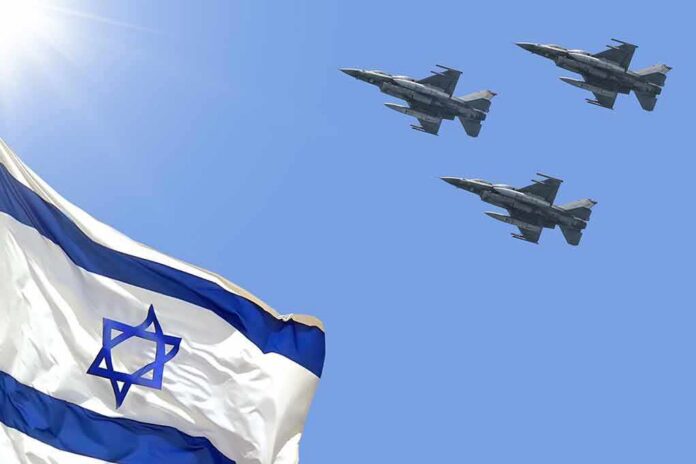
Reuters reported that on February 28, 2026, the United States and Israel struck targets across Iran, with the Pentagon naming the U.S. mission Operation Epic Fury. An Israeli defense official said Israel coordinated closely with Washington and planned the operation for months. Israeli authorities said about 200 fighter jets hit 500 targets, marking their largest flying mission to date. President Trump stated the United States worked with Israel and aimed to remove an imminent threat from Iran’s leadership and forces.
The United Nations Secretary-General condemned the use of force by the United States and Israel in a same-day statement and in remarks to the Security Council. The United Kingdom confirmed that the strikes took place that morning. Iran fired missiles and drones in response, while the Pentagon reported no United States deaths or injuries. The White House later detailed that Operation Epic Fury targeted Iran’s ballistic missiles, drones, navy, and defense industry to blunt future attacks.
Why Markets Care: Energy Prices and Inflation Risk
Asset managers said markets tend to price these shocks first through oil, inflation, and flight to safety, not through instant collapse. Analysts pointed to higher oil prices, weaker risk assets, and gains in safe havens as the near-term pattern. The World Bank’s chief economist warned that escalation could reignite inflation and slow global growth sharply if energy stays tight. That warning ties to a basic household concern: higher fuel and heating costs hit families and small businesses the fastest.
Several oil majors and large trading houses paused shipments through the Strait of Hormuz after the strikes, reflecting real logistics strain rather than only headline fear. When tankers slow or reroute, costs climb and delivery times stretch. That feeds into higher prices for gas, diesel, aviation fuel, and goods moved by truck and ship. For many readers, this is not a market chart; it is the weekly budget, the grocery bill, and the ability to keep a small shop open.
The Monetary System Angle: Pressure Without Collapse
Investment houses stressed that duration is the key risk. A short conflict can leave a bruise; a long one can harden into inflation and tighter financial conditions that stress banks, borrowers, and pension funds. Safe-haven buying can lift the dollar and gold. Risk-off moves can drain credit to smaller firms. That mix adds friction to payments and lending, which support daily trade. History shows wars and sanctions on Iran often push finance to adapt, not break overnight.
Analysts also flagged the risk of regional spillover, which could widen the energy shock and raise policy uncertainty for central banks already fighting inflation. Central banks cannot drill more oil. If energy stays high, they must choose between higher rates to cool prices or easier policy to protect growth. Either path can pinch households: higher mortgage and credit costs on one hand, or higher living costs on the other. That is why many Americans feel the system serves elites first and families last.
What Washington and Tehran Do Next Will Set the Bill
The White House outlined goals to degrade Iran’s strike tools, but gave limited public detail on legal memos and the full operational timeline. Reuters noted that precise target-by-target attribution between United States and Israeli forces remains incomplete in public reporting. Those gaps matter for oversight and for markets that try to size how far this could go. Still, the core fact is firm: coordinated strikes occurred, Iran responded, and energy routes felt strain.
Iran conflict → monetary risk is second-order.
First-order tonight: Brent $102.49, WTI $92.84, heating-oil crack ~$101.49 (Yahoo front-month). Energy hits the FX/rates channel after the barrel. pic.twitter.com/hLecqVQ2mh
— m (@mirzaotovic) October 2, 2026
For conservatives, the risk is higher energy prices and supply shocks that punish workers while Washington spends and agencies grow. For liberals, the risk is a wider war, cuts to social support, and a deeper gap between the wealthy and everyone else. Both can agree on this: if conflict lingers, costs rise, and the monetary system channels that pain to the real economy first. Leaders should level with the public on objectives, limits, and a concrete path to reduce risks to prices, jobs, and savings.
Sources:
zerohedge.com, reuters.com, un.org, nypost.com, allianzgi.com, morganstanley.com, indiatoday.in, eiu.com
© newsworthy.news 2026. All rights reserved.