
Brain scans found roughly 16% to 20% lower dopamine-related signals in key motivation and memory hubs of people with long COVID, tying the condition’s fatigue and brain fog to measurable changes in the brain.
Story Highlights
- A peer-reviewed study scanned 24 long COVID patients and 24 healthy controls using positron emission tomography.
- Dopamine nerve terminal marker levels were about 16% to 20% lower across striatal regions in the long COVID group.
- Lower signals tracked with apathy, slower movement, and worse memory performance in patients.
- Experts say the marker reflects dopamine system integrity but is indirect and needs larger follow-up studies.
What The Study Found In The Brain
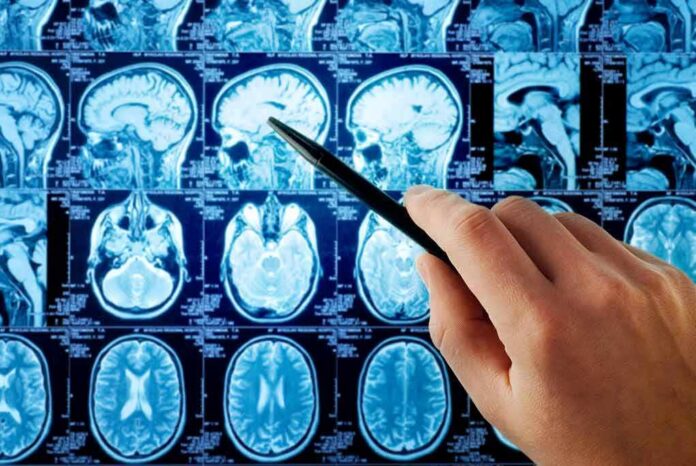
Researchers used positron emission tomography scans to measure a protein called vesicular monoamine transporter 2 in the striatum, a region that supports motivation, movement, and thinking. The team reported significantly lower signals in long COVID patients compared with matched healthy adults. Reported reductions were about 20% in the ventral striatum, 16% in the dorsal putamen, and 17% in the dorsal caudate, averaging near 18% across sites in the brain’s dopamine pathways.
Researchers linked these changes to symptoms that many patients describe. Lower vesicular monoamine transporter 2 in the ventral striatum aligned with more apathy. Reductions in the putamen matched slower movement. Lower levels in the caudate related to worse memory performance. These links support a common story patients tell about fatigue, brain fog, and a lack of drive after infection, and they offer a biological readout clinicians can track in future work.
Why Vesicular Monoamine Transporter 2 Matters
Vesicular monoamine transporter 2 helps package dopamine for release at nerve terminals. Nuclear medicine has long used it as an indirect marker of the health and density of dopamine-releasing terminals. In Parkinson’s disease research and other studies, lower binding on positron emission tomography has tracked with damage to dopamine circuits. That background gives the new result weight beyond a vague “brain scan difference” and points to a specific system tied to motivation and movement.
The study’s participants had mild or moderate acute infections, not only the most severe cases. That matters for everyday relevance, since many people with long COVID were never hospitalized. Multiple outlets summarized the same sample size and the same direction and size of changes, which supports the reliability of the core numbers as reported. Together, those details make the case that the signal is consistent and worthy of larger, confirmatory trials across different clinics and scanners.
How This Connects To Daily Life And Care
For patients, a measurable signal helps move the debate from doubts to data. When a scan shows changes in a known motivation and movement system, it validates common complaints of apathy, slowed thinking, and memory lapses. For families and employers, it explains why people who “look fine” may still struggle to finish tasks or stay focused. For doctors, it suggests testing medicines and therapies that target dopamine circuits, while researchers design trials that track this imaging marker over time.
Researchers have found evidence that long COVID may damage dopamine releasing neurons in the brain, potentially explaining persistent fatigue, low motivation, slowed movement, and memory difficulties. The discovery could lead to new treatments that target https://t.co/YTeLtXkt5q
— Michael W. Deem (@Michael_W_Deem) September 22, 2026
The evidence remains early. A 24-versus-24 design is small, and the imaging marker is indirect. Lower vesicular monoamine transporter 2 can reflect fewer terminals, altered protein levels, or changes in dopamine storage rather than proven neuron death. The strongest next steps are larger multi-site studies, scans repeated over time, and work that pairs imaging with immune and inflammation markers. Those steps can show whether the changes cause symptoms or track recovery.
Why This Moment Feels Bigger Than One Study
Americans across the political spectrum have felt brushed off about long COVID. Many see a health system that moves slowly while people lose jobs, savings, and peace of mind. This study does not solve the crisis, but it gives a concrete lead in a brain system tied to daily function. Leaders in government and health care can support replication, share data fast, and clear red tape so treatments are tested sooner. That is how institutions win back trust, one careful result at a time.
Sources:
fortune.com, technews.tw, gigazine.net, medscape.com
© newsworthy.news 2026. All rights reserved.