A teenage model was found shot and left naked in an Atlanta park, and it took two years and a single Sprite bottle for police to finally say they knew who killed her.
Story Snapshot
- Bridget Shiel, 19, was shot and her body left near a basketball court in Oakland City Park in southwest Atlanta.
- Police say Christopher Spencer, a convicted gang member already serving life for other murders, killed her.
- Detectives linked Spencer to the case after his DNA hit on a Sprite bottle and clothing tied to Shiel.
- The case highlights long delays in solving violent crimes and deep public doubts about how the system protects everyday people.
A Teen Killed And Left In A City Park
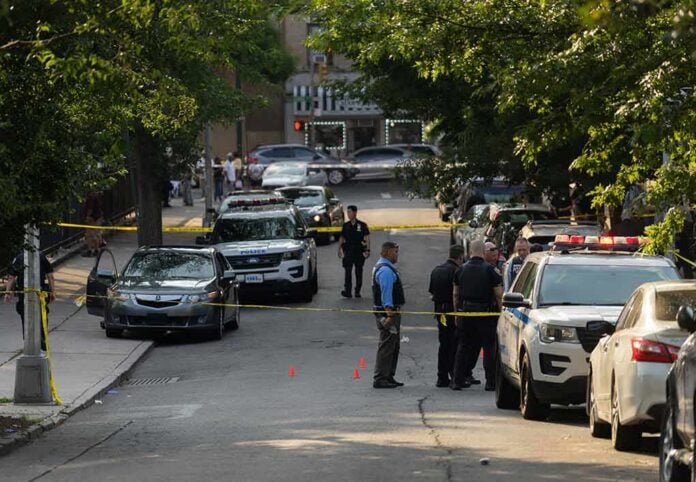
On May 31, 2016, Atlanta officers found 19-year-old Bridget Shiel’s body in Oakland City Park in southwest Atlanta. She was lying in a grassy area near a basketball court, naked and shot multiple times. Medical examiners later confirmed she had been riddled with bullets. Detectives believe she was killed somewhere else and then left in the park during the night, turning a neighborhood recreation spot into a crime scene that shocked families who lived nearby.
A day after Shiel was killed, police located her car behind a restaurant on Redan Road in DeKalb County, about 20 miles from the park. Near the car, officers found some of her clothing and a Sprite bottle, but at first these items did not point clearly to a suspect. For many months, investigators chased leads with no clear break. The case joined a long list of unsolved killings in metro Atlanta, fueling anger from residents who felt dangerous people were walking free while families waited for answers.
The DNA Break And A Familiar Name
The break in the case came when evidence from the Sprite bottle and clothing was processed for DNA and entered into the federal database known as the Combined DNA Index System. Detectives say they found traces of Christopher Spencer’s DNA on the bottle, on Bridget’s clothing, and on Bridget herself. Once Spencer’s profile was in the system because of another conviction, the database flagged a match. Atlanta police then secured an arrest warrant for Spencer in Shiel’s murder almost exactly two years after her body was found.
By the time of the warrant, Spencer was already serving life sentences without parole for other violent crimes, including the execution-style killing of a DeKalb County couple and the gang-related shooting deaths of two children in Clayton County. Prosecutors describe him as a gang member involved in multiple homicides across the Atlanta area. For Shiel’s family, learning that the suspected killer was already locked up brought some relief but also anger and confusion about why someone accused in so many deadly cases was still on the streets in 2016.
Cold Cases, Delays, And Public Distrust
The two-year gap between Shiel’s killing and Spencer’s arrest fits a wider pattern in Atlanta and across Georgia where homicide cases often sit unsolved until a DNA match or new witness emerges. Atlanta Police Department officials say the city has roughly 1,600 unsolved homicides dating back to the 1930s, showing how many families wait years or decades for justice. Other Georgia cases, like the 2025 arrest of Jon Worrell nearly 19 years after his wife’s killing, underscore how long delays are now common.
These long timelines deepen frustration on both the right and the left. Many conservatives see proof that government systems are slow, wasteful, and unable to keep dangerous gang members off the streets even after serious warning signs. Many liberals point to the same delays as signs that poor and working-class communities, often of color, get less protection and slower justice than the wealthy. Both groups increasingly talk about “elites” and a “deep state” that seems more focused on statistics and press releases than on real safety in places like Oakland City.
A Young Life Lost And Unanswered Questions
Police and prosecutors now say Spencer shot Bridget Shiel multiple times and left her in Oakland City Park, but they still do not know why she was killed. Friends and loved ones describe Bridget as a young stylist and model whose life had just begun. For her mother, the arrest brought “relief” but also the haunting question of motive that the evidence has not answered. That gap between a name on a warrant and a full story of what happened keeps the case painful and personal, not just another statistic in a crime report.
For many Americans watching cases like this, the lesson feels grim. A teenager can be gunned down and dumped in a public park. Her accused killer can be tied to several other murders. Yet it still takes years, complex lab work, and a lucky hit in a database to connect the dots. In an era when both conservatives and liberals doubt whether government really serves the people, the death of Bridget Shiel in Oakland City Park stands as one more reminder of a system that too often reacts after tragedy instead of preventing it.
Sources:
patch.com, wgxa.tv, wsbtv.com, youtube.com, instagram.com, uncovered.com, ourblackgirls.com, fbi.gov, atlantapd.org
© newsworthy.news 2026. All rights reserved.