Iranian officials just threatened to shut down Middle East oil if U.S. forces stage attacks from Gulf soil—putting global energy and American allies on notice.
Story Highlights
- Iranian leaders warn Gulf monarchies hosting U.S. bases they will be targeted if attacks originate from their territory [1][3].
- Iran’s United Nations envoy calls U.S. operations “unlawful” and a “grave escalation,” claiming catastrophic consequences [2].
- Tehran declares “restraint is over,” vowing retaliation on American ships and bases if Iranian vessels are hit [4].
- Iran demands sanctions relief and reparations while offering few verifiable details on alleged damages [6].
Direct Threats To Gulf States And Global Oil
Iranian lawmaker Mahmoud Nabavian warned Arab monarchies to stop allowing their soil to serve as launchpads for strikes on Iran, threatening direct retaliation if they do not [1]. An Islamic Revolutionary Guard Corps commander escalated further, saying that if Gulf territory is used against Iran, those countries should “say goodbye to oil production in the Middle East” [3]. These statements target partners that host American forces, signaling Tehran’s intent to raise the price of any coalition action by threatening energy lifelines and regional stability.
Such oil-targeting rhetoric matters because even short-lived disruptions in the Strait of Hormuz ripple into higher fuel and electricity costs for American families. Iran’s posture seeks leverage by menacing the world’s energy jugular, not by building diplomatic confidence. For conservatives who remember past price spikes, this is a reminder that deterrence, energy independence, and secure sea lanes are not abstractions; they are kitchen-table issues. The Trump administration must balance firm military posture with measures that shield U.S. consumers from manipulated shocks.
Legal Claims At The United Nations And A Narrative Contest
Iran’s United Nations Ambassador Amir Saeid Iravani accused the United States of “unlawful” actions that endanger international peace, warning that consequences “could be catastrophic” [2]. Tehran’s foreign ministry has framed its Hormuz moves as “defensive” and aligned with its interpretation of maritime law, while demanding respect for “legitimate rights” and condemning alleged American “bullying” [1][5]. However, Iran has not cited specific treaty articles or prior court rulings to substantiate a blockade claim, leaving key legal assertions unmoored from recognized adjudications [1].
Washington’s account directly challenges Tehran’s storyline. U.S. leaders report American ships came under fire during Strait transits and returned fire in self-defense, asserting the United States showed restraint while neutralizing threats quickly [4]. This clash of narratives—lawfare versus lawful transit—highlights why documentation matters. Without transparent logs, satellite data, or verifiable incident records from Iran, claims of U.S. violations remain allegations, while the burden of proof sits with the party seeking to restrict a vital international waterway.
‘Restraint Is Over’: Escalation Signals And Maritime Risk
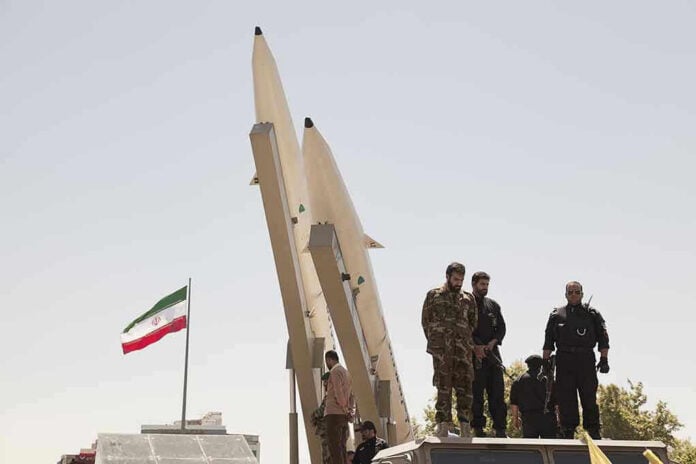
An Iranian parliament spokesman declared “our restraint is over,” warning any attack on Iranian vessels would trigger a “strong and decisive” response against American ships and bases [4]. State-linked outlets amplified the message with footage of explosions and military posturing, designed to telegraph readiness and resolve [4][5]. The pattern mirrors prior episodes where Iran couples legal demands with asymmetric threats—mines, drones, or proxies—to raise risk premiums and test political will, especially when energy chokepoints can magnify pressure on adversaries.
Gulf states, already targets of drone and maritime incidents, publicly blame Iran for disruptions and security threats, aligning their rhetoric with the United States as oil flows face hazards [6]. Their public stance matters because coalition basing and overflight rights hinge on local resolve. If Tehran’s threats intimidate partners, deterrence frays. If they stiffen spines, expect tighter coordination on missile defense, maritime escorts, and rapid interdiction—steps that reduce Iran’s leverage but could invite further brinkmanship.
Demands, Sanctions, And The Credibility Gap
Iran’s reported response to a U.S. peace proposal includes sweeping demands: compensation for war damages, an end to the naval posture in the Strait, halting attacks, lifting sanctions, and removing restrictions on oil exports [6]. Yet Tehran has released no public, detailed counter-proposal, no incident ledger, and no quantified damages, creating a credibility gap for claims that require international buy-in to enforce [6]. Absent verifiable documentation, such demands read as maximalist bargaining rather than a practical off-ramp.
Trump rejects Iranian response to US peace proposal
Iran seeks compensation, end to sanctions and blockade
Qatari tanker, bulk carrier pass Strait of Hormuz
Hostile drones detected over several Gulf countries
Iran issues warning over foreign warshipshttps://t.co/OpY25txwhO— Sharier Khan (@Sharierkhan1) May 10, 2026
For American conservatives, the path forward is clear-eyed strength. The administration must keep sea lanes open, back allies facing intimidation, and reject legal overreach that erodes freedom of navigation. Precision deterrence—clear red lines, rapid defensive action, and relentless economic pressure—reduces miscalculation. Energy policy that expands domestic production blunts Tehran’s oil blackmail. Peace through strength still works, but only if facts, not propaganda, guide decisions—and only if America refuses to let a hostile regime set the price of our security.
Sources:
[1] YouTube – Iran Issues Dark Warning To Arab Monarchies As Fear Of New War …
[2] Web – Iran warns US Gulf actions threaten international peace, security
[3] Web – Iran warns Gulf countries against use of territory for attacks
[4] YouTube – Iran Port EXPLOSION; IRGC Threatens Hormuz Cables; Trump …
[5] YouTube – Iran’s Chilling Reply To US Prez After Trump Rejects Proposal
[6] Web – Trump warns ceasefire on ‘life support’, Iran says ready for any …