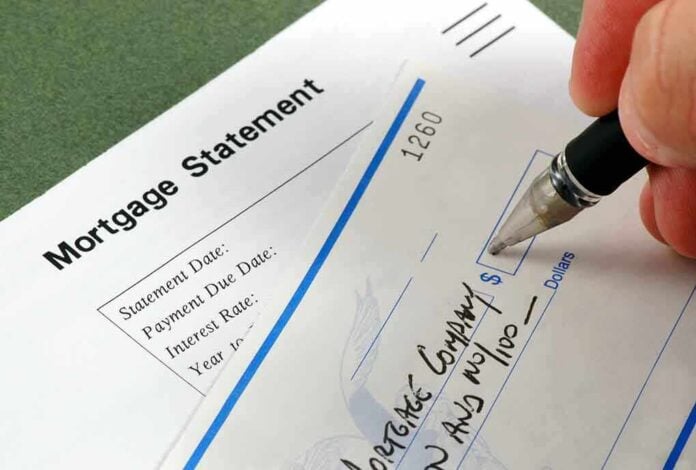
Trump’s new $200 billion mortgage‑bond push is being sold online as a “housing bailout,” but the real story is a high‑stakes effort to unwind Biden‑era housing pain without repeating Washington’s old bailout games.
Story Snapshot
- Trump directed Fannie Mae and Freddie Mac to buy $200 billion in mortgage bonds to nudge mortgage rates lower and ease Biden‑era affordability pain.
- Viral creators call it a “housing bailout,” but it is a targeted bond‑purchase plan, not checks to banks or blanket debt forgiveness.
- The move leans on government‑controlled GSEs instead of the Federal Reserve, raising fresh questions about how far Washington should reach into housing markets.
- Economists warn the plan may modestly trim rates but cannot fix the deeper supply crisis left unaddressed for years.
Trump’s Mortgage‑Bond Order Versus the “Bailout” Hype
President Trump’s Truth Social announcement laid out a simple directive: Fannie Mae and Freddie Mac are to buy an additional $200 billion in mortgage bonds using what he describes as roughly that amount in cash and liquid assets now sitting on their balance sheets. The White House frames this as a way to push mortgage rates and monthly payments down after years of inflation, rate hikes, and policy mistakes that hammered middle‑class buyers. Online, though, YouTube headlines blast it as a massive “housing bailout,” language that confuses a targeted market intervention with the bank‑rescue playbook from the 2008 crisis.
Industry outlets describe something far narrower than the social‑media spin. Axios and ResiClub report that Trump is leaning on the two government‑controlled mortgage giants to soak up more agency mortgage‑backed securities, aiming to compress the spread between 30‑year mortgage rates and 10‑year Treasury yields. That mechanism is important for conservatives to understand: it is about changing pricing in the bond market, not writing bailout checks to failing lenders, delinquent borrowers, or politically connected institutions.
How the Plan Works and What It Can — and Cannot — Do
Fannie Mae and Freddie Mac already buy mortgages, turn them into securities, and guarantee payments to investors, which is how they keep money flowing into the housing market. Under Trump’s directive, they would hold an extra $200 billion of these mortgage bonds on their own books, sharply expanding retained portfolios that had already grown by around $70 billion since mid‑2025. More demand for mortgage bonds should raise prices and lower yields, which in turn can nudge down 30‑year fixed mortgage rates for families trying to buy or refinance.
Conservative readers should also weigh the scale. The agency mortgage‑backed securities market is roughly $9.26 trillion, and the Federal Reserve at one point held more than $2.7 trillion of those bonds during its quantitative‑easing spree. Trump’s instruction uses the GSEs as the lever instead of the Fed and at a smaller size, though still large relative to legal portfolio caps around $225 billion each for Fannie and Freddie. That makes it a serious, but not unlimited, attempt to use existing government‑controlled entities to undo some of the damage from years of easy money, overregulation, and neglected supply.
Winners, Losers, and the Conservative Trade‑Offs
Homeowners stuck in high‑rate mortgages could see a window to refinance if the extra demand for bonds pulls rates down enough, even by a few tenths of a percentage point. Prospective buyers may gain some breathing room on monthly payments, which matters after Biden‑era price surges and stagnant real wages. Yet economists note that if cheaper financing boosts demand without adding new homes, sellers and existing owners may reap the biggest windfall as prices drift higher again, while first‑time buyers face stiffer competition and bigger down payments.
That tension goes straight to the heart of conservative concerns about government engineering markets. Using Fannie and Freddie as quasi‑monetary tools risks blurring the line between limited government and central planning, especially when their retained portfolios approach statutory caps that were put in place after the last crisis to limit systemic risk. At the same time, many on the right will see Trump’s move as a targeted, time‑limited effort to reverse years of Washington‑created distortions, rather than the open‑ended spending and direct bailouts favored by past Democratic administrations.
Populist Strike on Wall Street Landlords and Housing Supply Reality
Trump paired the $200 billion bond plan with a separate proposal to ban large institutional investors from buying single‑family homes, signaling a broader populist message: homes are for families, not Wall Street funds. That message resonates with conservatives who watched globalist capital gobble up starter homes while ordinary Americans were locked out by high prices and higher rates. However, analysts point out that big institutions still own only a small share of single‑family rentals nationwide, so an outright ban may have more symbolic than sweeping economic impact.
Housing economists repeatedly stress that the core problem is supply, especially of entry‑level homes. Zoning barriers, permitting delays, labor shortages, and years of policy skewed toward urban density over traditional neighborhoods have left builders unable to keep up. A bond‑purchase program can move rates at the margin but cannot build a single new house. For conservatives, that is the key constitutional and common‑sense lens: financial engineering should not replace the harder work of cutting red tape, respecting local control, and unleashing private builders to meet real family demand.
Sources:
Trump wants to buy $200B in mortgage bonds to lower housing costs – Axios
Trump directs Fannie Mae & Freddie Mac to buy $200 billion in mortgage bonds – ResiClub Analytics