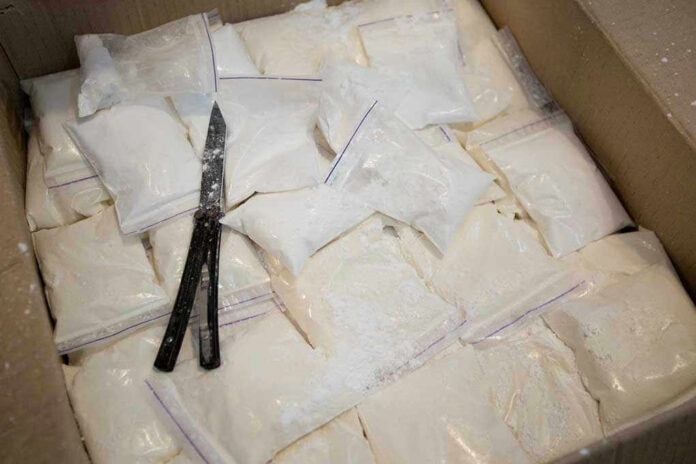
A record-setting drug bust in Central America exposes just how far criminal cartels will go to flood American communities with illegal narcotics—while raising critical questions about border security and U.S. sovereignty.
Story Snapshot
- El Salvador’s navy intercepted 1.4 tons of cocaine floating 1,000 miles offshore, disrupting a $35 million drug shipment bound for cartels.
- The bust is part of an unprecedented crackdown, with over 37 tons of cocaine seized in less than two years under President Bukele’s aggressive anti-trafficking strategy.
- U.S.-Salvadoran cooperation is at an all-time high, but traffickers are adapting with new smuggling tactics far from traditional patrol zones.
- The operation highlights ongoing threats to American communities and the urgent need for secure borders and robust interdiction efforts.
Salvadoran Navy’s Deep-Water Drug Seizure Shakes Up Cartel Tactics
On September 9, 2025, El Salvador’s navy pulled 1.4 tons of cocaine—valued at $35 million—from the Pacific Ocean, nearly 1,000 miles from its coastline. The massive haul was discovered floating, not hidden aboard a vessel, pointing to increasingly sophisticated methods favored by international cartels. President Nayib Bukele publicly hailed the operation, underscoring his administration’s crackdown on trafficking routes that channel deadly narcotics northward, reinforcing why maritime vigilance is essential for U.S. national security.
Unlike previous busts that involved intercepting boats or submarines, this operation highlights a disturbing trend: traffickers now abandon large shipments in international waters, relying on GPS and retrieval teams to evade detection. In the last two years, El Salvador has seized a staggering 37.2 tons of cocaine—tenfold more than historic averages—thanks to expanded patrols and international intelligence-sharing. The latest seizure demonstrates how political will and modern tactics can disrupt organized crime, but also how the battle against cartels is far from over, especially as they adapt with new evasion strategies.
Transnational Cartels Exploit Strategic Corridors, Threaten U.S. Communities
Central America has long served as a vital artery for cocaine smuggling from South America to the United States. Cartels use semi-submersibles, fishing boats, and now floating caches to circumvent naval patrols and border controls. The Pacific corridor, where the latest bust occurred, remains a preferred route for traffickers—one that ultimately brings drugs into American cities, fueling crime and addiction. U.S. authorities, recognizing the threat to public safety and traditional values, have increased cooperation with allies like El Salvador to stem the tide and fortify border defenses.
The surge in seizures signals both a victory for law enforcement and a warning about the ongoing arms race between governments and organized crime. Every ton of cocaine intercepted means millions denied to criminal organizations, but traffickers continuously seek new routes, endangering coastal communities and undermining regional stability. The American public bears the brunt, as the flow of narcotics drives up crime, strains law enforcement, and erodes family values at home.
Bukele’s Security Push and U.S. Partnership Mark New Phase in Regional Drug War
President Bukele’s administration, with expanded naval resources and aggressive policies, has shifted the balance of power in regional anti-trafficking operations. The U.S. Embassy in El Salvador praised the latest seizure, emphasizing the importance of joint operations and intelligence-sharing. By pushing patrols further into international waters and deploying advanced surveillance, Salvadoran forces have set new records in interdiction. However, experts caution that as law enforcement intensifies its efforts, cartels will innovate, potentially leading to new forms of smuggling and violence.
Short-term effects include heavy financial losses for criminal networks and temporary relief for affected communities, but the long-term success of such operations depends on continued cooperation, investment in maritime security, and robust U.S. border policies. The seizure’s publicity also boosts Bukele’s reputation for delivering results, while reinforcing conservative calls for secure borders and vigilant enforcement to protect American families from the fallout of global drug trafficking.
Sources:
Bukele’s Security Administration Strikes Another Major Blow Against Drug Trafficking
1.4 Tons of Cocaine Found Floating in the Pacific Ocean
Salvador Seizes 1.4 Tons of Cocaine Floating in the Pacific Ocean
El Salvador Deals Severe Blow to International Drug Trafficking