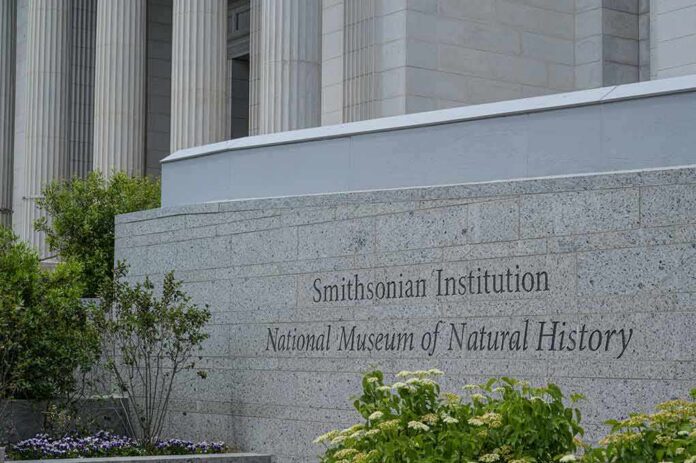
When a sitting congressman says America’s flagship history museum is pushing “anti-American horrors” and needs to “clean house,” it raises hard questions about who controls the story of our country.
Story Snapshot
- Rep. Brandon Gill says the Smithsonian’s National Museum of American History is captured by a left-wing, “woke” agenda and backs President Trump’s new executive order aimed at fixing it.
- Gill’s clash with Director Anthea Hartig in a House hearing went viral after he pressed her on materials that linked politeness and objectivity to “white supremacy culture.”
- President Trump’s Domestic Policy Council report and executive order say the museum uses American history as a tool for social justice, not as a shared national story.
- Hartig insists the museum is nonpartisan, governed by standards of scholarship and accuracy, and simply adding ignored voices rather than attacking America.
Gill’s Charge: Smithsonian History Has Gone “Too Far Left”
Rep. Brandon Gill, a Republican from Texas, is accusing the Smithsonian’s National Museum of American History of trading neutral history for progressive activism. In a recent House Oversight subcommittee hearing, he argued the museum now frames America mainly through race, gender, and oppression instead of achievement and shared ideals. Gill says this shift reflects a deeper “far-left, Marxist” influence inside the Smithsonian that treats patriotism and objectivity as suspect.
Gill’s criticism is backed by a 162-page report from President Trump’s Domestic Policy Council, released on July 4, that accuses the museum of ideological bias. That report says museum staff have embraced “Museums as a Site for Social Action” and use history as a “prime tool” for social justice instead of presenting America as a common inheritance. The report claims exhibits on the founding, immigration, race, and gender consistently lean left and paint the nation in a harsh light.
The Viral Hearing: “Are You a White Supremacist?”
During the hearing titled “Rewriting American History: Examining the Smithsonian’s Efforts to Reshape the Past,” Gill focused on a “Mass Action” or “anti-racist” toolkit the museum had promoted. That toolkit included a chart describing traits such as politeness, being on time, individualism, and objectivity as features of “white supremacy culture.” Gill used the museum’s own materials to question whether basic manners and good scholarship were now treated as racist.
Gill first asked Director Anthea Hartig if historians should aim to be objective. She answered yes, saying objectivity is one of the goals of good scholarship and that the museum strives to be objective and nonpartisan. Gill then pointed to the toolkit’s claim that objectivity is part of white supremacy culture and pressed her on whether, by her own standards, she was promoting “white supremacist culture.” He repeated the same pattern with politeness, asking if being courteous matters, then asking, “Ma’am, do you consider yourself a white supremacist?”
Hartig’s Defense: Nonpartisan, But More Voices and Hard Chapters
Director Hartig pushed back firmly on the idea that the museum is pushing an ideology. In her prepared testimony and in her answers, she said, “The museum does not take sides in America’s political debates.” She described the museum’s mission as preserving and documenting American life in all its breadth so visitors can encounter the past and draw their own conclusions, not be steered toward a partisan view.
Hartig explained that “reframing” history does not mean erasing traditional stories of the founding or progress. Instead, it means adding evidence and voices that were left out before, so more Americans can see themselves in the national story. She argued that looking seriously at slavery, racism, and other painful chapters is not the same as hostility toward America; in her view, it can deepen appreciation for the country’s struggles and achievements. She noted that exhibits are governed by standards of accuracy, independence, and nonpartisanship.
Trump’s Executive Order and the Call to “Clean House”
President Trump followed the Domestic Policy Council report with an executive order on “Restoring Truth and Sanity to American History.” The order says museums in Washington, D.C., should be places where people learn, not sites for ideological indoctrination or divisive narratives that distort shared history. It specifically criticizes the National Museum of American History’s leadership for using exhibits to advance social justice ideas and “radical transformation of our society.”
😍😍Rep Brandon Gill backs Trump executive order, calls to 'clean house' at the Smithsonian https://t.co/WxBeUBA6Yp
— Judi (@TruthJusticeKat) July 25, 2026
After the hearing and the executive order, Gill went on Fox News and Newsmax to call for major changes at the Smithsonian. He said it is time to “clean house,” starting with firing Director Hartig. Gill argued that taxpayers are tired of funding institutions that, in his view, smear America and traditional values while selling political messages like “Latina Power” merchandise and hosting exhibits that parents find inappropriate for children. He says Republicans now have both the oversight power and White House backing to force a reset.
Why This Fight Matters Beyond One Museum
This battle over the Smithsonian fits a larger pattern that many Americans on both the right and left recognize. Museums, schools, and archives say they are broadening history to include more voices. Politicians and citizens often respond that these changes feel like ideological capture by elites who look down on ordinary people. The fight becomes sharpest when leaders seem to label everyday traits like politeness, hard work, or patriotism as suspect or oppressive.
For conservatives, Gill’s questions tap long-standing anger at “woke” agendas in institutions funded by taxpayers. For many liberals and independents, the same fight raises concern that powerful officials and donors can reshape history to serve their own politics, right or left. Underneath the shouting, the shared worry is clear: Americans no longer trust that major national institutions serve the public instead of the elite. This Smithsonian clash is really about who owns the American story, and whether regular citizens still have a say.
Sources:
facebook.com, noticias.foxnews.com, youtube.com, newsmax.com, oversight.house.gov, redstate.com
© newsworthy.news 2026. All rights reserved.