President Trump has unleashed a new wave of tariffs on America’s trading partners, but—get this—he’s delaying the pain just long enough to squeeze a few more concessions, all while markets, businesses, and everyday Americans brace for the fallout.
At a Glance
- Trump’s administration announced sweeping new tariffs, including a 10% baseline on nearly all imports and up to 54% for select countries.
- Key trading partners such as Japan and South Korea are targeted with immediate 25% tariffs, but implementation is delayed until at least August 1 for negotiations.
- Markets tumbled, inflation is expected to rise, and US businesses are caught in the crossfire while the White House claims it’s all about fair trade.
- Legal challenges are mounting, and the administration’s authority remains under scrutiny with a major appeals court hearing scheduled for July 31.
Trump’s Tariff Barrage: “America First” or Just First in Line for Higher Prices?
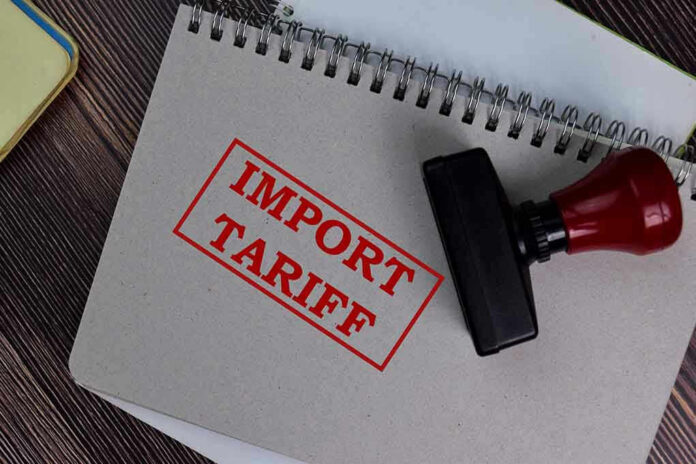
President Trump’s trade team, apparently never satisfied unless the rest of the world is on edge, has rolled out a fresh round of “reciprocal” tariffs. This time, it’s not just the usual suspects—China or Mexico—getting the treatment. No, the net is wider: tariffs will hit imports from Japan, South Korea, South Africa, Indonesia, Thailand, Cambodia, and a grab bag of others, with rates ranging from 25% and, for some, up to a whopping 54%. American importers, brace yourselves: that 10% baseline tariff now covers nearly every imported good not already caught up in some special trade war sideshow.
Trump’s gambit? Threaten the tariffs, then dangle the possibility of negotiation before the hammer comes down. He’s already crowed about “deals” with the UK and China and claims India is on the brink. For everyone else, the clock is ticking to August 1. If partners don’t come running to the table—tariffs hit, wallets get lighter, and American businesses pass the pain onto customers. If this is the new definition of “winning,” it’s got a lot of folks scratching their heads—and checking their receipts.
Winners, Losers, and the Usual Political Circus
Let’s get real: the big winners here aren’t the taxpaying Americans footing the bill at the checkout line. It’s government coffers, fattened by what the Trump administration calls “revenue,” but what any business owner with a calculator calls a tax. That’s right—tariffs are just taxes by another name, and the folks who pay them are US importers and, ultimately, the American consumer. The White House claims this is leverage for “fair trade,” but economists and retail experts are singing a different tune. Jonathan Gold at the National Retail Federation didn’t mince words: “All of that new revenue is just a tax on US businesses.” The pain is especially sharp in sectors like autos, electronics, and consumer goods, where imported parts and products are the norm, not the exception.
Financial markets reacted exactly as you’d expect when uncertainty reigns: the S&P 500 and Nasdaq 100 dropped 0.8%, currencies of targeted countries sank, and the US dollar flexed its muscle. Business leaders now face a game of chicken with suppliers and customers, forced to decide whether to eat the higher costs or shove them down the food chain to you and me. Meanwhile, the administration’s threats of even higher tariffs—especially for countries aligning with the “anti-American” BRICS bloc—have global trading partners scrambling to cut deals or prepare retaliation of their own.
Inflation, Legal Chaos, and a Masterclass in Government Overreach
Remember inflation? The economic cancer that’s eaten away at your savings, jacked up the price of groceries, and made every trip to the store a new adventure in sticker shock? Well, buckle up. Torsten Slok, chief economist at Apollo Global Management, warns that this new tariff blitz, combined with high oil prices and immigration restrictions, is a recipe for even more inflation in the months ahead. Just what America needs: another round of price hikes courtesy of Washington’s slapdash economic playbook.
The legal mess isn’t any prettier. The US Court of International Trade has already declared most of Trump’s new levies illegal under the International Emergency Economic Powers Act, but an appeals court has let them stand—for now. A showdown looms on July 31, and depending on how the judges rule, the entire strategy could unravel overnight, or the administration could double down, leaving businesses and consumers in limbo. That’s the kind of “certainty” that makes investors reach for the Pepto.
Negotiation Theater: Deadline Diplomacy or Political Kabuki?
The administration’s fondness for setting deadlines, then shifting them as the mood strikes, has become a trademark. Trump’s letters gave targeted countries until August 1 to make nice or face the tariff music. The White House claims this is all about bringing partners to the table, but for businesses trying to plan inventory, pricing, and supply chains, it’s a logistical nightmare. The only thing predictable about these tariff threats is their unpredictability.
Some countries have struck framework deals—like the UK, China, and Vietnam—but the majority are stuck playing “will they, won’t they?” with American trade officials. And every time a new batch of tariffs is dangled, the headlines scream, the markets shudder, and American families wonder how much more they’ll have to pay for everyday goods.