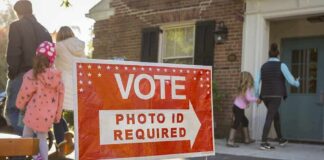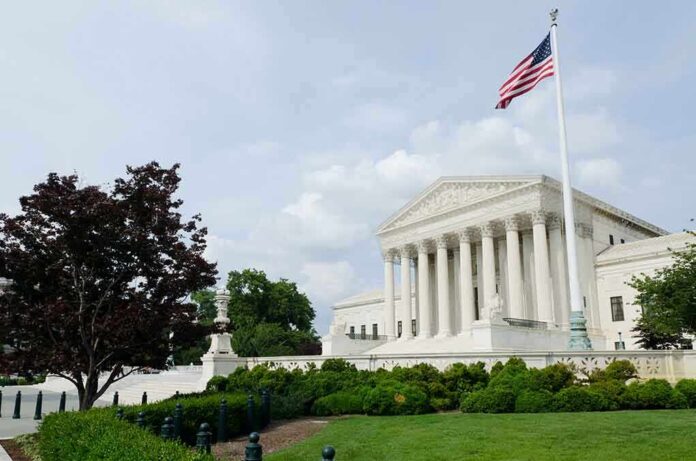
A Supreme Court showdown over mail-in ballot deadlines now threatens election integrity and the principle of “one election, one day,” igniting deep concern among constitutional conservatives.
Story Highlights
- The Supreme Court will decide if states can count mail-in ballots received after Election Day, challenging laws in Mississippi and 16 other states.
- The Republican National Committee argues extended deadlines undermine federal election law and uniformity.
- Millions of military, disabled, and absentee voters could be affected by the ruling.
- The outcome could reset national standards for mail-in voting, impacting future elections and constitutional rights.
Supreme Court to Decide Fate of Mail-In Ballots Received After Election Day
This November, the Supreme Court agreed to hear Watson v. RNC, a case that could fundamentally alter how America handles mail-in ballots. At issue is Mississippi’s law, passed in 2020, allowing ballots postmarked by Election Day to be counted if received within five business days. Similar grace periods exist in 16 other states and Washington, D.C., potentially impacting millions of voters nationwide. Conservatives are watching closely, concerned that such policies may erode election integrity and violate the U.S. Constitution’s requirement for a uniform federal Election Day.
The Republican National Committee (RNC) has challenged Mississippi’s law, arguing it conflicts with federal statutes mandating a single, nationwide Election Day. The RNC contends that counting ballots received after Election Day opens the door to inconsistent standards, ballot harvesting, and delayed results—issues that have frustrated voters and undermined confidence in recent elections. The Supreme Court’s decision will not only affect Mississippi but also set a precedent for the other states and D.C. with similar laws, directly shaping future federal election procedures and conservative values around election integrity.
Election Integrity Versus Voter Access: Key Arguments Before the Court
Election integrity advocates maintain that strict deadlines are necessary to prevent fraud and ensure timely, reliable results. They argue that extending deadlines enables last-minute ballot harvesting and manipulation, putting the credibility of our elections at risk. On the other hand, defenders of grace periods—often citing the needs of military, disabled, and absentee voters—warn that postal delays and administrative errors could disenfranchise honest Americans. The Supreme Court must weigh the constitutional mandate for a uniform Election Day against arguments for flexibility and access, with both sides presenting legal and practical concerns rooted in decades of precedent and recent experience.
Mississippi’s Republican-led legislature originally enacted the grace period to prevent disenfranchisement, especially during the COVID-19 pandemic when postal delays were rampant. Yet, as political battles over mail-in voting intensified, these policies faced mounting legal challenges. The Department of Justice has previously supported extending deadlines for military and overseas voters, while states have defended their authority to set election procedures. The Supreme Court’s ruling will override the positions of lower courts, advocacy groups, and federal agencies, making this case a defining moment for election law and constitutional governance.
National Implications: Who Stands to Gain or Lose?
The immediate impact of the Supreme Court’s decision will be felt by military personnel, disabled Americans, and absentee voters who rely on mail-in ballots. If the Court rules against grace periods, states will be forced to change their laws, potentially disenfranchising voters who mail ballots on time but face unavoidable postal delays. Election officials could face increased administrative burdens as they scramble to adapt systems and technologies for stricter deadlines. Meanwhile, the debate will intensify partisan divisions over election integrity, voter access, and the role of state versus federal authority in shaping election rules—core concerns for constitutional conservatives and those wary of government overreach.
Me @NRO: Supreme Court Takes On Major Mail-In Ballots Case https://t.co/mjsfS5RSQS
— Dan McLaughlin (@baseballcrank) November 11, 2025
Legal experts highlight the case’s potential to set a major precedent for the balance of power between federal and state governments in election administration. Academic commentary underscores the tension between counting every eligible vote and maintaining nationwide standards. While some argue that grace periods are essential for military and overseas voters, others maintain that only strict deadlines can guarantee timely, uniform results and safeguard the process from manipulation. The Supreme Court’s decision will signal whether the nation prioritizes constitutional clarity and election integrity or opts for flexible accommodation at the cost of uniformity and trust.
Sources:
U.S. Supreme Court to Hear Critical Case on Mail Ballot Deadlines