

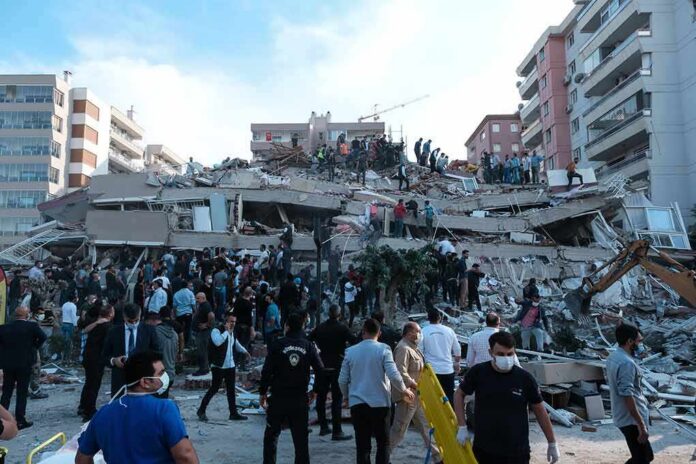
A Ukrainian survivor says a Russian glide-bomb strike tore into two apartment blocks in Zaporizhzhia, killing her sister and wounding dozens of neighbors.
Story Snapshot
- Regional officials reported two killed and 42 injured after guided bombs hit two residential buildings in Zaporizhzhia.
- The account fits a wider pattern of aerial bombs causing rising civilian casualties across Ukraine, tracked by United Nations monitors.
- Russia says it aims at defense and logistics sites, while local reports cite repeated hits on homes and shops in the city.
- The dispute highlights the fog of war and why citizens doubt leaders who promise protection yet fail to stop the harm.
What Local Authorities Reported In Zaporizhzhia
On July 19, regional officials in Zaporizhzhia said Russian forces launched glide bombs that struck a five-story and a nine-story apartment building. The blasts killed two people and injured 42, including eight children. Photos and videos from the scene showed shattered homes and emergency crews working into the night. The damage cut through several floors, forcing fast evacuations. The reported use of guided aerial bombs suggests standoff attacks from outside dense air defenses.
Days around that strike brought more reports of civilian harm in the city. Local authorities cited guided aerial bombs hitting homes, shops, and workplaces, with injuries ranging from a few people to dozens. A separate wave of attacks in the region was tallied at more than a thousand in one day, showing the pressure on communities that sit within reach of Russian aircraft and drones. A steady drumbeat of such incidents strains hospitals and rescue crews.
How Russia Frames Its Targets Versus On-The-Ground Impacts
Russia’s Ministry of Defence has said that its overnight attacks in Zaporizhzhia target defense industry sites and transport hubs, not civilians. That claim appears often when missiles or bombs hit urban areas. In Zaporizhzhia, however, multiple local reports describe apartment blocks, a shopping site, and other civilian places taking damage and producing casualties. The gap between intent claims and impact reports fuels public distrust during a long, grinding war.
This pattern is not unique to one night. United Nations monitors reported a sharp rise in civilian deaths and injuries in 2026, with aerial bombs a major cause. Glide bombs, which are large and powerful, are especially destructive in cities. Even when aimed at a military object, their blast can destroy nearby homes and shops. In the first half of 2026, verified civilian harm surged, reflecting more frequent strikes and bigger munitions in populated areas.
Why The Survivor’s Story Resonates Across A Tired Public
Survivors like the woman who lost her sister put a human face on the numbers. Her account lines up with the official tally from that night and the visible wreckage left behind. People on both the left and right in the United States see stories like this and ask hard questions. They doubt global leaders who promise rules and red lines, yet cannot stop bombs from hitting families in their homes in a major European city.
For Americans, this connects to deeper worries. Many believe a distant elite makes choices while everyday people face the cost. They watch a war that keeps killing civilians and fear that leaders will again avoid clear goals, clear limits, and clear results. The facts in Zaporizhzhia are stark: guided bombs hit homes, people died, and many were hurt. The survivor’s loss shows how modern war blurs lines and why truth and accountability matter to any hope of peace.
Sources:
yahoo.com, reuters.com, kyivpost.com
© newsworthy.news 2026. All rights reserved.